Quick Navigation
- How Does a Plant Moisture Meter Actually Work?
- The Main Types: Which One is Right for Your Jungle?
- How to Use a Moisture Meter Correctly (This is Where Most People Go Wrong)
- Top Features to Look For (And Red Flags to Avoid)
- My Personal Experience with Different Brands
- Advanced Tips & Troubleshooting
- The Bottom Line: Is a Plant Moisture Meter Worth It?
Let's be honest. Sticking your finger in the dirt is a time-honored tradition, but it's about as reliable as predicting the weather by looking at the sky. The top inch can be bone dry while the root zone is a swamp. I killed a perfectly good fiddle leaf fig that way, thinking it was thirsty when its roots were actually drowning. It was frustrating, and expensive. That's when I finally gave in and got my first real plant moisture meter.
It was a game-changer. No more dramatic rescues or silent, soggy deaths. These little tools take the mystery out of watering, which is, let's face it, the number one cause of houseplant demise. But the world of moisture meters isn't as simple as just buying the first one you see on the shelf. Some are brilliant, and others... well, they might as well be a random number generator.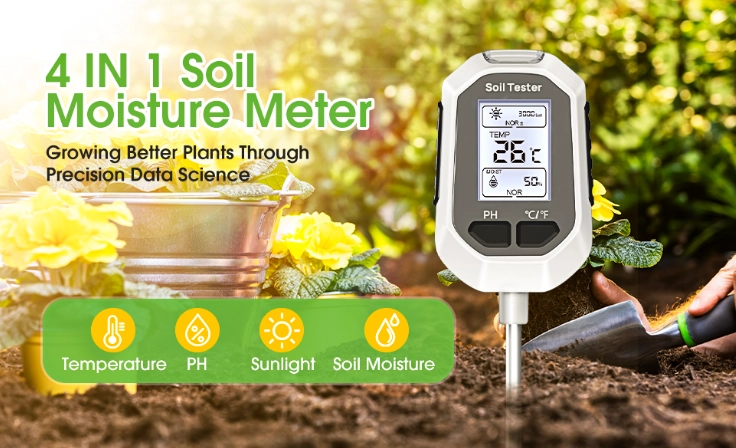
How Does a Plant Moisture Meter Actually Work?
It's not magic, though it feels like it. Most affordable soil moisture meters you'll find for home use are what's called resistive or conductivity meters. They have two (or more) metal probes that you stick into the soil. The device sends a tiny, harmless electrical current between these probes.
Water conducts electricity. Dry soil doesn't. So, the meter measures the electrical resistance between the probes. Less resistance means more water present (higher conductivity), and the meter shows a higher moisture reading. More resistance means drier soil, and the meter shows a lower reading. It's brilliantly simple.
There are fancier, more expensive meters used in agriculture and science called capacitive or TDR (Time Domain Reflectometry) sensors. These are incredibly accurate and aren't affected by salts, but you're unlikely to need one for your monstera. For our purposes, the standard resistive probe is the workhorse.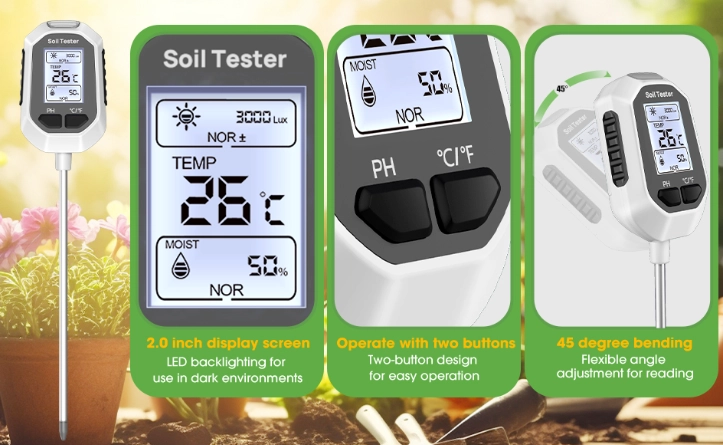
The Main Types: Which One is Right for Your Jungle?
Not all moisture meters are created equal. Picking the right type is half the battle. Here’s a breakdown of what you’ll find.
| Type | How It Works | Best For | Watch Out For |
|---|---|---|---|
| Basic Analog Probe | A simple dial gauge with a single metal probe. Insert, wait, read. | Beginners, budget-conscious growers, checking a few key plants. | Probes can bend or break. Can be less precise. No extra features. |
| Digital Probe Meter | Similar probe, but with an LCD/LED digital readout (often with a 1-10 scale). | Those who want a clearer, more precise number. Often includes a basic light meter. | Requires batteries. The probe is still the vulnerable point. |
| 3-in-1 or 4-in-1 Meter | A digital meter that measures moisture, light intensity, and soil pH (and sometimes temperature). | The data-loving plant parent who wants a fuller picture of their plant's environment. | The pH function is often the least accurate. Can be a "jack of all trades, master of none." |
| Bluetooth/Smart Meters | A probe that stays in the pot, connecting to an app on your phone to give continuous readings and alerts. | Tech enthusiasts, frequent travelers, or anyone with very finicky, high-value plants. | Significantly more expensive. App dependency. Battery life for the probe. |
So, which one do you actually need? If you're just starting out, a basic digital probe meter is the sweet spot. It gives you a clear number without overcomplicating things. I personally find the 3-in-1 meters handy, but I take the pH reading with a massive grain of salt—it's more of a general indicator than a lab-grade result.
How to Use a Moisture Meter Correctly (This is Where Most People Go Wrong)
Buying a good plant water meter is step one. Using it properly is step two, and it's crucial. Here’s the right way to do it, broken down.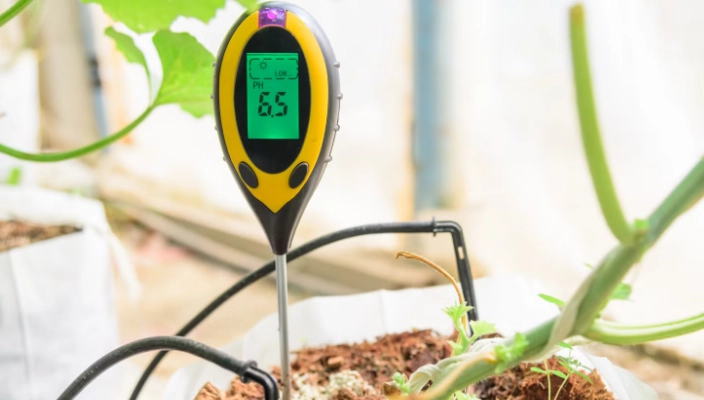
1. Prep the Soil and Your Meter
If the soil is super dry and pulled away from the edges of the pot, give it a very light surface watering first. This helps ensure good contact for the probe. Also, always wipe your probe clean with a dry cloth before and after each use. Dirt and residue buildup can mess with the readings.
2. Insert the Probe—The Right Way
This is the most important part. Don't just poke it in near the stem. Aim for the midpoint between the stem and the edge of the pot, and push it down slowly and straight to the depth of the root ball (usually about 2/3 to 3/4 the height of the pot). If you hit heavy resistance from a root, pull it out and try a slightly different spot. Forcing it can damage both the root and your probe.
Go deep. Surface readings are meaningless.
3. Wait and Read
Leave the probe in place for 30-60 seconds to let the reading stabilize. The dial or numbers will settle. For meters with a scale (like 1-10), what do the numbers mean?
- 1-3 (Dry/Red Zone): Time to water for most plants.
- 4-7 (Moist/Green Zone): The sweet spot. Most plants are happy here. Don't water yet.
- 8-10 (Wet/Blue Zone): Soggy. Do not water. For many plants, this is the danger zone.
But here's the critical thing: These numbers are not universal. A succulent wants to hit 1-2 before watering. A peace lily might be happy getting watered at 4. You need to learn your specific plant's preference, which leads us to...
4. Interpret for Your Specific Plant
The meter gives you data, not a command. Your job is to apply it. A fern and a cactus in the same room will have wildly different "ideal" meter readings. Research your plant's needs. A great resource for understanding plant-specific watering needs is the University of Minnesota Extension's guide on watering houseplants. It provides excellent, science-backed principles that pair perfectly with meter data.
Keep notes at first. "Watered my pothos when meter read 3. It perked up. Next time, I'll wait until it hits 2." This turns the soil moisture meter from a gadget into a true learning tool.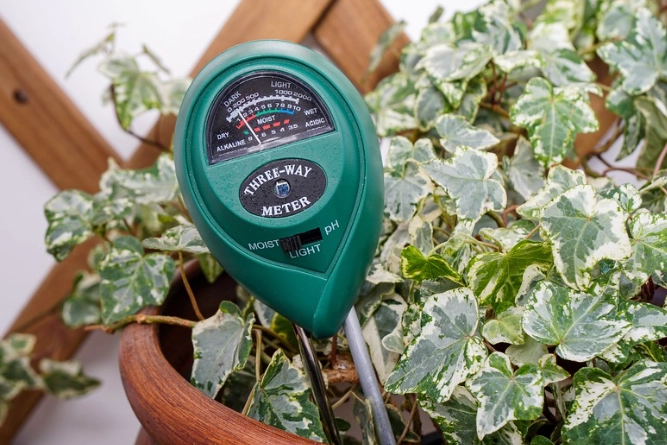
Top Features to Look For (And Red Flags to Avoid)
Walking down the garden center aisle or scrolling online, here’s what should grab your attention—and what should make you click away.
- A Long, Sturdy Probe: At least 6 inches, made of sturdy, corrosion-resistant metal.
- Clear, Easy-to-Read Display: Analog dials should have clear color zones. Digital ones should have a bright, legible screen.
- No Batteries Required (for analog): One less thing to worry about.
- Simple Calibration: Some better digital models let you calibrate in dry and wet soil for improved accuracy.
- A Protective Case/Cap: Keeps the probe clean when not in use.
- Super Short, Thin Probes: They're toys, not tools.
- Excessively Fancy Packaging Promising "Miracle" Results: It's a sensor, not a sorcerer.
- Meters That Claim to Be "Self-Watering": This is a different product (an aquameter or watering spike) and is often unreliable.
- Extremely Low Price Point from Unknown Brands: You often get inconsistent, inaccurate sensors.
- No Instructions or Vague Scales: If you can't understand what it's telling you, it's useless.
My Personal Experience with Different Brands
I've tested a bunch over the years. I won't name and shame the terrible ones, but I will highlight a couple of types that have earned a permanent spot in my plant care kit.
The XLUX T10 is the classic analog model you see everywhere for a reason. It's cheap, reliable for basic readings, and has no batteries. It's my go-to for a quick check on my collection. The probe is a decent length. It's not fancy, but it works.
For digital, I've had good luck with the Sonkir 3-in-1 (MS02) style meter. The moisture and light functions are solid. The pH function, as mentioned, is a rough guide at best. The display is clear, and it feels sturdy in hand.
On the higher end, I trialed a Koubachi Wi-Fi Plant Sensor for a season. The data and app were fantastic—seeing a moisture graph over time taught me more about my plant's drinking habits than anything else. But the price tag is steep, and eventually, the sensor stopped connecting. For a tech-savvy person with a prized plant, it's a cool option, but it's not necessary for most.
The truth is, a mid-range digital meter will solve 95% of your watering problems.
Advanced Tips & Troubleshooting
Once you've got the basics down, these pro-level tips will make you a moisture meter master.
Calibrate Your Understanding for Soil Type
A meter will read differently in a chunky, airy aroid mix versus a dense, peaty soil, even if the actual water available to roots is similar. In fast-draining mixes, you might need to water when the meter reads a bit higher (like 4) because the roots dry out faster. In dense soil, wait for a lower reading (like 2) to be sure the center isn't still wet. The University of Vermont's soil science resources explain how soil texture affects water retention, which is key context for your meter readings.
Take Multiple Readings
For large pots, don't trust just one spot. Take a reading near the edge and one closer to the center. Sometimes water pools in the middle, or the edges dry out first. An average gives you the true picture.
What If the Reading Seems Wrong?
If your meter is stuck on one number or giving crazy readings:
- Clean the Probe Thoroughly: Use a scouring pad on the metal if needed.
- Check for Battery (digital): A dying battery gives funky readings.
- Test in Extremes: Stick it in a cup of dry rice (should read min/dry) and then in a glass of water (should read max/wet). If it doesn't respond, it's dead.
- Avoid Touching the Probe with Your Hands while taking a reading, as skin moisture can affect it.
Common Questions & Misconceptions (FAQ)
The Bottom Line: Is a Plant Moisture Meter Worth It?
If you have more than a couple of plants, or if you've ever lost a plant to over or under-watering, the answer is a resounding yes. A decent plant moisture meter costs less than replacing one medium-sized houseplant. It pays for itself in saved plant lives and reduced anxiety.
It won't do the thinking for you—you still need to know your plant's preferences—but it gives you the crucial information you need to make the right call. It turns watering from an art based on hope into a science based on data.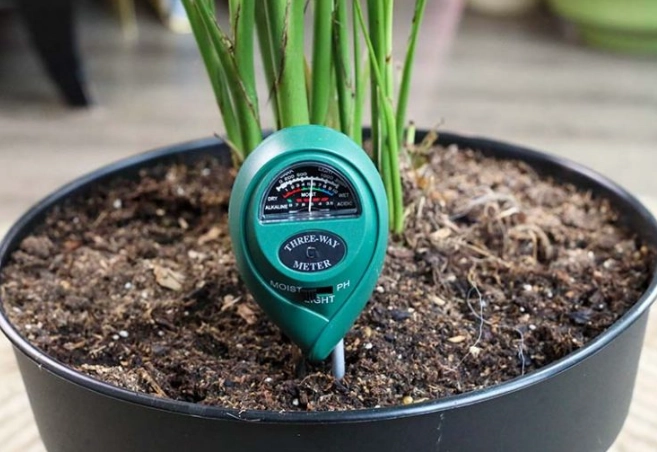
Start with a reliable, mid-priced digital probe meter. Learn to use it correctly. Pair its readings with your growing knowledge of each plant. You'll find your watering schedule becomes more efficient, your plants become healthier, and that constant worry of "do they need water?" simply fades away. You'll stop guessing, and finally start knowing.
And trust me, your plants will thank you for it.
Reader Comments