Your Floral Journey Map
- Getting Started: The Non-Negotiable Basics
- The Art and Science of Actually Arranging Flowers
- Design Principles That Aren't Just Jargon
- Popular Flower Arrangement Styles You Can Try at Home
- Keeping Your Masterpiece Alive: Care Secrets
- Answering Your Flower Arrangement Questions (FAQs)
- Taking It Further: Resources and Inspiration
Let's be honest. You've probably brought home a beautiful bunch of flowers from the store, plopped them in a vase with some water, and called it a day. A week later, you're throwing out a sad, droopy mess. I've been there too. The gap between a grocery store bouquet and those stunning, magazine-worthy flower arrangements can feel huge. But what if I told you it doesn't have to be? What if creating a gorgeous centerpiece or a heartfelt gift bouquet was more about knowing a few simple tricks than having some innate artistic talent you're sure you lack?
This guide is for anyone who loves flowers but feels a bit lost when it comes to arranging them. We're not aiming for Chelsea Flower Show level on day one. We're aiming for "Wow, you did that?" from your friends and family. We'll walk through everything, step by messy step. I'll even share some mistakes I made along the way (trust me, there were plenty).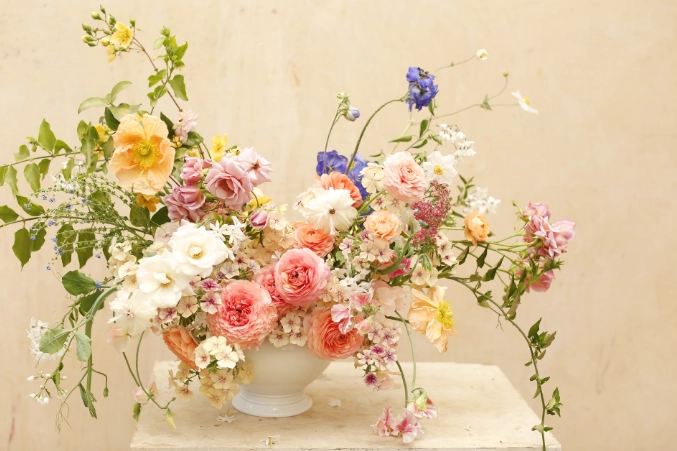
Getting Started: The Non-Negotiable Basics
Before you even touch a flower, let's talk gear. You don't need a professional florist's toolkit, but a few key items make the process infinitely easier and your results infinitely better. Skipping this step is like trying to cook a gourmet meal with a dull knife and a cold pan—frustrating and doomed to mediocrity.
Essential Tools You Actually Need
A sharp pair of floral shears or sharp scissors is number one. Clean cuts help flowers drink water. Kitchen scissors mash the stems. You can find decent ones online for the price of a coffee.
Floral tape (that sticky green tape) is a secret weapon. It creates a grid over the mouth of your vase to hold stems in place. Game changer for beginners. Floral foam (oasis) is great for more structured designs, but it's not eco-friendly and can be tricky. Let's master vases first.
Your vase matters more than you think. The height and shape dictate your arrangement. A common mistake is using a vase that's too tall or too short. A good rule of thumb? Your vase should be about one-third to one-half the height of your desired finished arrangement. And clean it with soapy water between uses! Bacteria is the enemy of longevity.
Choosing Your Flowers: A Realistic Approach
Walk into a flower shop or market, and it's easy to get overwhelmed. Do you go for the bold sunflowers or the delicate lilies? Here's a practical framework.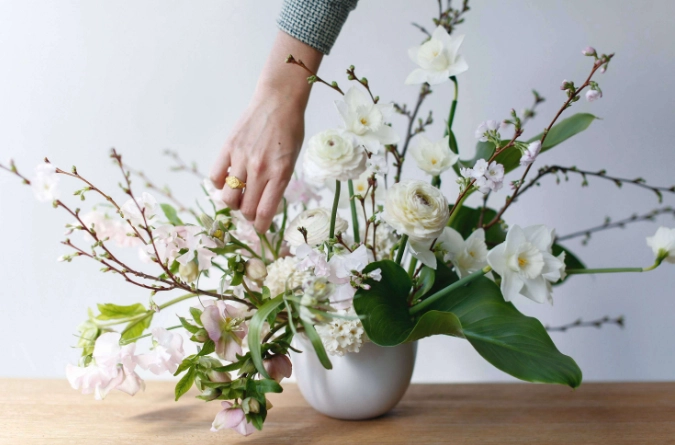
Think of your flowers in three roles: Focal Flowers, Filler Flowers, and Greenery. Focal flowers are your stars—big, bold blooms like roses, lilies, or peonies. Fillers are the supporting cast—smaller clusters like baby's breath, waxflower, or spray roses. Greenery is your foundation—eucalyptus, leather leaf fern, salal. It adds volume, texture, and makes everything look more natural and lush.
For your first few flower arrangements, try a simple formula: one type of focal flower, one type of filler, and one type of greenery. It simplifies decision-making and almost always looks cohesive. I remember trying to use five different focal flowers in one vase. It looked chaotic, like each flower was fighting for attention.
| Flower Role | Examples | Pro Tip |
|---|---|---|
| Focal (The Star) | Roses, Lilies, Sunflowers, Dahlias, Peonies, Hydrangeas | Odd numbers (3, 5, 7) often look more natural than even. |
| Filler (The Support) | Baby's Breath, Waxflower, Statice, Solidago, Spray Carnations | Use to cover mechanics (like vase edges or tape) and add texture. |
| Greenery (The Foundation) | Eucalyptus, Ruscus, Ferns, Ivy, Lemon Leaf | Start with greenery to build a shape and "frame" for your flowers. |
Where you buy matters. Grocery stores are convenient, but flowers are often older. A local florist, farmers' market, or even a dedicated online flower delivery service (like those sourcing from farms) will have fresher, longer-lasting stock. Look for firm petals, strong green stems, and buds that are just beginning to open, not tight green buds or fully blown blooms.
The Art and Science of Actually Arranging Flowers
Okay, you've got your flowers, your vase is clean, and your shears are sharp. Now what? This is where people freeze. Do you put the big flowers in first? The greenery? Let's break the process down into a relaxed, repeatable sequence.
Step-by-Step: Building Your Arrangement
1. Prep Everything. Fill your vase with lukewarm water and flower food (the little packet that comes with bouquets is worth using—it has sugar for food, acid to balance pH, and a biocide to fight bacteria). Strip any leaves that will fall below the waterline. This is boring but critical. Leaves in water rot and breed bacteria, shortening the life of your entire arrangement. Cut each stem at a 45-degree angle under running water or in a bowl of water. This prevents an air bubble from blocking the stem and increases the surface area for drinking.
2. Create a Grid. Take your floral tape and make a hashtag (#) pattern over the mouth of your vase. The squares should be about an inch wide. This gives each stem a specific slot to sit in and prevents them all sliding into a clump in the middle. If you don't have tape, criss-crossing clear Scotch tape can work in a pinch, but it's less sturdy.
3. Start with Greenery. This builds your shape. Insert stems of greenery around the outer edges of the vase, aiming for a loose, asymmetric shape—think of a crescent moon or a gentle slope, not a perfect ball. Let some stems arch out, others be shorter. This creates the "frame" you'll fill in.
4. Place Your Focal Flowers. Add your main blooms. Distribute them unevenly through the arrangement, following the shape set by your greenery. Don't put them all at the same height. Have one or two slightly higher as a peak, and others lower. Turn the vase as you work to see it from all angles. The grid tape will hold them exactly where you want them.
5. Weave in the Fillers. Use your smaller filler flowers to fill gaps, cover the tape or vase rim, and add pops of color and texture between the larger blooms. They act as connectors, making the whole piece feel cohesive.
6. The Final Spin and Tweak. Step back. Look from across the room. Spin the vase. Is it too heavy on one side? Is there a glaring hole? Now is the time to add one more sprig of filler or adjust a leaning stem. Don't over-fuss. Often, a slightly wild, imperfect look is more charming than rigid perfection.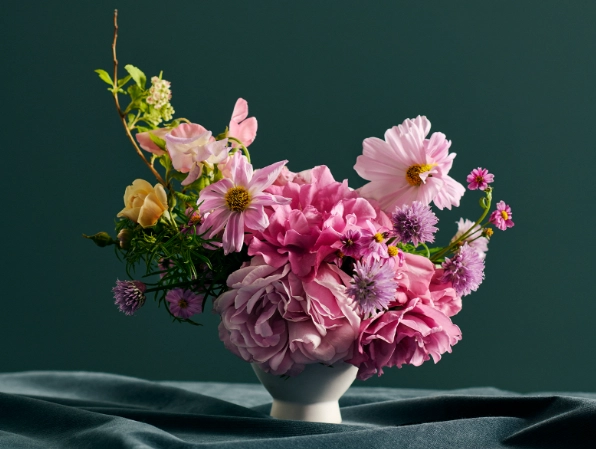
Design Principles That Aren't Just Jargon
Terms like "balance" and "color theory" can sound intimidating, but they're just fancy words for "what looks good to your eye." Let's demystify them.
Color: Your Biggest Impact Tool
Color sets the mood. You don't need a degree in art. Use a simple color wheel concept. Monochromatic schemes use different shades of one color (all pinks, from blush to fuchsia). It's elegant and foolproof. Analogous schemes use colors next to each other on the wheel (yellow, lime green, and orange). It's harmonious and vibrant. Complementary schemes use opposites (purple and yellow, blue and orange). It's bold and dramatic, but can be tricky—balance is key so it doesn't look garish.
Consider the occasion. Soft pastels for a baby shower, bright and cheerful for a birthday, deep reds and purples for a dramatic dinner party. White and green arrangements are always classic and chic.
Shape, Texture, and Scale
Beyond color, mixing shapes and textures creates depth. Pair round peonies with spiky snapdragons and feathery astilbe. Combine glossy leaves with fuzzy lambs ear. This variety keeps the eye moving and makes the arrangement feel rich and considered.
Scale is about proportion. A tiny bud vase with one massive sunflower looks awkward. A huge floor vase with a few delicate stems gets lost. Your flowers, vase, and the space where it will live need to be in conversation with each other.
Popular Flower Arrangement Styles You Can Try at Home
Once you're comfortable with the basics, it's fun to play with different styles. These aren't hard rules, but helpful starting points.
The Garden-Style Arrangement
This is my personal favorite. It mimics how flowers grow in a garden—loose, abundant, and slightly wild. The key is asymmetry and a variety of blooms at different heights and stages (buds, half-open, full). It should look like you just gathered an armful from your yard. Use lots of greenery that spills over the edges. This style is forgiving because perfection isn't the goal; natural charm is.
The Modern Minimalist
Clean lines, negative space, and a limited palette. Think one type of striking flower (like three proteas or a bunch of calla lilies) in a simple, geometric vase. Or a few branches with blossoms. Every element is intentional. This is harder than it looks because there's nowhere to hide a mistake.
The Classic Centerpiece
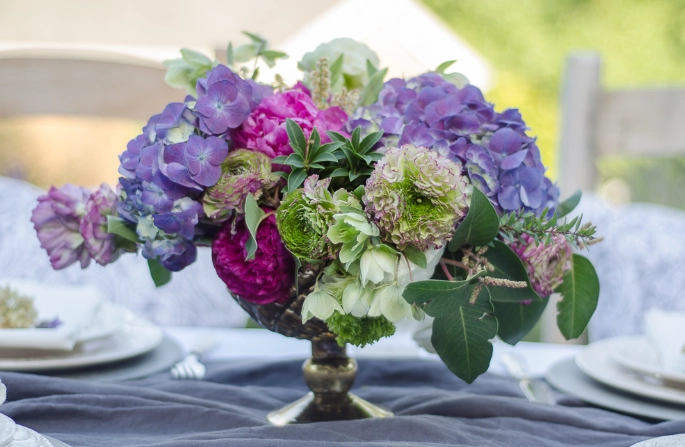
Designed to be viewed from all sides, usually lower and wider so people can see over it at a dinner table. Often round or oval in shape. The height is crucial—usually no more than 12-14 inches tall so it doesn't block sightlines. Using a low, wide bowl or compote vase works best here.
Creating flower arrangement ideas for your own home means thinking about the room. A tall, dramatic piece for an entryway, a low, fragrant one for a coffee table, a cheerful bunch for the kitchen windowsill.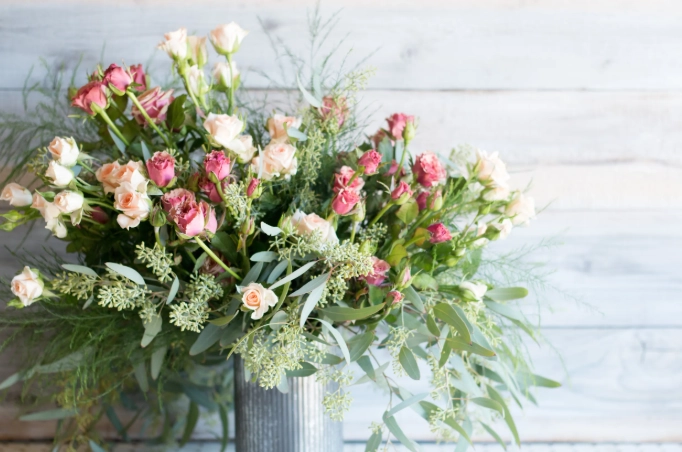
Keeping Your Masterpiece Alive: Care Secrets
You've spent time creating a beautiful arrangement. Now let's make it last. Proper care can often double the vase life of your flowers.
Water is Life. Check the water level daily. Flowers drink a lot in the first day or two. Top it up with fresh water. Every two to three days, change the water completely. Don't just top it off. Dump it out, rinse the vase to remove slime, re-cut the stems (another 45-degree cut, just a half-inch off), and add fresh water and food.
Location, Location, Location. Keep your arrangement away from direct sunlight, heating/cooling vents, ceiling fans, and ripening fruit (fruit emits ethylene gas, a plant hormone that accelerates aging). A cool spot in the room is ideal.
The Trimming and Cleaning Ritual. As flowers fade, remove them promptly. A dead rose can emit ethylene and make others die faster. It also just looks bad. Snip it out. If you notice a stem getting slimy, remove it and rinse the others.
For more detailed, science-backed advice on extending the life of cut flowers, resources from institutions like the University of Minnesota Extension provide excellent, research-based tips on post-harvest care that go beyond old wives' tales.
 Think of flower care like having a pet fish. Clean water is non-negotiable.
Answering Your Flower Arrangement Questions (FAQs)
Taking It Further: Resources and Inspiration
Feeling inspired? The world of floral design is deep and wonderful. For those who want to dive deeper, I recommend looking at the work of professional floral associations. The American Institute of Floral Culture (AIFC), while a membership organization, often shares foundational principles and history that can deepen your appreciation. Similarly, the Society of American Florists (SAF) is a key industry body that provides insights into trends and professional practices.
For sheer inspiration, don't just look at modern florists on Instagram. Visit botanical gardens, look at classic Dutch still life paintings, or even study the way plants are arranged in nature. The best flower arrangements often echo the effortless beauty of the natural world.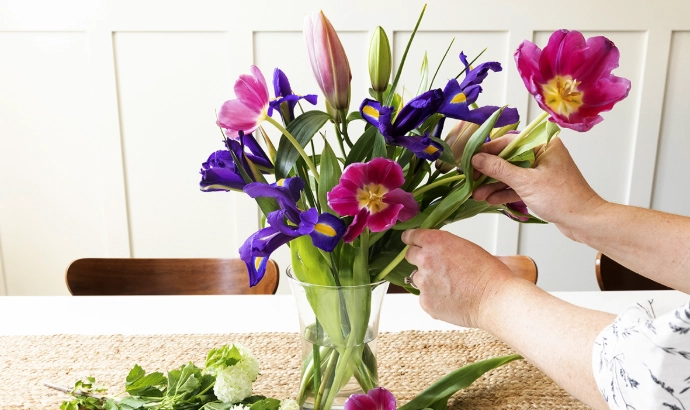
Remember, the goal isn't perfection. It's expression, enjoyment, and bringing a little more beauty into your daily life. Every time you practice how to arrange flowers, you'll learn something new. You'll develop a feel for what works. Maybe you'll discover you love the drama of dark flowers, or the serenity of all-white palettes.
So go buy some flowers. Don't overthink it. Grab a bunch that makes you smile, follow these steps, and see what happens. The worst that can happen is you get to enjoy some beautiful blooms for a week. The best that can happen is you discover a relaxing, creative hobby that fills your home with life and color. And really, that's not a bad outcome at all.
Reader Comments