I messed up my first asparagus bed. Planted the crowns too shallow, watered like it was lettuce, and wondered why nothing came up. After a decade of trial and error, I've learned that sowing asparagus isn't hard, but it demands a shift in mindset. This isn't a quick crop—it's a long-term investment. Get it right, and you'll harvest spears for 20 years or more. Let's cut through the noise and dive into the nitty-gritty.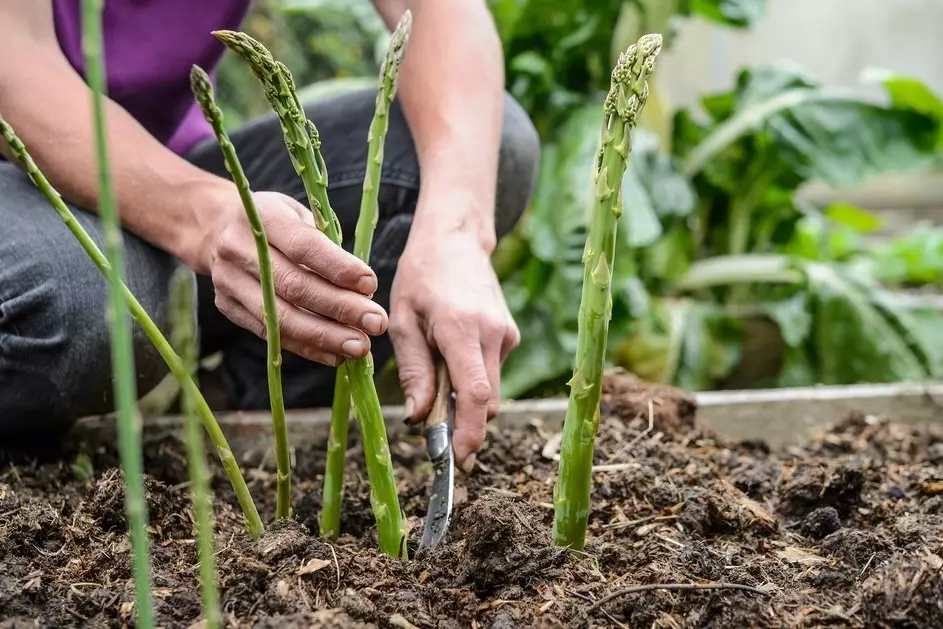
What You'll Learn in This Guide
- Why Bother with Asparagus? The Good and the Annoying
- Picking Your Asparagus: Seeds vs. Crowns and Varieties That Work
- When to Sow Asparagus: Timing Isn't Just a Suggestion
- Soil Preparation: The Make-or-Break Step Everyone Skimps On
- Step-by-Step: How to Sow Asparagus Seeds and Plant Crowns
- Caring for Asparagus Plants: Water, Weeds, and Waiting
- Common Mistakes I've Seen (And Made) When Sowing Asparagus
- Harvesting Asparagus: Why Patience Is Your Best Tool
- Your Burning Questions Answered
Why Bother with Asparagus? The Good and the Annoying
Asparagus is a perennial vegetable. Once established, it comes back year after year. That's the big sell. You plant it once, and with minimal fuss, you get fresh spears every spring. But here's the catch: it takes patience. You shouldn't harvest anything in the first two years. I know, that's a tough pill to swallow for eager gardeners.
The rewards? Homegrown asparagus tastes nothing like store-bought. It's sweeter, tender, and you can pick it at peak freshness. Plus, it's low-maintenance after the initial setup. On the flip side, it needs space—a dedicated bed that you can't rotate easily. And if you get the soil wrong, you'll struggle. According to the University of California Cooperative Extension, asparagus thrives in well-drained soil with a pH of 6.5 to 7.5. Ignore that, and you're setting yourself up for failure.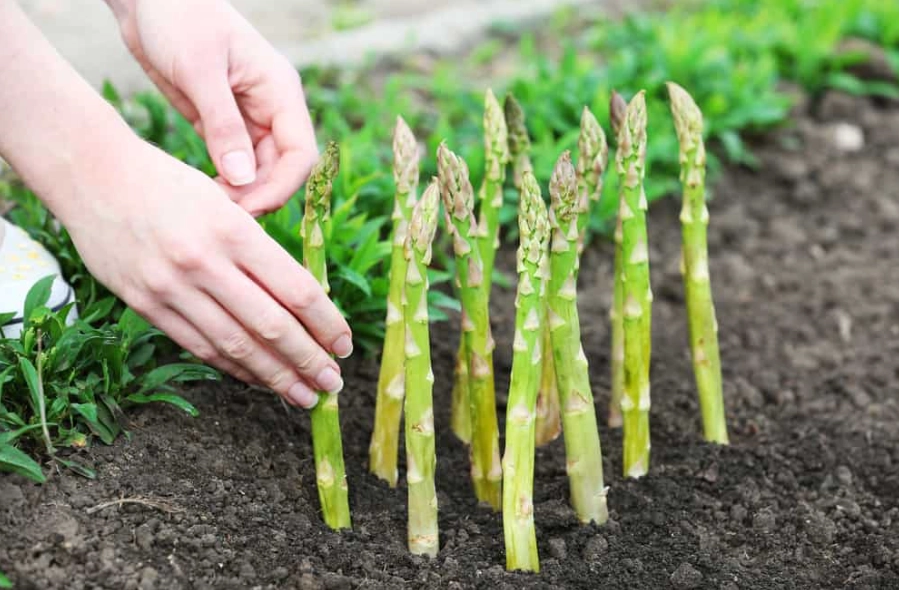
Picking Your Asparagus: Seeds vs. Crowns and Varieties That Work
Most people buy crowns—those gnarly, dormant roots. It's faster. But sowing asparagus from seeds is cheaper and lets you choose from more varieties. I've done both. Seeds take an extra year to establish, but they often produce stronger plants in the long run.
Seeds: Cost less, more variety options, slower start (add 1 year). Good for patient gardeners or large plots.
Crowns: More expensive, limited varieties, faster establishment. Ideal for small gardens or if you want harvest sooner.
Popular varieties? 'Jersey Knight' is my go-to—it's male, so no energy wasted on seeds, and it's disease-resistant. 'Purple Passion' has colorful spears but yields less. 'Mary Washington' is an old standby, but it can be hit-or-miss with rust disease. Check local nurseries or seed catalogs; regional adaptation matters.
When to Sow Asparagus: Timing Isn't Just a Suggestion
Timing is critical. Sow too early, and frost kills young shoots. Too late, and plants don't establish before heat stress. For seeds, start indoors 8-10 weeks before the last spring frost. Use a seed-starting mix and keep temperatures around 70°F. I've found that asparagus seeds germinate slowly—up to three weeks. Don't panic if nothing happens right away.
For crowns, plant in early spring when soil is workable. Soil temperature should be at least 50°F. In most temperate zones, this is March to April. If you're in a warm climate like USDA zone 8 or above, fall planting might work, but I'd stick to spring to avoid winter rot. The Old Farmer's Almanac has good regional calendars, but trust your soil thermometer over generic dates.
Soil Preparation: The Make-or-Break Step Everyone Skimps On
This is where most beginners fail. Asparagus needs deep, loose, fertile soil. I can't stress this enough. Don't just dig a hole and toss in a crown. Prepare the entire bed.
Start by testing your soil pH. A simple kit from a garden center works. Aim for 6.5 to 7.5. If it's too acidic, add lime; too alkaline, add sulfur. Then, dig a trench or broad bed about 12 inches deep. Mix in plenty of organic matter—compost or well-rotted manure. I use about 4 inches of compost worked into the bottom. Avoid fresh manure; it can burn roots.
Drainage is key. If your soil is clay-heavy, consider raising the bed. Asparagus roots rot in waterlogged conditions. A study from Cornell University highlights that poor drainage is a top reason for asparagus decline. So, if you have heavy soil, add sand or grit to improve texture.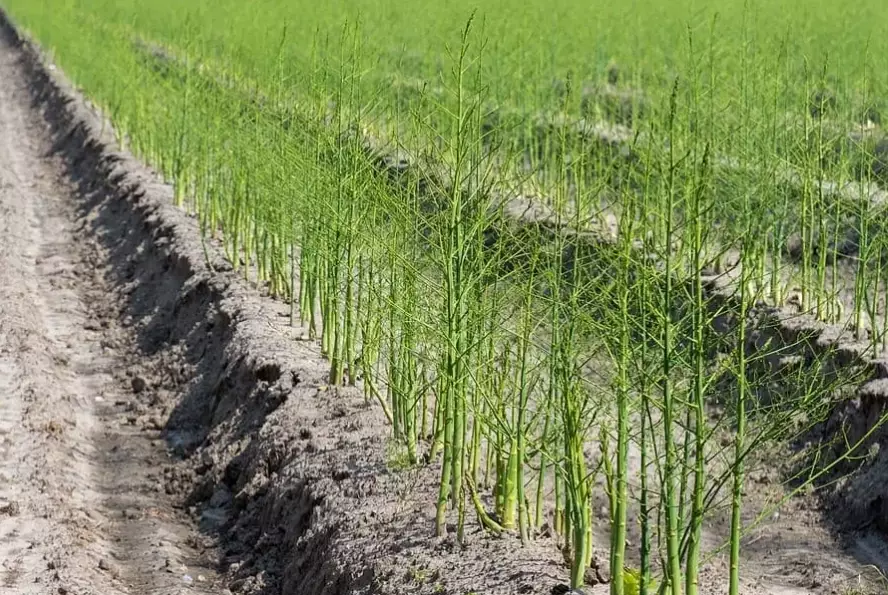
Step-by-Step: How to Sow Asparagus Seeds and Plant Crowns
If Sowing Asparagus Seeds
Start seeds indoors in late winter. Fill trays with seed compost, sow seeds ¼ inch deep, and water lightly. Cover with a plastic dome to retain moisture. Keep at 70-75°F. Once seedlings emerge, remove the dome and place under grow lights or a sunny window. Transplant outdoors after the last frost, spacing 12 inches apart.
If Planting Asparagus Crowns
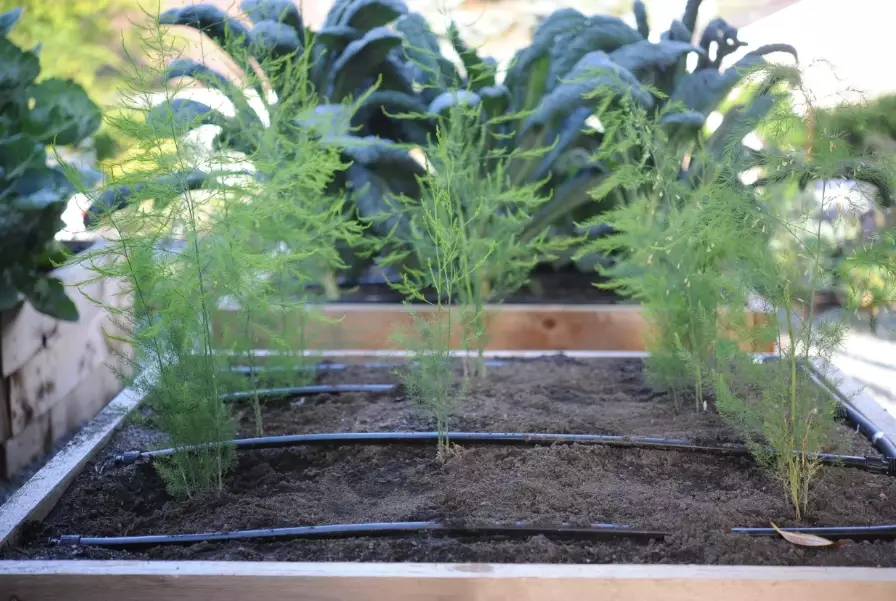
Dig trenches 6-8 inches deep and 12 inches wide. Space crowns 12-18 inches apart in rows 3-4 feet apart. Spread roots out in the trench, cover with 2 inches of soil, and water well. As shoots grow, gradually fill in the trench with soil until level.
| Step | Details |
|---|---|
| 1. Prepare Bed | Dig trench 12 inches deep, mix in compost |
| 2. Plant Crowns | Place crowns root-side down, cover with 2 inches soil |
| 3. Water | Water deeply to settle roots |
| 4. Fill Trench | Gradually add soil as shoots grow |
Caring for Asparagus Plants: Water, Weeds, and Waiting
Water consistently but don't overdo it. Asparagus needs about 1 inch of water per week. Mulch with straw or compost to retain moisture and suppress weeds. Weeds are the biggest enemy—hand-pull regularly to avoid competition.
Fertilize in spring with a balanced fertilizer or compost tea. Avoid high-nitrogen fertilizers; they promote foliage over spears. In fall, cut back ferny foliage after it turns yellow to prevent disease. Some gardeners leave it for winter insulation, but I remove it to reduce pest habitat.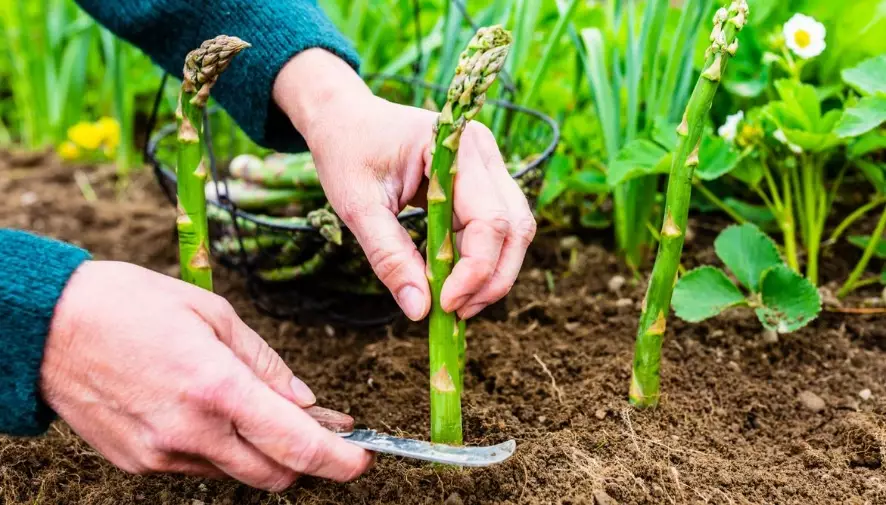
Common Mistakes I've Seen (And Made) When Sowing Asparagus
- Planting too deep or shallow: Crowns should be 6-8 inches deep initially.
- Overharvesting early: Resist the urge—wait until year three for a full harvest.
- Ignoring soil pH: Test and adjust to avoid nutrient lockout.
- Poor weed control: Weeds compete for nutrients; stay vigilant.
Harvesting Asparagus: Why Patience Is Your Best Tool
In year one, don't harvest at all. Let plants establish. Year two, you can pick a few spears over 2-3 weeks. Year three, harvest for 4-6 weeks. Stop when spears become thin—this signals the plant needs energy for next year.
Use a sharp knife to cut spears at ground level. Snap harvesting can damage crowns. Store harvested asparagus in the fridge for up to a week, but it's best eaten fresh.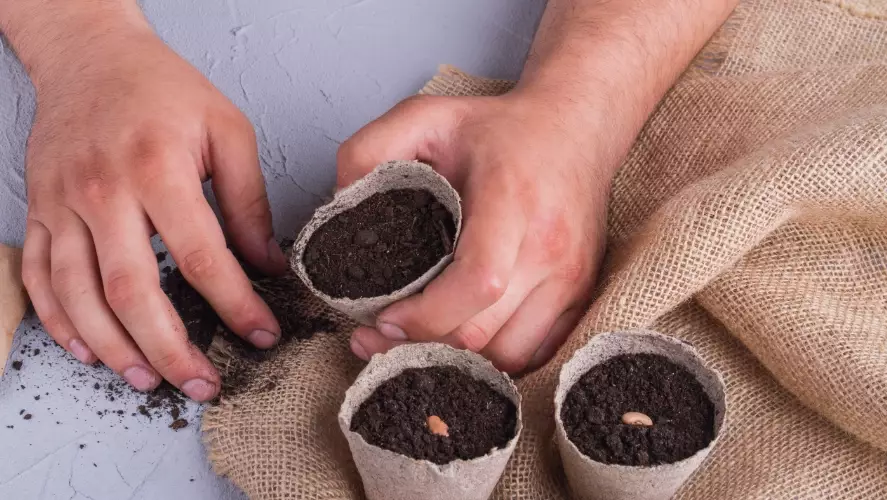
Your Burning Questions Answered
 How deep and far apart should I plant asparagus crowns?
Reader Comments