Let's be honest. You've probably tried growing basil before. You brought home a lush little pot from the store, put it on the windowsill, watered it when you remembered, and watched it slowly turn into a sad, leggy stick with a few yellowing leaves at the top. I've been there. My first basil plant died a slow death because I treated it like a cactus. The truth is, basil isn't hard to grow, but it has very specific, non-negotiable needs if you want those aromatic, flavorful leaves for your caprese salad or pesto.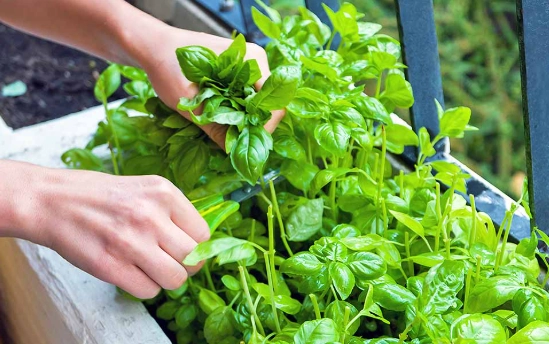
Good basil care isn't about complex rituals. It's about understanding what this sun-loving, thirsty, fast-growing herb craves. Get a few fundamentals right, and you'll have more basil than you know what to with. Get them wrong, and well, you know how that story ends.
Your Basil Growing Roadmap
Sunlight: The Non-Negotiable Foundation
This is where most indoor attempts fail. Basil is a Mediterranean herb. It evolved under the intense sun of Italy, Greece, and Southeast Asia. It doesn't just like sun; it needs it to manufacture the essential oils that give it flavor and to grow sturdy, not spindly.
Outdoors: Find the sunniest spot in your garden or on your balcony. We're talking a minimum of 6 hours of direct sunlight. 8 is better. Morning sun is gentler, but afternoon sun is more intense. If you have a choice between a spot with 4 hours of sun and a spot with 7, always choose the 7-hour spot, even if it means moving a patio chair.
Indoors: Here's the brutal truth. A north-facing windowsill is a death sentence. An east or west-facing window might keep it alive, but not thriving. A south-facing window is your best bet, but even that can be weak in winter. I learned this the hard way one November. My south-facing window basil became pale and stretched, desperately reaching for light that just wasn't strong enough.
If you're serious about indoor basil, especially year-round, a grow light isn't an optional accessory; it's a requirement. A simple LED panel or bulb, placed 6-12 inches above the plant and left on for 12-14 hours a day, mimics the sun perfectly. The difference is night and day. The plant stays compact, the leaves are dark green and packed with flavor.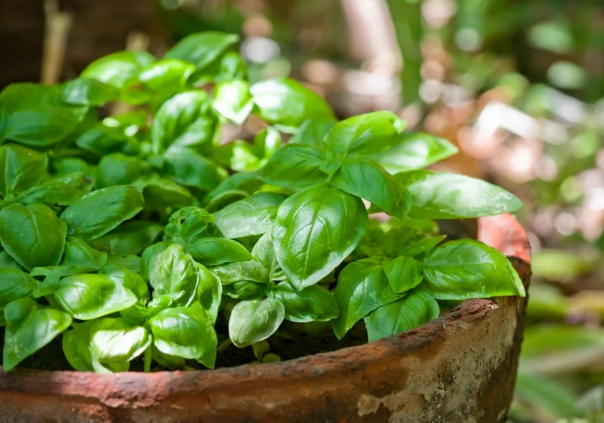
Watering: An Art, Not a Science
The second biggest basil killer, right after poor light, is our love (or neglect) with the watering can. Basil likes consistently moist soil, but "moist" does not mean "soggy." Its roots need oxygen as much as they need water.
Forget watering on a schedule like "every Tuesday." The needs of a basil plant in a small terracotta pot on a hot, windy balcony are completely different from one in a large plastic pot in dappled shade.
Here's the only method you need: The Finger Test.
Stick your index finger into the soil, down to about your first knuckle (roughly an inch). What does it feel like?
- Dry and crumbly? Time to water. Water slowly and thoroughly at the base of the plant until you see water freely running out of the drainage holes at the bottom. This ensures the entire root ball gets hydrated.
- Cool and damp? Walk away. Do not water. Check again tomorrow.
In peak summer heat, you might be doing this daily. In cooler spring or fall weather, maybe every 2-3 days. The plant will tell you. Wilting leaves in the afternoon sun often mean it's thirsty, but if it's wilting in the morning with wet soil, you've likely overwatered and caused root rot.
Soil, Food, and the Right Container
Basil isn't super picky about soil, but it won't tolerate heavy, waterlogged garden dirt. For containers, always use a high-quality potting mix, not garden soil. Potting mix is formulated to be light, fluffy, and well-draining. Look for mixes labeled for vegetables or herbs; they often have a bit of compost or fertilizer already mixed in.
Now, about food. Basil is a fast grower, which makes it a hungry plant. It guzzles nutrients, especially nitrogen, to produce all those lush green leaves. If you don't feed it, growth slows, leaves get smaller, and they lose their deep green color.
A simple rule: Start feeding about 4 weeks after planting (or bringing it home). Use a balanced, water-soluble fertilizer (look for an N-P-K ratio like 10-10-10 or 5-5-5) every 2-3 weeks during the active growing season (spring through summer). Halve the strength recommended on the bottle. It's better to under-feed slightly than to over-fertilize, which can burn roots and affect flavor.
The Pot: Drainage holes are non-negotiable. No holes, no basil. Terracotta pots are great because they are porous and help soil dry more evenly, preventing overwatering. Plastic pots retain moisture longer, which can be helpful in very hot climates. Size matters. A 10-12 inch diameter pot is a good start for one plant. Too small, and it dries out too fast and gets root-bound.
Pruning: Your Secret Weapon for Bushiness
This is the fun part and the step most beginners are scared of. We hate cutting our plants. It feels wrong. But with basil, cutting is an act of love. It's how you turn a single, tall, wobbly stem into a dense, bushy, leaf-producing machine.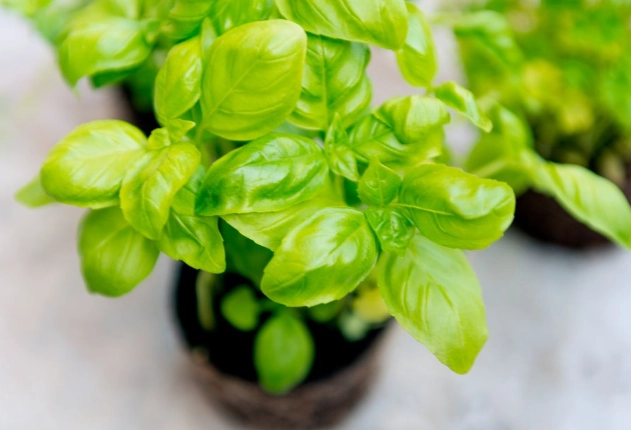
Basil grows from a central tip. If you let that tip keep growing, the plant gets taller and focuses energy on making flowers (which makes the leaves taste bitter). If you remove that tip, the plant panics and sends out two new branches from the leaf nodes just below the cut. You've just doubled your potential harvest points.
When to start: When your plant has about 3-4 sets of true leaves (not the first tiny seed leaves).
How to do it: Find the very top set of small leaves. Just above that, you'll see two tiny little leaves or bumps on the stem (these are the lateral buds). Using clean scissors or your fingernails, snip the main stem just above those tiny buds. Don't be shy.
Those two buds will now grow into two new branches. Once those branches have grown 2-3 sets of leaves, repeat the process. Pinch the tips off of them. Now you have four branches. Keep this cycle going. Every time you want to harvest for the kitchen, you're also pruning. Always cut just above a set of leaves.
And about those flowers—the moment you see a flower bud forming, pinch it off immediately. The goal is leaves, not seeds.
Troubleshooting Common Basil Problems
Even with perfect care, things can go sideways. Here’s a quick decoder ring for what your basil is trying to tell you.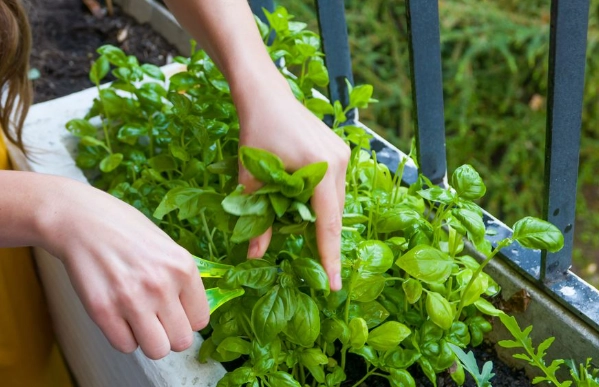
Yellow Leaves
Usually overwatering or poor drainage. Check your soil moisture with the finger test. Could also be a nitrogen deficiency—time for a light feed. Sometimes, it's just the older, lower leaves dying off naturally. Snip them to keep the plant tidy.
Black or Brown Spots on Leaves/Stems
This is often a fungal disease like Fusarium wilt or downy mildew, exacerbated by cool, wet conditions and poor air circulation. It's tough to cure. Remove affected leaves immediately, avoid overhead watering, and ensure good spacing between plants. Prevention (good light, airflow, dry leaves) is key.
Holes in Leaves
You've got visitors. Likely caterpillars (like the tomato hornworm, which also loves basil) or slugs/snails. Inspect the undersides of leaves. Pick off caterpillars. For slugs, beer traps or diatomaceous earth around the base can help.
Leggy, Stretched Growth
This is 99% a light issue. The plant is stretching desperately to find more sun. Move it to a brighter location or introduce a grow light.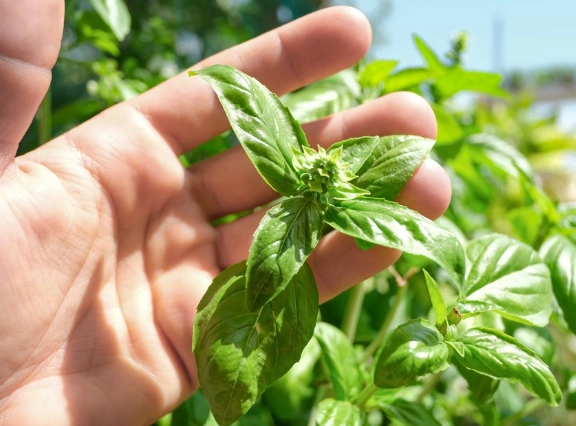
The Overwintering Experiment (Is It Worth It?)
Can you keep a basil plant alive indoors over the winter? Technically, yes. Should you? It depends on your patience.
Basil is an annual. It's genetically programmed to complete its life cycle (grow, flower, set seed, die) in one season. Trying to keep a large, mature outdoor plant alive indoors through winter is a battle against low light and dry air. It often results in a sad, struggling plant.
A more successful strategy is to take cuttings in late summer. Snip 4-inch long healthy tips, remove the lower leaves, and place them in a glass of water on a bright windowsill. In about 10 days, they'll grow roots. Pot them up, and you'll have young, vigorous plants to tend through winter. They won't be as prolific as summer basil, but you'll have fresh leaves.
Frankly, for most people, I think it's easier to let the outdoor plant die with the frost, save some seeds if you have an heirloom variety, and start fresh with new seeds or a nursery plant in spring. The new plant will be vigorous and happy.
Growing great basil boils down to a simple formula: Maximum Sun + Consistent (Not Constant) Moisture + Regular Pinching. Nail those three things, and you'll shift from struggling to keep a plant alive to wondering what to do with your massive basil harvest. Now go check your plant's soil with your finger. That's where it all starts.
Reader Comments