Quick Navigation
- Why a Two Bay System is the Composter's Secret Weapon
- Getting Started: What You Need to Know Before You Build
- Step-by-Step: Building Your Bin (The Way That Actually Works)
- How to Actually Use Your New Bin (The Real Secrets)
- Troubleshooting: Fixing Every Annoying Problem
- Your 2 Bay Pallet Compost Bin Questions, Answered
- Taking It Further: Advanced Tweaks & Ideas
Let's talk about compost bins. You've probably seen the fancy tumblers at the garden center, the sleek plastic ones, and maybe even thought about buying one. Then you see the price tag. Ouch.
But what if I told you there's a system that's cheaper (often free), more durable, and honestly, works better for serious composting? That's the two bay pallet compost bin. It's not the prettiest thing in the world, I'll give you that. My first one looked like a toddler's woodworking project. But after a few seasons of trial, error, and a ton of finished compost, I'm a total convert.
This guide isn't about theory. It's the stuff I wish I knew before I dragged my first pallet home. We'll cover why this design beats single bins, exactly how to build one that won't fall over, the nitty-gritty of using it, and how to fix every common problem. No fluff, just dirt.
Why a Two Bay System is the Composter's Secret Weapon
You might be wondering, why bother with two compartments? Can't I just have one big pile? You could, but you'll be waiting forever.
Think of it like this. Composting has stages. In the first bay, you're actively adding new stuff—kitchen scraps, grass clippings, that pile of weeds you just pulled. It's the "working" bay. It's fresh, it's cooking, and it needs turning and attention.
The second bay is for the magic to finish. Once your first bay is full, you stop adding to it and start filling the second one. The first pile then gets to just sit and decompose without new, cold material constantly chilling it down. This is where it transforms from a lumpy mass of scraps into that beautiful, crumbly, black gold.
A single bin forces you to either keep adding to a pile that's trying to finish, or stop composting for months while you wait. A 2 bay pallet compost bin gives you a continuous cycle. You always have a place for your scraps, and you always have compost finishing. It's simple, but it changes everything.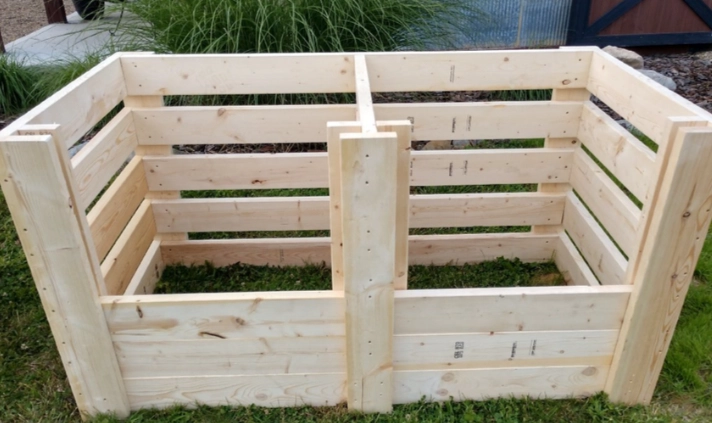
Getting Started: What You Need to Know Before You Build
Alright, let's get practical. The beauty of using pallets is that they're often free. Check behind grocery stores, hardware stores, or on community boards like Craigslist. But not all pallets are created equal.
The Great Pallet Debate: Safe vs. Sketchy Wood
This is crucial. You're going to be growing food in this compost. You don't want nasty chemicals leaching into it.
Look for pallets stamped with "HT." This stands for Heat-Treated. It means bugs and mold were killed with heat, not methyl bromide or other pesticides (those are stamped "MB"—avoid them like the plague). HT pallets are safe for gardening.
Also, avoid pallets that are stained dark, smell funny, or have obvious chemical spills. If it held industrial chemicals, it's not worth the risk. Stick to clean, dry, HT-stamped pallets.
Tools and Materials List (The Realistic One)
You don't need a workshop. Here's what I actually used:
- Pallets: 4-5 HT-stamped pallets in decent shape.
- Hammer: A basic claw hammer.
- Pry Bar/Cat's Paw: For carefully dismantling one pallet. Don't just smash it.
- Galvanized Nails or Deck Screws (3-4 inch): Screws are easier if you mess up, but nails are cheaper. I used screws for the main structure and nails for the front slats.
- Drill (optional but helpful): For pre-drilling if you use screws, especially in knotty wood.
- Wire Cutters & Galvanized Wire/Staples: To secure the sides if the pallets are wobbly.
- Work Gloves & Safety Glasses: Pallet wood is splintery. Trust me.
- Level (optional): Nice to have, but you can eyeball it.
- Hinges & Latches (optional): If you want fancy removable front slats.
See? Nothing crazy. You probably have half this stuff in your garage.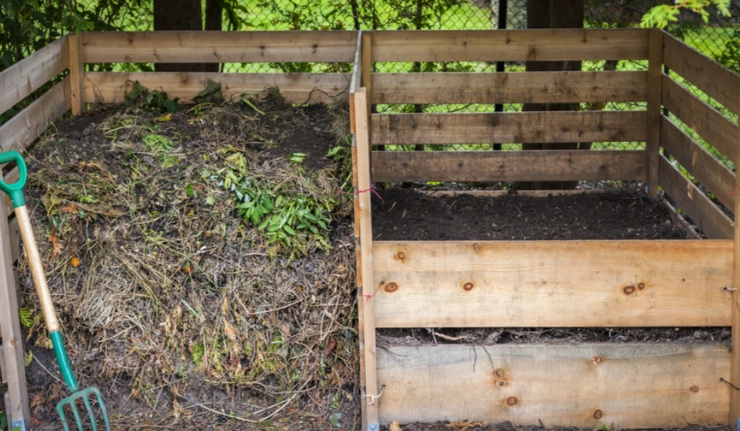
Step-by-Step: Building Your Bin (The Way That Actually Works)
Let's build. We'll go for a simple, sturdy design. Forget the Pinterest-perfect ones; we want functional.
Step 1: Pick the Perfect Spot
This matters more than you think. Put it somewhere:
- Convenient: Close to your kitchen door for easy scrap-dumping, especially in rain or snow.
- On Soil, Not Concrete: Worms and microbes need to migrate up from the ground. It also drains better.
- Part Sun/Part Shade: Full sun dries it out; full shade keeps it too cold. A bit of afternoon sun is perfect.
- With Room to Work: You need space to swing a pitchfork in front of it.
Step 2: Prep Your Pallets
Take one pallet and carefully dismantle it. Use the pry bar to gently lift the boards off the stringers (the 2x4s). Try to keep the boards intact. These will be your front slats and the divider between the two bays. Set aside the good stringers too—they're great for bracing.
Inspect your three remaining whole pallets. These are your walls. Choose the sturdiest, flattest one for the back.
Step 3: Assemble the Three-Sided Box
Lay your back pallet on the ground in your chosen spot. Position your two side pallets against its ends to form a U-shape. The open side is the front.
Now, secure them. This is where sturdiness happens. Nail or screw through the side pallets into the ends of the back pallet. Go at an angle if you can (toenailing) for a stronger hold. Use multiple fasteners at the top, middle, and bottom.
Stand the whole thing up. Does it wobble? If so, use pieces of your dismantled pallet stringers to make corner braces. Screw a diagonal piece from the top of a side wall to the bottom of the back wall. This makes it rock-solid.
Some people wire the pallets together. It works, but I find screws or nails with braces are more permanent.
Step 4: Install the Central Divider
This is what makes it a true 2 bay compost bin. Take a pallet stringer or a few sturdy boards from your dismantled pallet. Place it vertically in the center of your U, running from the back wall to the front opening. Secure it to the back pallet and the ground (a stake helps). This wall separates the two bays.
Make sure it's tall and secure enough to hold two separate piles.
Step 5: Create the Removable Front Slats
This is the clever part. You need access to turn the pile and harvest compost. Don't fix the front permanently.
Take the boards you salvaged. You have two options:
The Simple Slot Method: Nail two vertical stringers to the front corners of your side walls, creating a channel. Cut your front boards to fit snugly between them and just slide them down into the channels like a fence. To remove, just lift them up.
The Hinged Panel Method (My Preference): For each bay, create a panel by nailing 3-4 boards horizontally to two short vertical stringers. Then attach this whole panel to one side wall with hinges. It swings open like a door. It's a bit more work but so much easier to use, especially when you're wrestling with a full pile.
And that's it. Your basic, bomb-proof 2 bay pallet compost bin is ready. It might not win a beauty contest, but it will make fantastic compost for years.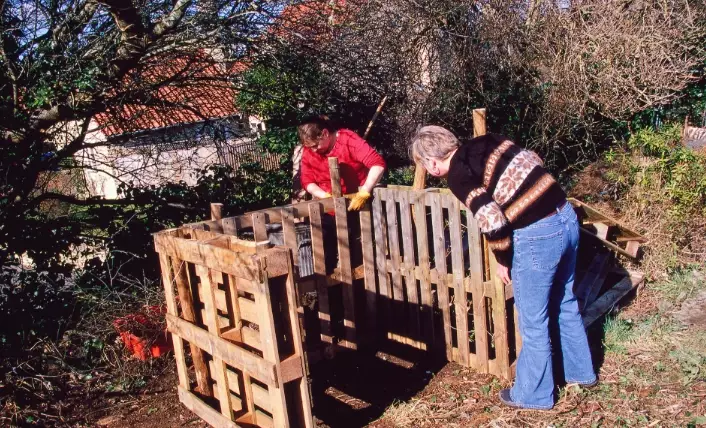
How to Actually Use Your New Bin (The Real Secrets)
Building it is half the battle. Using it right is the other half. A lot of guides gloss over this.
The "Green and Brown" Dance
You've heard it: mix greens (nitrogen-rich, wet stuff) and browns (carbon-rich, dry stuff). But what does that mean in practice?
| Greens (Nitrogen) | Browns (Carbon) | Avoid Completely |
|---|---|---|
| Fruit & veggie scraps | Dry leaves (crushed!) | Meat, fish, bones |
| Coffee grounds & filters | Cardboard (shredded) | Dairy products |
| Fresh grass clippings | Straw or hay | Fats, oils, grease |
| Garden weeds (no seeds!) | Sawdust (untreated wood) | Pet waste (cat/dog) |
| Eggshells (crushed) | Wood chips | Diseased plants |
The trick is the ratio. Aim for roughly 1 part green to 2 or 3 parts brown by volume. Too many greens and it becomes a smelly, slimy mess. Too many browns and it just sits there, dry and inactive.
My method? Keep a bag of dry leaves or a bale of straw next to the bin. Every time I dump a kitchen pail of greens, I toss in a couple handfuls of browns on top. It becomes a habit.
The Turning Schedule (It's Not That Strict)
Turning adds oxygen and speeds things up. But how often?
When the pile in your active bay is about 3 feet high, give it a good turn with a pitchfork, mixing the outside to the inside. Do this every week or two if you're in a hurry. If you're lazy like me sometimes, once a month is fine. It'll just take longer.
Here's the two-bay advantage: When your first bay is full and cooking, start adding to the second bay. Once a month, turn the first bay into the second bay. This mixes it perfectly and frees up the first bay to become your new "finishing" bay. It's a beautiful, lazy person's system.
When is it Done?
Finished compost is dark, crumbly, and smells like fresh earth. You shouldn't be able to recognize any of the original scraps (except maybe a few eggshell bits).
It can take 2 months to a year, depending on your climate, materials, and how much you turn it. The stuff at the bottom of your finishing bay will be ready first. Just scoop it out from the bottom with a shovel when you need it.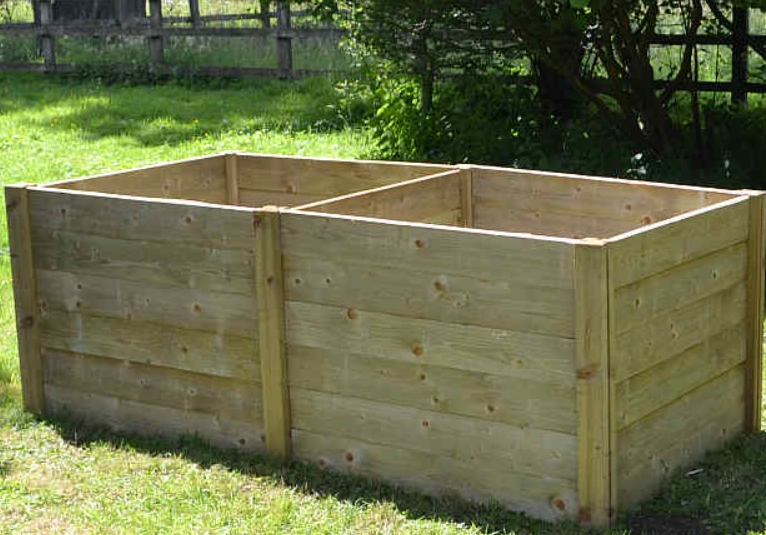
Troubleshooting: Fixing Every Annoying Problem
Things will go wrong. It's part of the process. Here's how to fix the common headaches.
Problem: The Pile Smells Like a Rotting Swamp
Cause: Too many greens, not enough air, too wet.
Fix: Turn it immediately to aerate. Mix in a huge amount of dry browns (straw, shredded cardboard). Make sure your front slats aren't sealed tight—airflow is key.
Problem: Nothing is Decomposing. It's Just Sitting There.
Cause: Too dry, too many browns, or the pile is too small.
Fix: Soak it with a hose while turning it. Add a nitrogen kickstarter like fresh grass clippings, coffee grounds, or even a cup of organic fertilizer. Make sure your pile is at least 3x3 feet to generate heat.
Problem: Critters! Raccoons, Rats, or Flies
Cause: You're putting in forbidden food (meat, dairy, oily stuff) or not burying food scraps.
Fix: Stop adding problem foods. Always bury new kitchen scraps under 6 inches of browns or finished compost. For a pallet bin, you can staple hardware cloth (wire mesh) to the inside if rodents are a major issue, but proper management usually solves it.
Problem: The Bin is Leaning or Coming Apart
Cause: Construction wasn't sturdy enough, or the ground softened.
Fix: Empty the bay if you can. Drive sturdy stakes (more pallet stringers) into the ground on the outside of the leaning wall and screw the wall to them. Reinforce all corners with diagonal braces. Consider placing it on a level base of gravel or pavers if the ground is soggy.
These fixes work. I've dealt with every single one.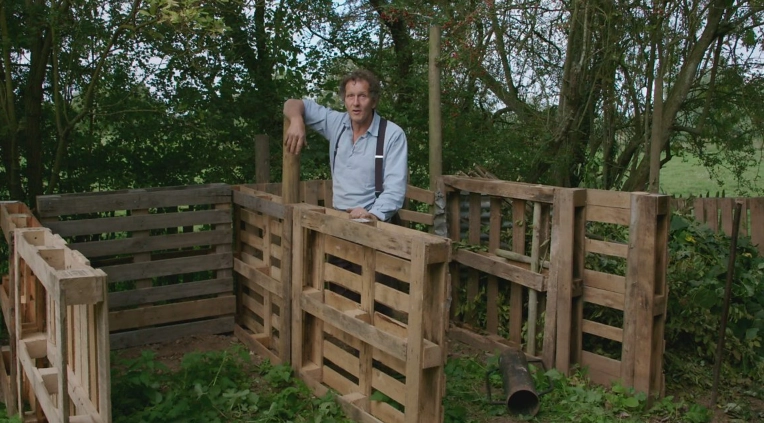
Your 2 Bay Pallet Compost Bin Questions, Answered
How many pallets do I really need for a 2 bay bin?
You can do it with four if you're careful. Five gives you more wood for bracing and a sturdier build. Don't stretch it with three; the bays will be too small to heat up properly.
Can I paint or stain it?
I wouldn't. Any paint or stain will eventually chip and flake into your compost. If you must, use a non-toxic, natural wood preservative like linseed oil on the outside only. Let it cure completely before using. Honestly, letting the wood weather naturally is the safest bet.
Is a pallet bin worse than a plastic one?
It depends. Plastic bins are tidier and sometimes better at pest control. But they're expensive, smaller, and can crack. A two bay pallet compost bin has a much larger capacity, provides superior passive airflow through the slats, and costs almost nothing. It's the workhorse option.
How do I winterize it?
In cold climates, composting slows but doesn't stop. Insulate the pile by covering the top with a thick layer of straw or a tarp. Keep adding to it. The core will often stay active. You'll get a big burst of decomposition in the spring. The U.S. Environmental Protection Agency has a good general page on home composting basics that touches on seasonal management.
What if my wood starts to rot?
It will, eventually. That's okay! It's part of the cycle. The bottom boards in contact with the moist compost might rot in 3-5 years. Just replace them with new boards. The structure will last many years longer. This is one reason screws are better than nails—easier to replace parts.
Taking It Further: Advanced Tweaks & Ideas
Once you've got the basics down, you can play.
The Three-Bay System: If you have massive amounts of yard waste, add a third bay. One for fresh, one for cooking, one for finished. It's the ultimate luxury setup.
Roof It: A simple slanted roof made from corrugated plastic keeps rain from waterlogging your pile in wet climates.
Worm Integration: You can add a handful of red wiggler worms to the finishing bay to create a hybrid compost/worm bin system. They'll help break things down even faster. Universities with strong agricultural programs, like the University of California's Composting Education Program, have great resources on vermicomposting principles.
Vertical Expansion: If you need more height, simply screw another pallet on top of your walls. Just make sure your structure can handle the weight.
So there you have it. The complete, unfiltered guide to the 2 bay pallet compost bin. It's not the easiest path—buying a tumbler is easier. But it's the most effective, most scalable, and most satisfying way to compost at home.
Grab some pallets, spend a Saturday afternoon on putting it together, and start turning your waste into the best thing your garden has ever seen.
Reader Comments