Quick Guide to the Ladybug Life Cycle
You know that cute, spotted red beetle that lands on your hand sometimes? The ladybug? I remember my own kids being fascinated by them, but also full of questions. Where do they come from? Do they start as little babies that look like their parents? The truth is, their story is way cooler than that. It's a complete transformation, almost like magic, happening right in your backyard. Understanding the ladybug life cycle for kids isn't just a science lesson; it's a front-row ticket to one of nature's most common yet incredible shows.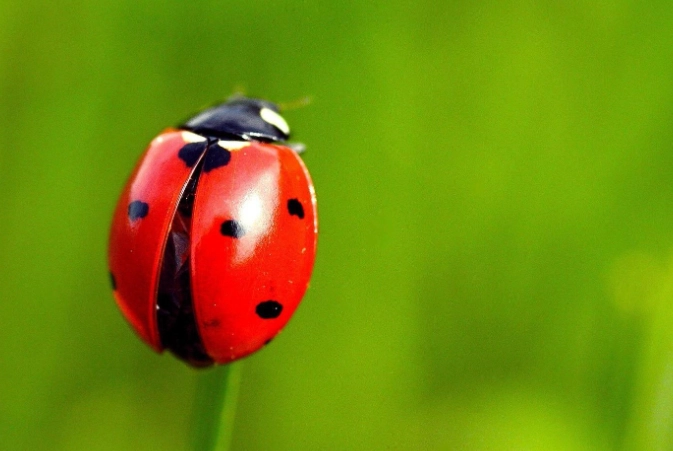
And let's be honest, most guides out there are either too simple (just pictures) or way too scientific. They miss the fun part – the "how can I see this myself?" part. That's what we're going to fix. We're going to dig into every single stage of the ladybug life cycle for kids, but we're also going to get our hands dirty with activities you can actually do. Because reading is one thing, but seeing a ladybug larva munch on an aphid? That's a memory.
The Four Amazing Stages of a Ladybug's Life
Unlike humans who just grow bigger, ladybugs go through what's called "complete metamorphosis." That's a fancy science term for having four totally different life stages. Think of it like a butterfly. They don't just hatch as a small butterfly. They go: Egg -> Caterpillar (Larva) -> Chrysalis (Pupa) -> Butterfly. Ladybugs follow the same incredible pattern. If you're explaining the ladybug life cycle to kids, this is the core concept. The four stages are: Egg, Larva, Pupa, and Adult.
Metamorphosis 101
Complete Metamorphosis (Holometabolism) is the process insects like ladybugs, butterflies, and beetles go through. It involves a dramatic change in body form between the immature and adult stages. The pupal stage is a resting period where this massive reorganization happens. You can read a more detailed scientific definition from trusted sources like Encyclopedia Britannica. For ladybugs, this means the hungry, alligator-like larva turns into the graceful, flying beetle we all know.
The whole process, from a mom ladybug laying an egg to that egg becoming a new adult ladybug, can take about 3 to 6 weeks, depending on the species and the weather. Warmer weather usually means faster growth.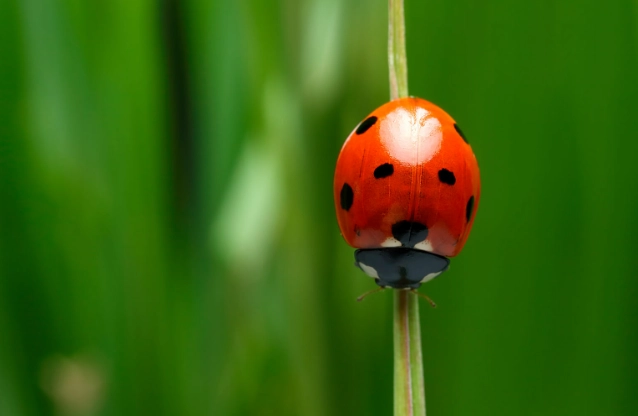
Stage 1: The Tiny Egg (The Beginning)
It all starts with a cluster of tiny, yellow or orange-yellow eggs. A mother ladybug is very smart about where she lays them. She doesn't just drop them anywhere. She looks for the perfect buffet for her future babies. And what do baby ladybugs eat? Aphids! Those tiny, soft-bodied bugs that suck the juice out of plants.
So, a mom will fly around and find a leaf absolutely crawling with aphids. It's like finding a supermarket right next to a nursery. She'll lay her eggs (usually 10 to 50 at a time) on the underside of that leaf. This does two things: it hides the eggs from birds and other predators, and it places the soon-to-hatch babies right next to their first meal. Pretty clever, right?
The eggs are oval and so small you need to look closely. After a few days, they might turn darker just before hatching. And then...
Stage 2: The Hungry Larva (The Eating Machine)
This is the stage that surprises most kids (and adults!). When the egg hatches, out comes something that looks nothing like a ladybug. It looks more like a tiny, spiky, black and orange alligator. This is the larva (plural: larvae).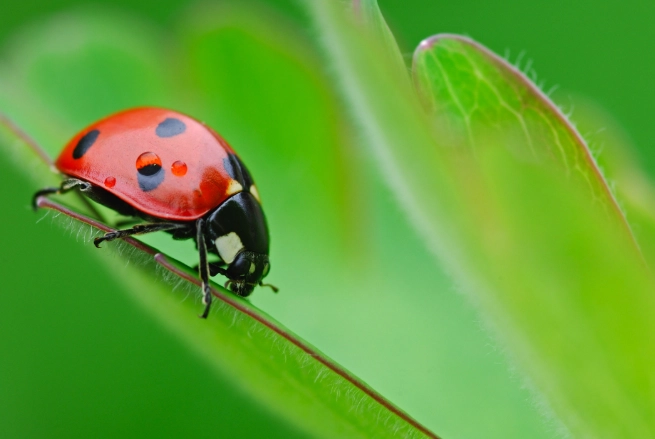
If you're teaching the ladybug life cycle for kids, this is the "wow" moment. The larva has one job: EAT. It needs to grow, and fast. It has a soft body that needs to harden, so it goes through a process called molting. As it grows, its skin gets too tight. It splits open, and the larva wiggles out with a new, larger skin underneath. A ladybug larva will molt about four times over 2-4 weeks. Each stage between molts is called an instar.
Larva Lunch Facts:
- Diet: Almost entirely aphids. A single larva can eat hundreds of aphids before it's done growing. They are a gardener's best friend!
- Movement: They have six legs (like all insects) up near their head and they crawl quite actively over leaves, searching for food.
- Defense: Those spiky bumps aren't just for looks. They make the larva look less tasty to birds. Some species can also ooze a yucky fluid from their joints if bothered.
Honestly, the larva stage is my favorite part of the ladybug life cycle for kids to observe. They're so active and purposeful. After it's eaten enough and grown to full size, the larva gets a bit restless. It stops eating. It starts looking for a safe spot. This signals the next big change.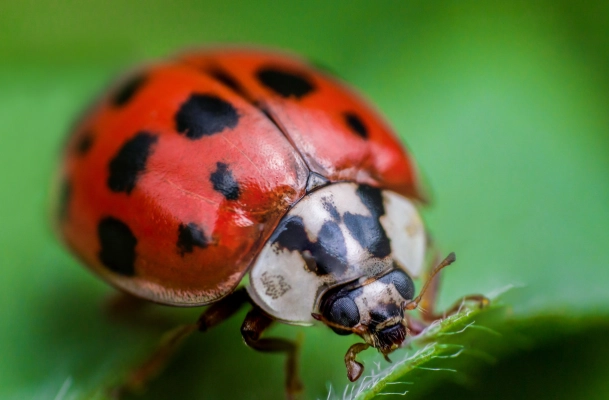
Stage 3: The Pupa (The Big Change)
This is the "quiet time." The full-grown larva finds a secure leaf or stem. It uses a special sticky substance from its rear end to attach itself firmly to the surface. Then, it curls up slightly and its skin splits one last time.
But underneath isn't another larva skin. It's the pupa. The pupa looks like a weird, lumpy, orange or dark-colored shell. It might remind you of a shrimp tail stuck to a leaf. From the outside, it looks like nothing is happening. No movement. No eating. It seems completely still.
But inside, it's chaos! The entire body of the larva is being broken down and rebuilt into the body of an adult ladybug. Wings are forming. The hard wing cases (elytra) are developing. The legs are reshaping. It's a biological factory running at full speed. This stage usually lasts about 5 to 10 days.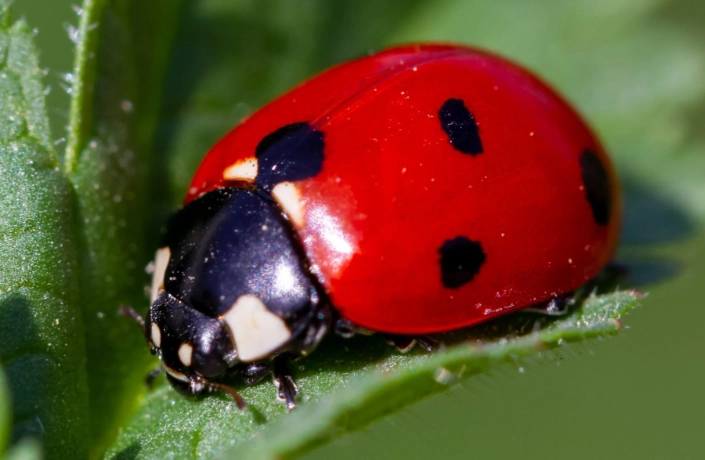
It's a fragile time. The pupa is defenseless. That's why choosing a hidden spot is so crucial. If you find one, look but don't touch. The slightest disturbance can disrupt this delicate process.
Stage 4: The Adult Ladybug (The Final Form)
Finally, the pupal case splits open. Out crawls the adult ladybug. But wait – it looks wrong! Its wing cases (the red or orange hard part) are soft, pale yellow, and haven't gotten their color yet. Its iconic black spots are also missing. It looks very vulnerable.
This new adult will sit still for an hour or two, pumping fluid into its wings and body. As it does this, the wing cases expand, harden, and slowly gain their bright color. The black spots appear last. This is called "hardening" or "sclerotization." Once its shell is hard, it can finally fly away.
The adult's main goals are to eat (yes, still aphids!), find a mate, and for the females, lay eggs to start the whole ladybug life cycle for kids (and everyone else!) all over again. Adult ladybugs can live for several months to a year, and some species huddle together in big groups under bark or in houses to survive the winter.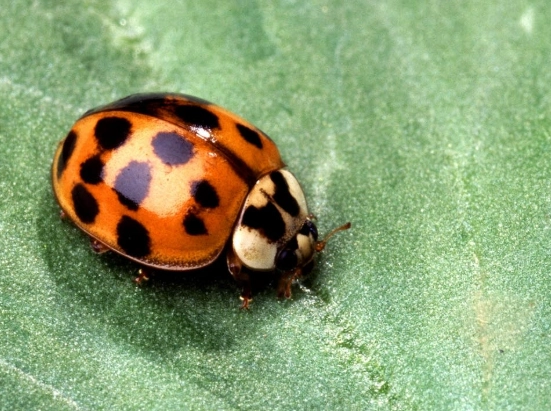
Ladybug Life Cycle Timeline (At a Glance)
Here’s a quick look at how long each stage typically takes under good, warm conditions. Remember, cooler weather slows everything down.
| Life Stage | What It Looks Like | Main Activity | Approximate Duration |
|---|---|---|---|
| Egg | Clusters of tiny yellow/orange ovals | Developing | 3 to 5 days |
| Larva | Spiky, black & orange, alligator-like | Eating & Growing (Molting 4 times) | 2 to 4 weeks |
| Pupa | Lumpy, orange/dark shell attached to leaf | Metamorphosis (Transforming) | 5 to 10 days |
| Adult | Familiar spotted beetle (soft at first) | Eating, Flying, Mating, Laying Eggs | Several months to a year |
How Does This Compare to Other Bugs?
Not all insects grow the same way. Understanding the different types of life cycles helps us appreciate how special the ladybug life cycle for kids really is. Here’s a simple comparison.
| Type of Life Cycle | Stages | Example Insects | Key Difference |
|---|---|---|---|
| Complete Metamorphosis | Egg -> Larva -> Pupa -> Adult | Ladybugs, Butterflies, Beetles, Bees, Flies | Larva looks COMPLETELY different from adult. Has a resting pupal stage. |
| Incomplete Metamorphosis | Egg -> Nymph -> Adult | Grasshoppers, Cockroaches, Dragonflies | Nymph looks like a small, wingless version of the adult. It molts to grow bigger and develop wings. No pupa stage. |
| No Metamorphosis | Egg -> Young -> Adult | Silverfish, Springtails | The young look almost identical to the adults, just smaller. They only change in size. |
See? Ladybugs are in the "complete" club, which is the most dramatic and, in my opinion, the most fascinating to watch. The Smithsonian Institution has some great general resources on insect metamorphosis if you want to dive even deeper.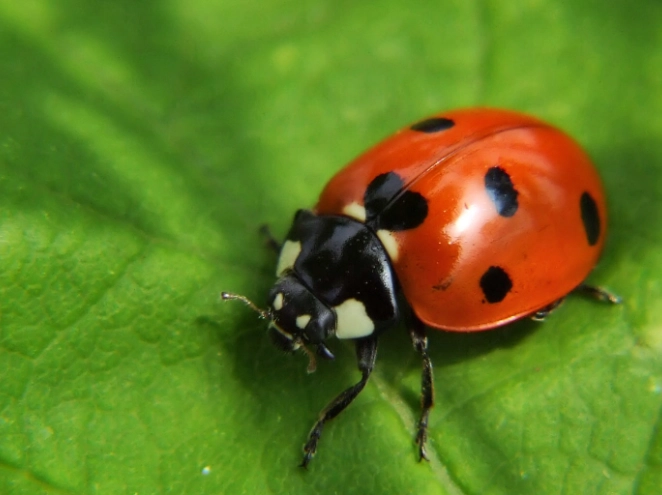
Fun Activities: See the Ladybug Life Cycle for Kids in Action!
Reading is fine, but real learning happens when you see it. Here are a few safe, simple activities. You'll need patience and good observation skills!
Activity 1: The Backyard Safari
Goal: Find ladybugs in different life stages.
Where to look: Your garden! Focus on plants that often get aphids. Roses, milkweed, nasturtiums, and fruit trees are great spots. Look carefully on the undersides of leaves.
- For Eggs: Look for tiny yellow clusters. Use a magnifying glass.
- For Larvae: Look for small, fast-moving, spiky black creatures crawling near aphids.
- For Pupae: Look for odd, still, shrimp-like bumps attached to stems or leaf backs.
- For Adults: The easy ones! Look for the classic beetles.
Tip: Don't collect them. Just observe, take pictures, or draw what you see in a nature journal. Mark the spot and come back in a few days to see the progress.
Activity 2: Build a Ladybug Life Cycle Model
Use craft materials to make your own 3D model of the four stages.
- Eggs: Small yellow pom-poms glued to a paper leaf.
- Larva: Use black and orange pipe cleaners. Twist them to make a spiky, segmented body.
- Pupa: Mold a lump of orange or brown clay or playdough. Attach it to a twig.
- Adult: Paint half a walnut shell red with black spots, or use a red bottle cap.
Arrange them in a circle on a paper plate with labels. This is a fantastic way to solidify the stages of the ladybug life cycle for kids in their minds.
Activity 3: The Aphid Watch
If you find a plant with a lot of aphids (they look like tiny green, yellow, or black dots clustered on new stems), keep an eye on it. Check it every other day. The aphids attract ladybugs. You might get lucky and see a mother lay eggs, or find larvae already munching away. It's a real-life nature documentary in your own yard.
A word of caution: Some people buy ladybug larvae online to release in their garden for pest control. I'm not a huge fan of this for a simple kids' activity. It can introduce non-native species and often the larvae are stressed from shipping. Observing local, wild ladybugs is more educational and better for the environment.
Your Ladybug Life Cycle Questions, Answered
After talking to lots of kids and parents, here are the most common questions that pop up when learning about the ladybug life cycle for kids.
- Larva: Eats aphids and other tiny soft bugs like mites or insect eggs. They are incredibly hungry.
- Pupa: Doesn't eat at all. It's transforming.
- Adult: Also eats aphids, plus sometimes pollen or nectar for extra energy.
Why Learning About the Ladybug Life Cycle Matters
Okay, so it's cool to know the stages. But why does this matter beyond a school project? A few reasons:
It teaches patience and observation. Nature doesn't work on a smartphone schedule. You have to wait, check back, and pay close attention to small details.
It connects kids to their local ecosystem. That ladybug in your yard is part of a food web. It eats aphids, which helps your plants. It might get eaten by a bird or a spider. Seeing this cycle up close builds respect for even the smallest creatures.
It demystifies "bugs." That weird, spiky larva might look scary at first, but when you know it's just a baby ladybug doing its job, it becomes fascinating, not frightening.
Understanding the ladybug life cycle for kids opens a door. It turns a simple beetle into a character in a four-part drama of survival and change, playing out on a leaf near you. You don't need to go to a rainforest to see a miracle. Sometimes, it's right there on the rose bush.
So next time you see a ladybug, take a closer look at the plants around it. You might just find the beginning, middle, or end of an amazing story. Happy exploring!
Reader Comments