Let's cut to the chase. Buying a compost bin can feel silly when you're surrounded by free, perfect building materials. Wooden pallets are everywhere—behind hardware stores, garden centers, sometimes even on the curb. With about an hour of work and maybe $15 in hardware, you can turn four of them into a compost bin that outperforms most store-bought models. I've built half a dozen of these over the years for my garden and community plots. The best part? It's stupidly simple. This guide will walk you through every step, but more importantly, it'll show you how to avoid the one critical mistake almost every beginner makes with pallets.
What You'll Learn in This Guide
Why Building a Compost Bin Out of Pallets Actually Makes Sense
You're not just being cheap. Well, you are, but there are real advantages.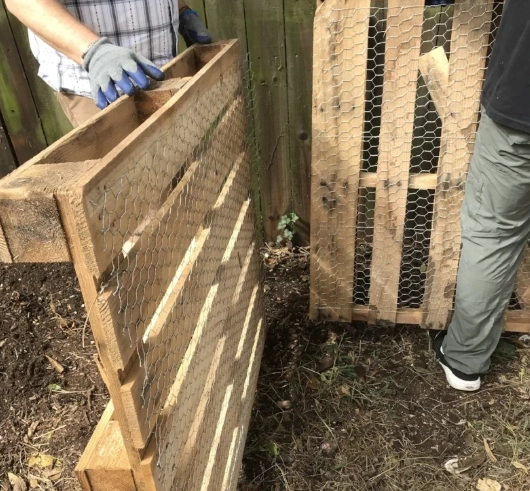
Store-bought tumblers are sealed plastic drums. They're fine, but they often don't get enough air, and they're a pain to turn when full. Stationary plastic bins with lids can work, but they're flimsy and limit your capacity.
A pallet bin is different. The gaps between the slats provide passive aeration—air flows in from all sides, which is the single most important factor for fast, odor-free composting. It's also modular. Need more space? Add another bay with two more pallets. Want to access finished compost from the bottom? You can design it that way. The wood itself, once weathered, creates a perfect micro-environment for the microbes doing the work.
Cost? Nearly zero. Environmental impact? You're upcycling industrial waste. It's a no-brainer.
How to Choose Safe Pallets for Your Compost Bin
This is the part most DIY blogs gloss over, and it's the most important. Not all pallets are created equal. Some are treated with nasty chemicals you do not want leaching into your compost and then your vegetables.
You need to look for the stamp. Every pallet used for international shipping has a stamp on it. This is your cheat sheet.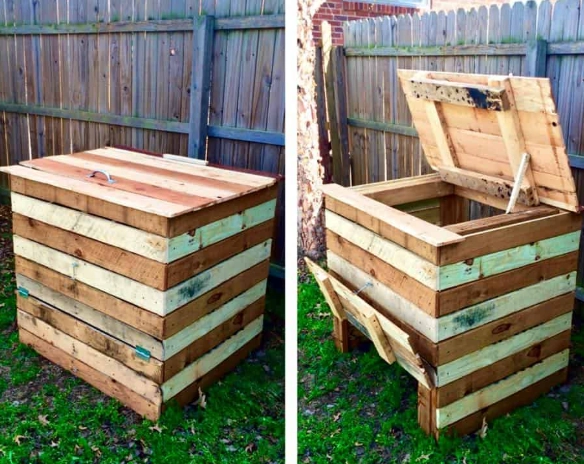
| Stamp Code | What It Means | Safe for Garden? |
|---|---|---|
| HT | Heat Treated. Heated to a core temperature of 56°C for 30 minutes. This is just wood and heat. | YES - This is the gold standard. |
| KD | Kiln Dried. Similar to HT, another heat-based process. | YES - Also perfectly safe. |
| MB | Methyl Bromide. A toxic pesticide fumigant. Banned in many places but old pallets exist. | NO - Avoid at all costs. |
| No Stamp / Unclear | Unknown treatment. Could be safe, could be painted or contaminated. | NO - Not worth the risk. |
Go hunting. Look behind local businesses (always ask permission first). Garden centers and hardware stores are good bets—they often receive plant or bagged goods on HT pallets. Avoid pallets from industrial manufacturers or chemical plants, as they might have spill contamination even if the stamp says HT.
You'll need four similar-sized pallets. The standard 48" x 40" GMA pallet is ideal. They're sturdy and give you a nice cubic yard of space when assembled.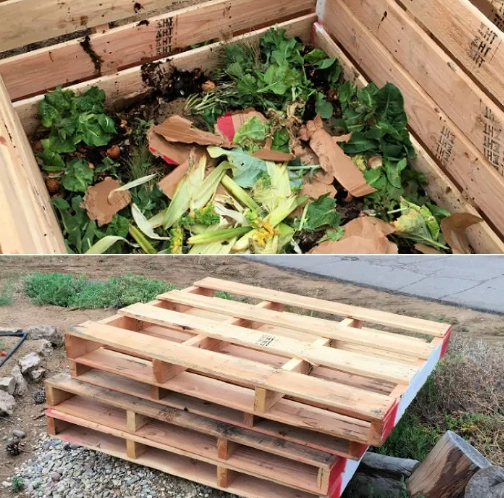
Gathering Your Tools and Materials
You don't need a workshop. Here's the complete list.
The Essentials:
- 4 Wooden Pallets (with HT or KD stamps).
- Heavy-Duty Galvanized Screws or Nails: 3-inch deck screws are best. Galvanized so they don't rust. You'll need about 20-30.
- Drill/Driver (if using screws) or a Hammer (if using nails). A drill is faster and creates a stronger joint.
- Pliers or a Pry Bar: For pulling out any old, bent nails from your pallets.
- Work Gloves: Pallet wood is rough and loves to give splinters.
- Safety Glasses: When pulling nails or drilling, stuff flies.
Nice-to-Haves (for a upgraded build):
- Hinges & a Latch: To turn one pallet into a removable front door.
- Wire Mesh or Hardware Cloth: To staple to the inside if your pallet slats are very wide, preventing material from falling out.
- Post Hole Digger & 2x4s: For a more permanent, anchored three-bay system.
Step-by-Step: Building Your 4-Pallet Compost Bin in an Hour
We're building the simplest, most effective design: a square box. Place it directly on soil, not concrete or pavement, so worms and microbes can migrate up.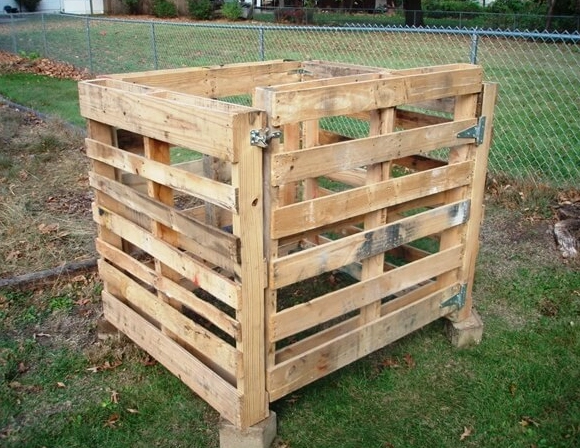
Step 1: Site and Prep
Choose a level spot in partial sun, convenient to your garden and kitchen. Clear any weeds. Lay your four pallets on the ground to visualize the square. Use your pliers to remove any protruding, rusty nails from the sides that will join together. This makes assembly safer and easier.
Step 2: Form the Three Fixed Sides
Stand up two pallets to form a corner. Their solid outer faces should be on the outside, and the inner "block" supports should be facing each other on the inside. Have a friend hold them steady. Drill pilot holes through the side of one pallet's support block into the adjacent pallet's block. Drive in two or three screws to secure the corner. Repeat to attach the third pallet, forming a U-shape. Don't over-tighten—you're screwing into end grain, which can split.
Step 3: The Fourth Pallet – Your Front Door
This is where you have options.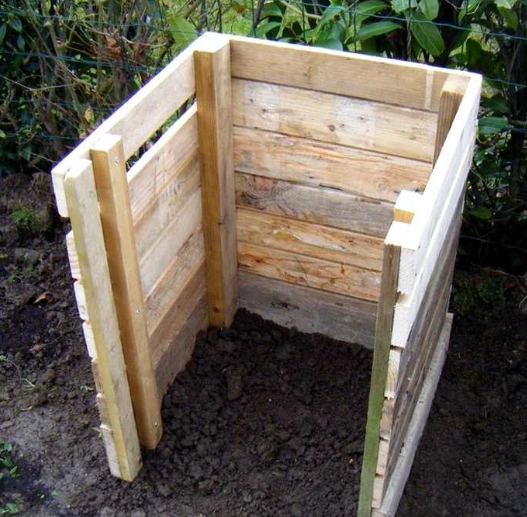
Option A (Simple Hook & Eye): Just stand the fourth pallet in the opening. To secure it, screw a couple of heavy-duty hook-and-eye latches to the top, connecting the front pallet to the side ones. To turn the pile or harvest compost, just unhook it and lay the front pallet down.
Option B (Hinged Door): This is my preference. Use two sturdy hinges to attach the fourth pallet to the front edge of one of the side pallets. Add a latch on the other side. Now you have a proper door that swings open. It feels more finished and is super convenient.
That's it. Really. Your basic bin is done.
Step 4 (Optional): Add a Bottom or Lid
You don't need a bottom—earth contact is good. But if you have pest concerns (like rodents), staple hardware cloth to the bottom inside edges before you assemble it. A lid retains moisture and heat. An old piece of plywood, a scrap of corrugated metal, or even a weighted-down tarp works perfectly.
Filling and Maintaining Your Pallet Compost Bin
Now for the fun part. The magic formula isn't that magical.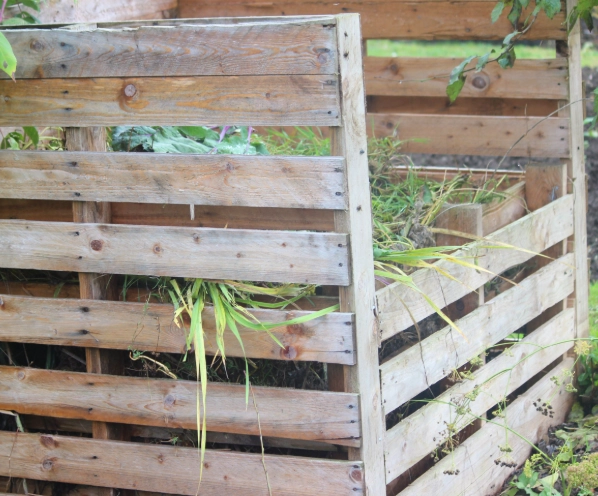
Start with a browns layer: Throw in a few inches of dry leaves, straw, or shredded cardboard at the very bottom. This helps with drainage and aeration from the get-go.
Add your greens and browns in layers: Kitchen scraps (greens) go in, then cover them with a handful of leaves or shredded paper (browns). This "lasagna" method prevents smells and flies. You're aiming for a rough balance of 2 parts browns to 1 part greens by volume.
When to turn? Forget the weekly schedule. Turn the pile when it starts to cool down or slump in the middle, or when it feels matted. Use a garden fork to move everything from one side of the bin into the other, mixing the outer material into the center. With a two-bin system, you just fork it from the full bin into the empty one next to it.
In 4-6 months of warm weather, you should have beautiful, dark compost at the bottom of the pile.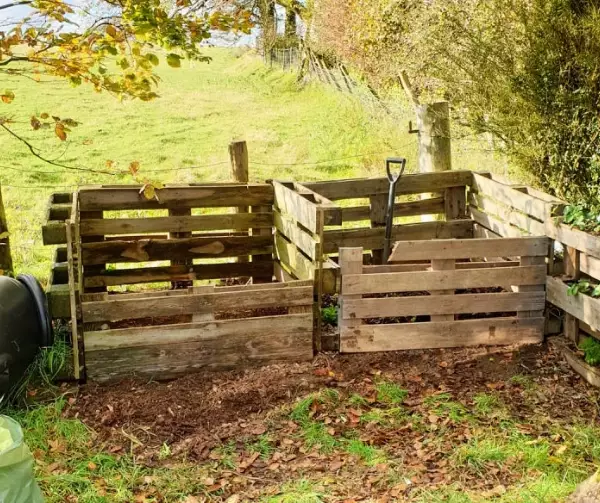
Your Pallet Compost Questions, Answered
Can I use any pallet I find behind a store?
Absolutely not. This is the biggest pitfall. You must check for the treatment stamp. Look for HT or KD only. Pallets without a stamp, or with an MB stamp, have likely been treated with chemicals you don't want in your soil. If it's stained, painted, or smells chemical, leave it. Always ask the store for permission before taking pallets.
Won't the wood just rot away in a year or two?
It will decay, but slowly. A heat-treated pine or fir pallet in direct contact with soil and compost might last 3-5 years. That's several gardening seasons of free service. The decay process is part of the system. When a board gets too soft, replace it with another. I've had bins last over 5 years with only one or two slats needing a swap. Think of it as a living, evolving structure.
My compost pile in the pallet bin is wet, smelly, and not heating up. What did I do wrong?
You're likely drowning in greens. A smelly, cold pile is almost always too wet and lacks air. Stop adding kitchen scraps. Immediately mix in a huge amount of dry browns—shredded cardboard, straw, dry leaves—to soak up moisture and create air pockets. Turn the pile vigorously to get oxygen in there. The pallet sides provide air, but if you've compacted the pile by stepping on it or never turning it, the center becomes anaerobic. Fix it by fluffing it up with browns.
Is a three-bay pallet compost system worth the extra effort?
Only if you generate a massive amount of yard waste or are composting for a community garden. For a typical household, a single or double bin is perfect. The three-bay system (one for new stuff, one for actively turning, one for finished compost) is great for workflow but takes more space, pallets, and time to build. Start with one bin. You can always add a second bay next to it later when you see how fast you fill it.
How do I keep animals out of my open-slat bin?
The main attractants are meat, dairy, and oily foods—never add these. For persistent raccoons or rodents, line the inside of the bin with ½ inch hardware cloth before you fill it, stapling it securely to the wood. This keeps critters from squeezing through the slats. A secure lid (a piece of plywood with a brick on top) is also a major deterrent. Most animals are lazy; if it's slightly difficult, they'll move on.
There you have it. No fancy tools, no big budget, just a smart use of what's already around. Your pallet compost bin will quietly turn your scraps into garden gold, season after season. Go find those four pallets and get started this weekend.
Reader Comments