You don't need a fancy greenhouse to keep gardening into the fall and winter. A cold frame is your secret weapon. It's a simple, bottomless box with a clear lid that traps solar heat, creating a microclimate that's several zones warmer than the outside air. I built my first one over a decade ago from an old window and some scrap wood, and it completely changed my harvest calendar. Now I get fresh spinach in December. Let's build one.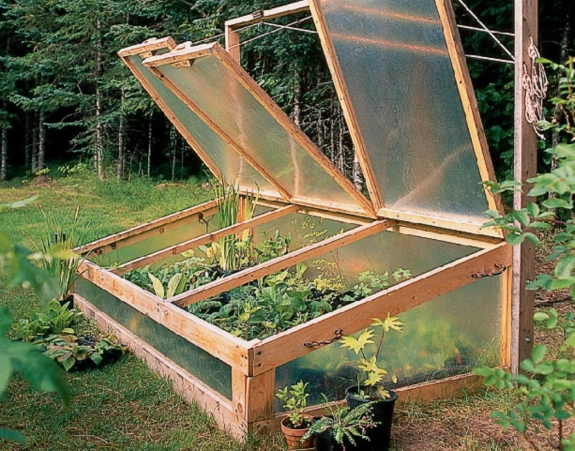
What’s Inside This Guide
What is a Cold Frame & Why You Need One
Think of it as a mini-greenhouse that sits right on the ground. It has no artificial heat source—just the sun. The physics are simple: sunlight passes through the transparent lid, warms the soil and air inside, and the insulated walls and lid slow down the heat loss. The USDA acknowledges the value of season extension techniques like cold frames for increasing local food production.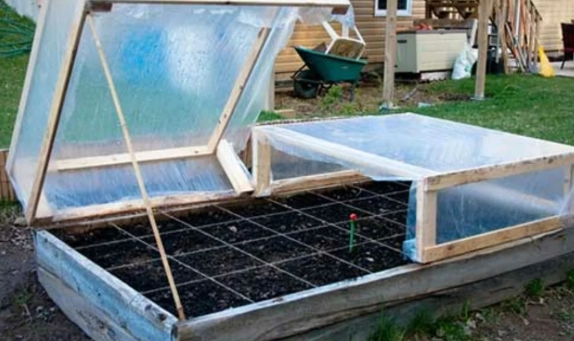
The benefits are huge.
- Harvest Longer: Grow cold-hardy greens like kale, spinach, and mache weeks or even months after your first frost.
- Get a Head Start: Start hardy seedlings like broccoli and cabbage in early spring, protected from late frosts and wind.
- Overwinter Tender Perennials: Protect potted herbs or young strawberry plants from killing freezes.
- It's Cheap: You can build a functional one for under $50 using new materials, or nearly free with salvaged parts.
But here's a trap many fall into: they build a box, throw in some plants, and forget about it. A cold frame is an active tool, not a set-it-and-forget-it device. Management is key.
Planning Your DIY Cold Frame
Location is everything. You need maximum sunlight, especially in winter. Place it with the long side facing south. A spot against a south-facing wall of your house or shed is golden—it absorbs heat during the day and radiates it back at night.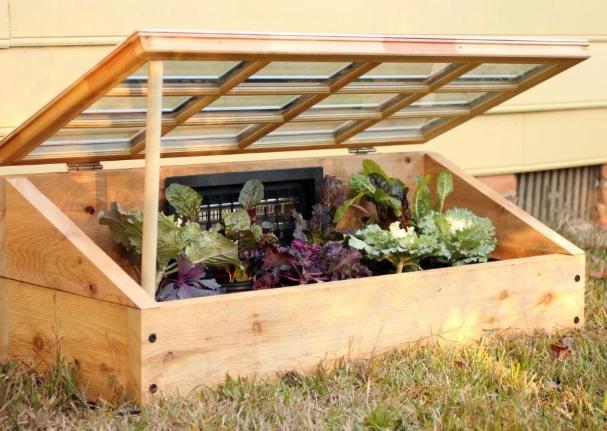
Now, materials. You have options, and each has trade-offs.
Choosing Your Lid (The Most Important Part)
The lid needs to be clear, durable, and lightweight enough to open easily.
- Old Storm Windows or Patio Doors: My favorite. They're often free on Craigslist or at ReStore. They have real glass (great clarity) and a built-in frame. The downside? Glass is heavy and can break if hail hits.
- Polycarbonate Greenhouse Panels: The modern choice. Twin-wall or corrugated polycarbonate is lightweight, shatterproof, and has good insulating properties (R-value). You'll need to build a simple wooden frame for it. This is what I use now.
- Clear PVC Sheeting (6-mil): The absolute budget option. Staple it to a wooden frame. It works for one season but degrades in UV light, turns cloudy, and is easily damaged by wind or pets.
For the box itself, rot-resistant wood is non-negotiable. Cedar, redwood, or pressure-treated pine are your best bets. Avoid pallet wood unless you're sure it's heat-treated (HT stamp), not chemically treated.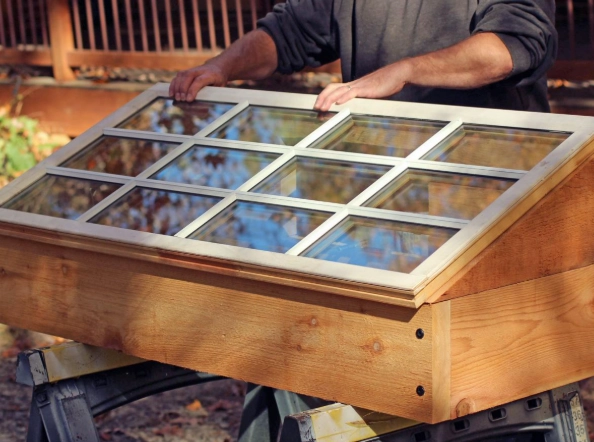
Basic Materials & Cost Breakdown
Here’s what you’ll need for a standard 3' x 6' frame, assuming you buy new lumber and polycarbonate.
| Material | Purpose | Estimated Cost |
|---|---|---|
| (4) 2x6x8' Pressure-Treated Pine | Front, Back, Sides | $25 - $35 |
| (1) 4'x8' Twin-Wall Polycarbonate Sheet | Lid Panel | $40 - $60 |
| (2) 1x3x8' Cedar | Lid Frame | $15 - $20 |
| Exterior Screws (3") | Assembly | $8 |
| 2 Heavy-Duty Hinges & a Prop Stick | Lid Hardware | $10 |
| Total (Approx.) | $98 - $133 |
See? Under $150 for a brand-new, durable structure that will last years. You can cut this cost in half by sourcing a used window.
Step-by-Step Build: The Simple 2x4 Frame
Let's build a sturdy, no-frills 3' x 6' cold frame. This design uses 2x4s for the walls for extra strength against snow load, with a slanted lid for rain runoff and better light capture.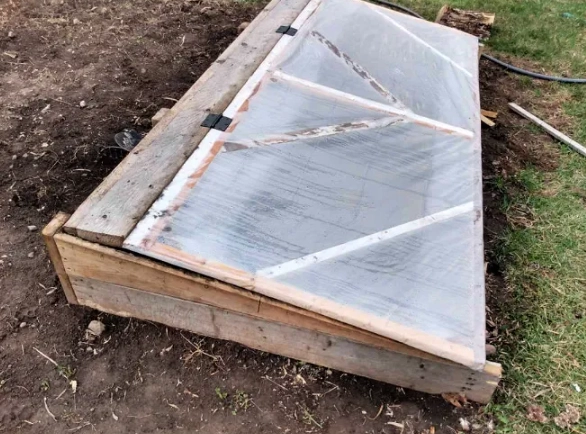
Step 1: Cut the Frame Pieces.
Cut your pressure-treated lumber to length. You need:
- Two sides: 36 inches long (2x4s).
- Front: 72 inches long (2x4).
- Back: 72 inches long (2x6). Using a taller board for the back creates the slope.
Step 2: Assemble the Box.
Lay the front and back pieces parallel on a flat surface, 36 inches apart. Place the side pieces between them to form a rectangle. Pre-drill holes to prevent splitting, then screw everything together using 3-inch exterior screws. Make sure the taller back board is at the back. This box sits directly on the ground, so no bottom is needed.
Step 3: Build the Lid Frame.
Using the 1x3 cedar, build a rectangle that is about 1/2 inch smaller than the outer dimensions of your box on all sides. This allows for easy opening and closing. Reinforce the corners with screws.
Step 4: Attach the Polycarbonate.
Cut your polycarbonate sheet to fit over the cedar frame. Leave it a bit oversized at first and trim. Important: The channels inside twin-wall poly must run vertically so condensation can drain. Attach it using polycarbonate-specific screws with rubber washers to prevent cracking and leaks. Don't overtighten.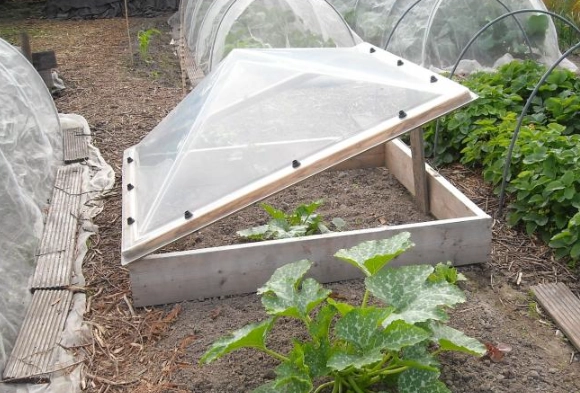
Step 5: Attach Hinges and Prop.
Place the lid on the box. Attach the hinges to the back of the lid and then to the back wall of the cold frame. Install a simple hook-and-eye or a notched stick to prop the lid open at various heights for ventilation.
That's it. Move it to its sunny spot, and you're ready.
Using & Maintaining Your Cold Frame
Building it is only half the battle. Using it well is the other half.
What to Grow: Stick with cool-season crops. They tolerate cold and have lower light requirements.
- Fall/Winter: Spinach, kale, mache (corn salad), claytonia, scallions, carrots, overwintering onions.
- Early Spring: Lettuce, radishes, peas, hardy annual flower seedlings.
The Daily Dance: Ventilation.
This is the most common mistake. On a sunny day, even in winter, the temperature inside can soar past 80°F (27°C) and cook your plants. You must open the lid. A good rule is to open it when interior temps reach 70°F (21°C) and close it a few hours before sunset to trap warmth. If you're not home, prop it open a few inches.
Watering: Water less frequently than in summer. The soil stays moist longer in the closed environment. Check the soil an inch down before watering. Water on sunny mornings so excess moisture can evaporate.
My Backyard Project: A Real-World Example
Last fall, I wanted fresh greens all winter. I had a spot against my south-facing fence. Instead of a long frame, I built two 2' x 4' cold frames side-by-side. Why two? If one gets a disease or I need to resoil, I can rotate.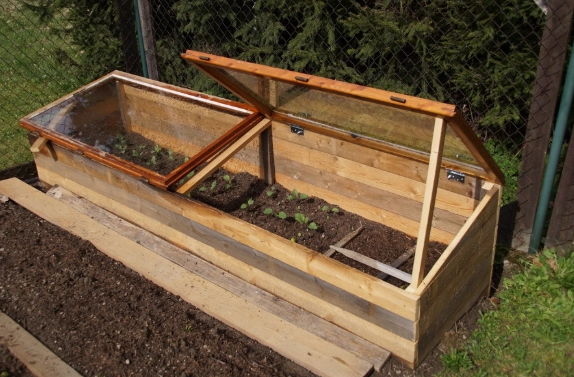
I found an old double-pane patio door someone was throwing out. Free lid! I built the boxes from cedar fence pickets (cheap, but not as durable). I spent maybe $30 total.
In mid-October, I direct-seeded spinach and 'Winter Density' romaine in one box. In the other, I transplanted kale and Swiss chard seedlings from my garden. By Thanksgiving, we were harvesting baby greens. The key was ventilation. On a 45°F (7°C) sunny day in January, the inside hit 75°F (24°C). I opened the lids about 6 inches.
We hit a cold snap in February—nights down to 15°F (-9°C). I threw an old burlap sack over the lids on those nights for extra insulation. The spinach leaves got a bit frosty on the tips but kept growing. We harvested until mid-March when the spring garden took over.
It worked. But the cedar pickets are already showing wear. Next time, I'm using 2x6 pressure-treated lumber. The free glass door, however, was a champion.
Your Cold Frame Questions, Answered
How do I stop condensation from dripping on my plants inside the cold frame?
Can I build a cold frame strong enough for heavy snow loads on a tight budget?
What's the best way to insulate a DIY cold frame during a polar vortex?
How can I prevent slugs and pests from getting into my cold frame?
Reader Comments