In This Guide
- The Core Question: To Line or Not to Line?
- What If You Don't Line It? Embracing the Gaps
- When Lining Might Be the Right Call (And How to Do It Right)
- The Hybrid Approach: Partial or Strategic Lining
- What About the Bottom? That's a Different Story.
- Answering Your Specific Questions (The FAQ)
- Making Your Final Decision: A Simple Checklist
So you've got your pallets, you've nailed or tied them together into a rough-and-ready compost bin, and you're ready to turn your kitchen scraps into black gold. Then the question hits you. It's a common one, I've asked it myself. Do you need to line a pallet compost bin?
I wish I could give you a simple yes or no. But the truth is, it depends. It depends on your climate, your pallets, your goals, and honestly, how much effort you want to put in. Lining isn't a mandatory step like adding browns and greens, but it's a choice that comes with some serious trade-offs.
I've made both mistakes and successes here. My first pallet bin? I didn't line it. The soil was rich, the worms were happy, but the wood started looking pretty ragged after a couple of years, and I lost a fair bit of the finished compost out the gaps. My second attempt, I went overboard with a thick plastic liner. Big mistake. It killed the airflow and my pile turned into a smelly, slimy mess. I had to rip it out.
Let's cut through the confusion. This isn't about a one-size-fits-all rule. It's about understanding what lining does, what it doesn't do, and figuring out what's right for your specific backyard setup.
The Core Question: To Line or Not to Line?
At its heart, the decision to line your pallet compost bin comes down to a battle between two things: containment and breathability. Your raw, unfinished compost needs to stay in the bin. But the billions of microbes doing the hard work need air to breathe.
Most standard pallets have gaps between the boards. These gaps are the main reason the question "do you need to line a pallet compost bin?" even exists. They let in fantastic airflow, which is crucial for aerobic composting (the good, non-smelly kind). But they also let smaller, unfinished materials like coffee grounds or dry leaves sift out. They can let valuable moisture escape in dry climates, or let too much rain in during wet ones.
A liner is basically a barrier you put on the inside walls of your pallet structure. Its job is to plug those gaps. But in doing so, it inevitably changes the environment inside your bin.
| Aspect | Lining Your Pallet Bin (The Pros) | Not Lining Your Pallet Bin (The Pros) |
|---|---|---|
| Containment | Keeps all compost materials securely inside. Prevents loss of unfinished bits through gaps. | Smaller materials can fall out through gaps. You might lose some finished compost from the sides. |
| Moisture Control | Can help retain moisture in dry, windy areas. Can block excess rain from waterlogging the pile in wet climates. | Pile can dry out faster in sun/wind. Can get too wet in heavy, sustained rain. |
| Wood Preservation | Protects the interior wood of the pallets from constant moisture and microbial decay, making the structure last longer. | The inner boards will decompose over time (which some see as a natural process, others see as a nuisance). |
| Insulation | Can provide slight insulation in colder climates, helping the pile retain heat. | Less insulation. The pile's temperature is more influenced by outside air. |
| Aesthetics & Tidiness | Looks neater. Contains the pile visually. | Looks more rustic. You can see the composting process at the edges. |
See? It's a real tug-of-war. For me, the biggest pro for lining is definitely the containment, especially if you're using finer materials. The biggest con? It's the risk of screwing up the airflow. That's a deal-breaker for healthy compost.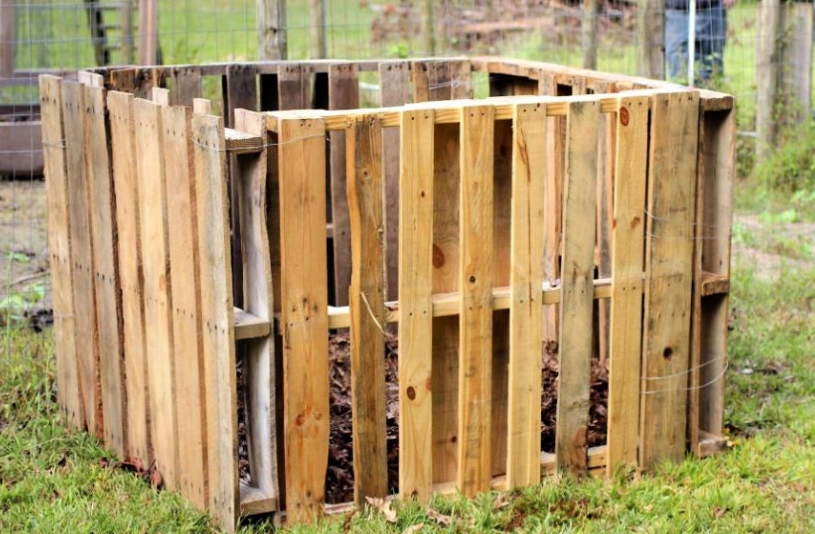
What If You Don't Line It? Embracing the Gaps
Choosing not to line is the purest form of pallet composting. It's simple, cheap, and often very effective. The gaps between the pallet slats aren't a design flaw for composting; they're a built-in aeration system.
This is how I run most of my bins now. The airflow is unbeatable. I rarely have to turn the pile because oxygen gets in from the sides so easily. It prevents the anaerobic conditions that cause bad smells. If you're lazy about turning your pile (and who isn't sometimes?), an unlined bin forgives you more.
The downsides are real, though. In my first unlined bin, I definitely noticed a ring of semi-composted material on the ground around the outside. It wasn't a huge amount, and eventually I just scooped it up and tossed it back in, but it felt inefficient. In a very dry summer, the outer edges of the pile can get crusty and dry because the wind whips through the gaps.
A great middle-ground if you don't line is to use a technique called "backing." Simply lean a piece of old cardboard, a scrap of plywood, or even an old rug against the outside of the pallet walls. This blocks the wind from robbing moisture and contains spills, but doesn't create the sealed environment of an internal liner. It's a low-commitment fix.
The wood will rot. Let's be clear. The inside faces of your pallets, constantly in contact with damp, biologically active compost, will begin to decompose. This isn't necessarily bad. It's just part of the cycle. The bin has a finite lifespan—maybe 5-7 years. Some folks see this as the bin eventually becoming compost itself, which is a nice thought. Others find it annoying when the boards get soft and the structure becomes wobbly.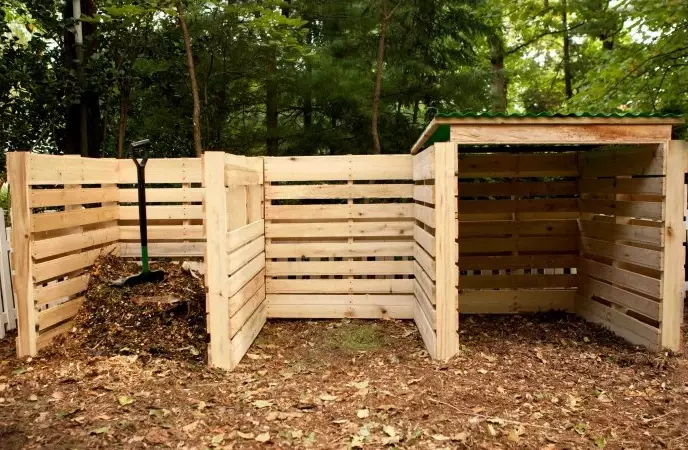
When Lining Might Be the Right Call (And How to Do It Right)
So, when does the scale tip towards adding a liner? There are a few specific situations where I'd seriously consider it.
First, if your pallets have really wide gaps. Some pallets are made with boards placed very far apart. If you can easily lose a fist-sized clump of compost through the gap, lining starts to make more sense. Second, if you live in an extremely windy and arid climate. Keeping moisture in is a constant battle, and a liner can act as a windbreak and moisture barrier. Third, if your bin is in a very visible part of your garden and you want a tidier look, or if it's near a fence or property line where escaping compost might annoy a neighbor.
The key to lining successfully is to remember one word: breathable. Your liner must allow air to pass through. This is where I failed with my thick plastic sheeting. It created a stagnant, anaerobic tomb.
Breathable Liner Materials: A Practical Comparison
If you decide to line, your material choice is everything. You're looking for something that blocks solids but allows air and some moisture vapor to transfer.
| Material | How to Use It | Pros | Cons & Watch-Outs |
|---|---|---|---|
| Landscape Fabric / Weed Barrier | Staple or tie it to the inside of the pallets. Use the woven, non-plastic kind. | Very breathable, water-permeable, durable. My top recommended choice for a liner. | Can be pricey. Ensure it's not the plastic non-woven kind, which is less breathable. |
| Hardware Cloth / Wire Mesh | Attach a sheet with a 1/4" or 1/2" grid to the inside of the bin. | Super durable, incredibly breathable, contains almost all materials. | Can be sharp to handle. Very fine materials like coffee grounds may still sift through. |
| Burlap or Hessian Sacks | Staple old coffee sacks or burlap rolls to the interior. | Natural, biodegradable, decently breathable, often free. | Will rot and need replacement every year or two. Not the strongest containment. |
| Multiple Layers of Cardboard | Flatten cardboard boxes and layer them against the inside walls. | Free, readily available, will eventually compost itself. | Becomes soggy and collapses over time. Needs frequent replacement. Can mat together and reduce airflow. |
| Straw or Hay Bales | Use the bales themselves as the wall, or pack loose straw tightly against pallet gaps. | Extremely breathable, insulates well, adds carbon directly to the pile. | Messy, attracts rodents if not packed tight, will decompose quickly. |
A word of caution on plastics: I strongly advise against using plastic tarps, pond liners, or non-permeable plastic sheeting as a full liner. They suffocate the pile. If you must use plastic for some reason, only use it on the north-facing wall in a cold climate for insulation, or on the top as a loose cover in heavy rain—never fully enclosed.
My go-to now is a quality woven landscape fabric. It's tough, lets air and water through, and lasts for years. I just use a heavy-duty staple gun to fix it to the pallet boards. Don't make it drum-tight; a little slack is fine.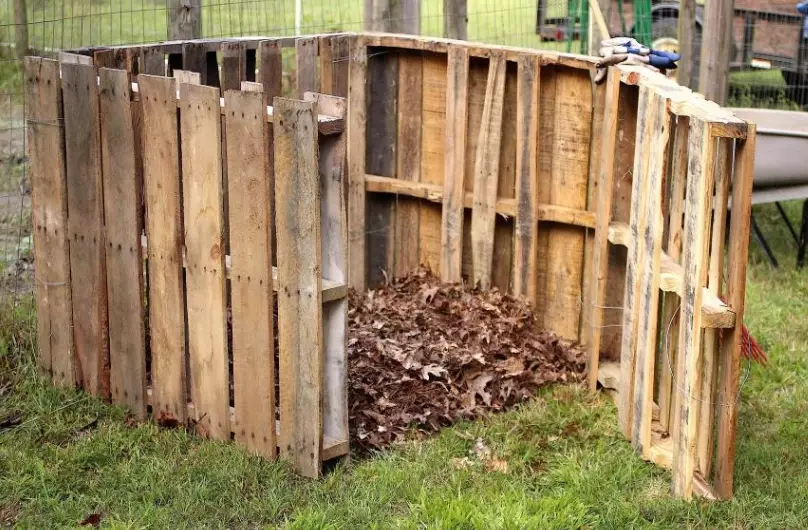
The Hybrid Approach: Partial or Strategic Lining
This is where you get clever. You don't have to line all four walls. Think about your bin's location and your specific problems.
Is the prevailing wind drying out your pile?
Just line the windward side (usually west or north).
Is the bin on a slope where compost spills out the downhill side?
Line the bottom half of that wall.
Getting too much driving rain from one direction?
Line that wall to act as a splash guard.
This hybrid method solves specific issues without creating a fully enclosed box. It's a surgical strike rather than a blanket policy. It also makes the whole "do you need to line a pallet compost bin" question less daunting—you're not committing to a full-scale project, just a minor modification.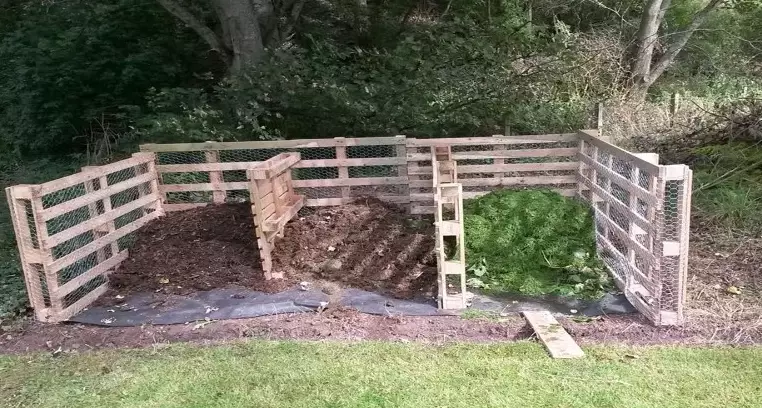
What About the Bottom? That's a Different Story.
We've been talking about lining the walls, but the bottom of the bin is a separate, and more important, consideration. Most experts, including resources from institutions like the U.S. Environmental Protection Agency, recommend having your compost pile in direct contact with the soil.
Why? The soil is a highway for worms, beneficial insects, and microbes to migrate up into your pile and supercharge the decomposition process. It also allows excess liquid (leachate) to drain away, preventing a soggy mess. If you line or seal the bottom, you cut off this vital connection.
So, for the bottom, the answer to "do you need to line it?" is almost always a firm no. Just set your pallet bin frame directly on bare earth, grass, or soil. If you're on a hard surface like concrete, you'll have to be much more careful about moisture levels, but it's still better to leave it open and manage moisture actively than to seal it.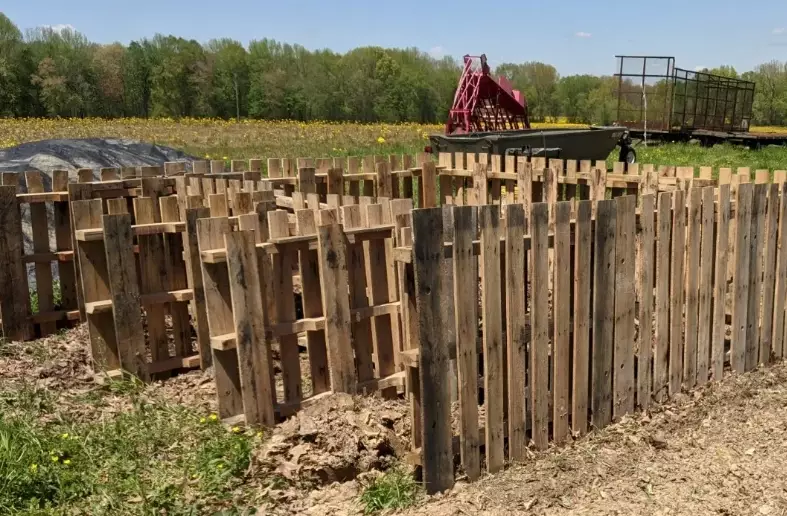
I made this mistake once, putting a bin on a plastic sheet on concrete. Drainage was zero, and it attracted every fruit fly in the county. Never again. Soil contact is non-negotiable for me now.
Answering Your Specific Questions (The FAQ)
Let's get into the nitty-gritty questions that pop up when you're deep in this decision. These are the things I've wondered and that readers email me about.
Making Your Final Decision: A Simple Checklist
Stuck? Walk through these points. They helped me clarify my own thinking.
- Look at your pallets. Are the gaps tiny or huge? Huge gaps lean towards lining or backing.
- Consider your climate. Dry and windy? A liner might help. Wet and humid? You probably want maximum airflow (no liner) or a liner only as a rain shield on top.
- Be honest about your style. Are you a meticulous gardener who hates mess, or a relaxed one who embraces the wild look?
- Think long-term. Are you okay with rebuilding the bin in 5-7 years as the wood rots? If not, a protective liner extends its life.
- Start simple. If you're unsure, don't line it at first. You can always add a liner later if you see problems with moisture loss or mess. It's much harder to fix a smelly, anaerobic pile caused by a bad liner.
For a deeper dive into the science of compost materials and ratios, which is far more critical to success than lining, the Cornell Waste Management Institute has fantastic, research-based resources.
So, What's the Verdict?
After all this, do you need to line a pallet compost bin? For most people, most of the time, no, you don't *need* to. The unlined, simple pallet bin works remarkably well. It's the path of least resistance and often the most successful.
However, you *might choose* to line it to solve a specific problem: excessive mess from wide gaps, brutal moisture loss in a dry climate, or to make the structure last longer. If you do line, your mission is to preserve breathability. Use landscape fabric, wire mesh, or burlap—never solid plastic.
Stop stressing about getting it perfect. The beauty of a pallet compost bin is its simplicity and adaptability. Try it without a liner. Watch how it behaves. If you see an issue, then you can ask the specific question: "How do I fix this moisture loss?" rather than the general "Do I need a liner?" That's how you'll build a system that works perfectly for your garden, your climate, and you.
Happy composting!
Reader Comments