Let's be honest. Starting a garden can feel overwhelming. You might have terrible clay soil that turns to concrete in summer, a backyard full of rocks, or maybe you're renting and don't want to invest in permanent beds. What if I told you there's a method that bypasses all that? Enter hay bale gardening. It's not just a trend; it's a legitimate, soil-free cultivation technique that turns a simple bale of straw or hay into a fertile, raised growing bed. I've been gardening for over a decade, and after wrestling with poor drainage and back-breaking tilling, switching to bales felt like a cheat code. This guide will walk you through everything, from choosing the right bale to harvesting your first tomato, based on hard-won experience, not just theory.
What's Inside: Your Quick Navigation
- What Exactly Is Hay Bale Gardening?
- Top Benefits Over Traditional Gardening
- Gathering Your Materials: A Simple Checklist
- The Critical 10-Day Conditioning Process
- Planting in Your Bale: Seeds vs. Transplants
- What Grows Best in Straw Bales?
- Ongoing Care: Watering and Feeding Your Bale
- Common Pitfalls and How to Avoid Them
- Your Questions, Answered
What Exactly Is Hay Bale Gardening?
At its core, hay bale gardening (more accurately called straw bale gardening) uses a decomposing bale of straw as both the container and the growing medium. You don't fill it with soil. Instead, you kickstart a composting process inside the bale itself using water and nitrogen fertilizer. Over about two weeks, the center of the bale heats up and begins to break down, creating a warm, nutrient-rich, and incredibly well-aerated environment for plant roots. It's like giving your plants a personal compost pile to grow in. The technique was popularized by horticulturist Joel Karsten, whose book outlined a simple, repeatable process. Research from institutions like the University of Nebraska-Lincoln Extension has since documented its effectiveness, especially for growers dealing with contaminated or compacted soil.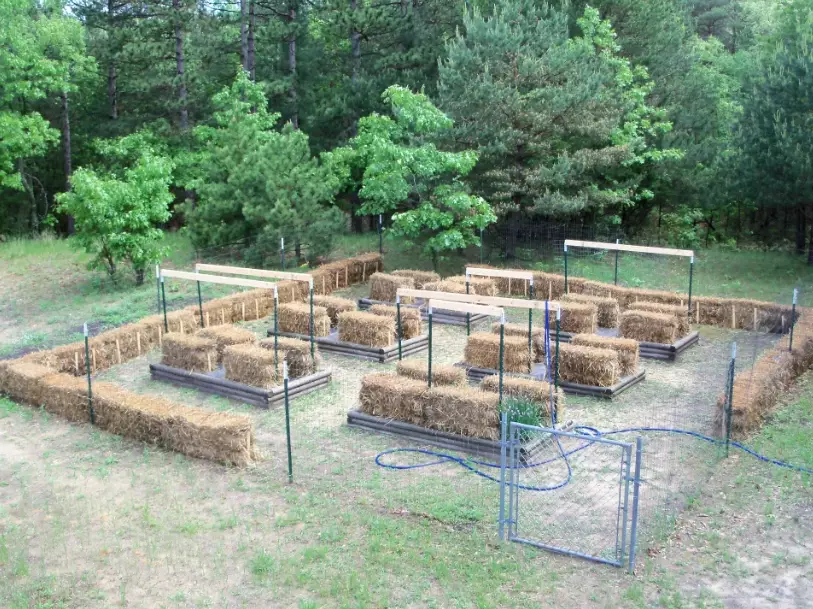
A crucial distinction: Most experts recommend using straw (the hollow stalks of grain crops like wheat, barley, or oats) over hay (dried grasses and legumes often containing seeds). Why? Straw bales are mostly seed-free, so you won't spend your summer weeding out grasses. Hay bales can work, but be prepared for extra weeding. For simplicity, we'll use the terms interchangeably here, but when you go shopping, ask for straw.
Top Benefits Over Traditional Gardening
Why go through the trouble? The advantages are tangible, especially for certain gardeners.
| Aspect | Hay/Straw Bale Garden | Traditional In-Ground Garden |
|---|---|---|
| Soil Quality | Irrelevant. Creates its own perfect medium. | Heavily dependent on existing soil; may require years of amending. |
| Weeding | Minimal. Few weeds germinate in the bale. | Constant battle with soil-borne weed seeds. |
| Height & Accessibility | Raised ~18 inches, easier on the back and knees. | Requires bending, kneeling, or building separate raised beds. |
| Drainage & Warmth | Excellent. Bales warm up faster in spring, extending the season. | Can be slow to warm, prone to waterlogging in clay soils. |
| Portability & Temporariness | Perfect for renters or temporary setups. Remove bales at season's end. | Permanent alteration of the landscape. |
| End-of-Season | Spent bales become fantastic compost or mulch. | Soil remains, may need cover cropping or tilling. |
The first year I tried it, my tomato plants in bales out-produced my in-ground bed by nearly double. The warmth and consistent moisture were game-changers.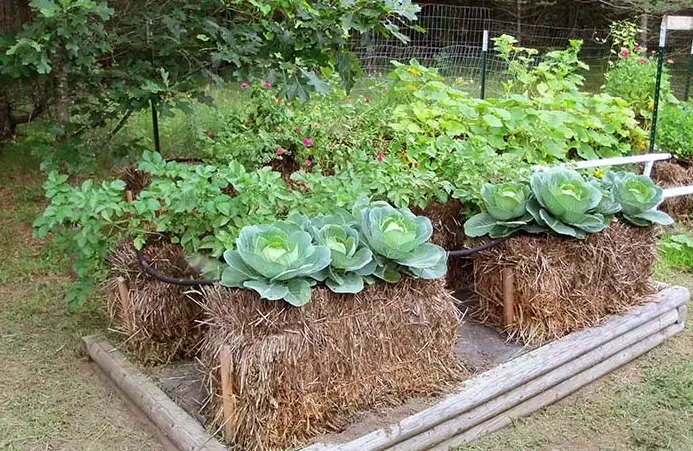
Gathering Your Materials: A Simple Checklist
You don't need much. Here's the non-negotiable list:
Straw Bales: Get the tightest, cleanest bales you can find. Avoid any that are moldy or falling apart. You'll need about 1-2 bales for every 3-4 plants you want to grow (e.g., 2 tomato plants per bale).
Nitrogen Source: This is the fuel for conditioning. A high-nitrogen lawn fertilizer (29-0-4 or similar) works well and is cheap. Organic options include blood meal or feather meal. You'll need about 1/2 to 1 cup per bale for the whole process.
A Good Watering Source: A hose with a gentle spray nozzle is ideal. Bales need a lot of water during conditioning.
Soil or Compost (a small amount): Not for filling, but for creating a little planting pocket on top of the bale.
Optional but Helpful: A soil thermometer to monitor the internal heat, and a tarp to place under the bales if you're putting them on a patio or deck to catch debris.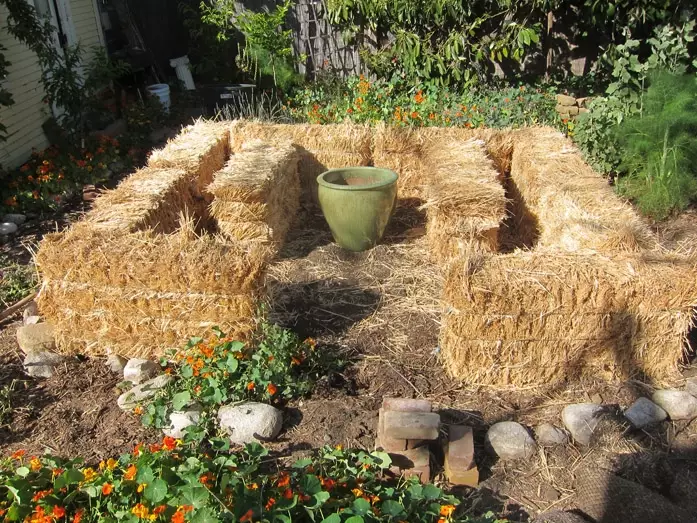
The Critical 10-Day Conditioning Process
This is where most beginners slip up. You can't plant directly into a fresh, dry bale. Conditioning is mandatory. Think of it as "cooking" the bale to make it plant-friendly.
Day 1-3: Soak and Fertilize
Place your bale with the strings running sideways (this keeps it more stable). Soak it thoroughly until water runs out the bottom. On days 1, 2, and 3, sprinkle 1/2 cup of your high-nitrogen fertilizer evenly over the top and water it in. Just keep the bale consistently moist, like a wrung-out sponge.
Day 4-6: Fertilize and Monitor Heat
On days 4, 5, and 6, cut the fertilizer to 1/4 cup per day, watering it in. Start checking the temperature inside the bale with your hand or a thermometer. It should start to feel warm. This is microbial activity—good decomposition.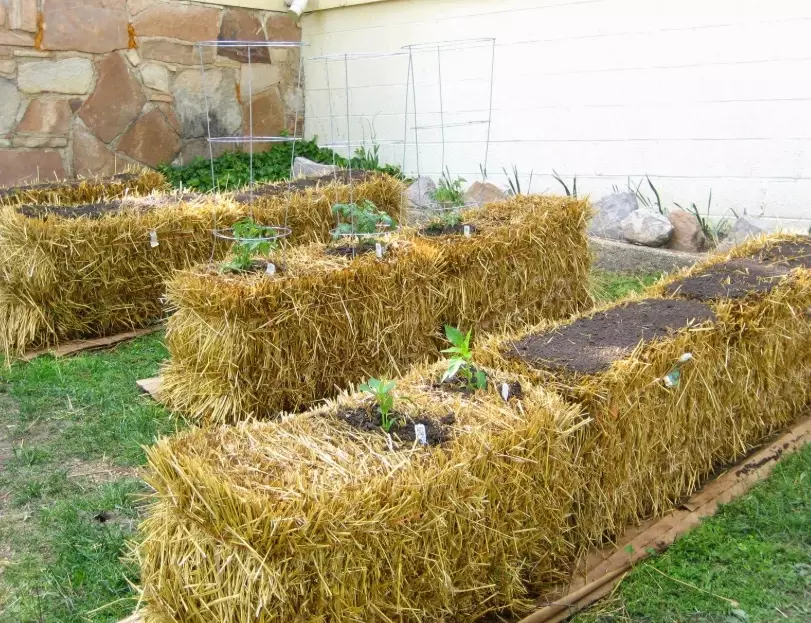
Day 7-10: Cool Down and Plant
Stop adding fertilizer on day 7. Just keep watering. By day 9 or 10, the internal temperature should have peaked and started to drop back to ambient. Stick your hand in—it should feel warm, not hot. Now it's ready.
Expert Misstep Alert: Don't use a balanced fertilizer (like 10-10-10) for conditioning. The high phosphorus can lock up micronutrients in the decomposing straw. Stick with a high-nitrogen source. Also, over-watering during the first few days can leach out all your fertilizer before the bale can absorb it. Water deeply but don't flood it continuously.
Planting in Your Bale: Seeds vs. Transplants
Once cool, you have two options.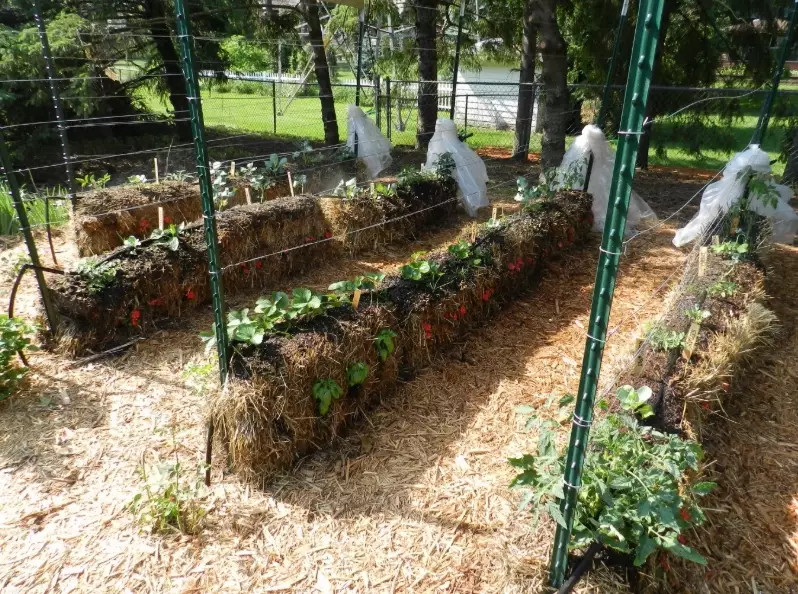
For Transplants (tomatoes, peppers, cucumbers): Pull apart a small hole in the top of the bale. Add a couple handfuls of potting mix or compost into the hole to give the young roots an immediate home. Plant your seedling into this pocket, firming it gently. The roots will quickly spread into the conditioned straw.
For Direct Seeding (beans, squash, greens): Create a 2-4 inch thick "bed" of potting mix or compost on top of the entire bale. Sow your seeds directly into this layer. This gives seedlings a fine-textured medium to start in before their roots reach the straw.
What Grows Best in Straw Bales?
Almost anything, but some are superstars.
Top Performers: Tomatoes, peppers, eggplants, cucumbers, summer and winter squash, potatoes, and strawberries. These plants love the warm, well-drained root zone.
Good Choices: Bush beans, kale, Swiss chard, and most herbs.
Challenging Crops: Tall, heavy corn and deep-rooted perennial crops like asparagus aren't ideal. Root crops like carrots and parsnips can work if you have a thick enough top layer of soil, but they may become misshapen.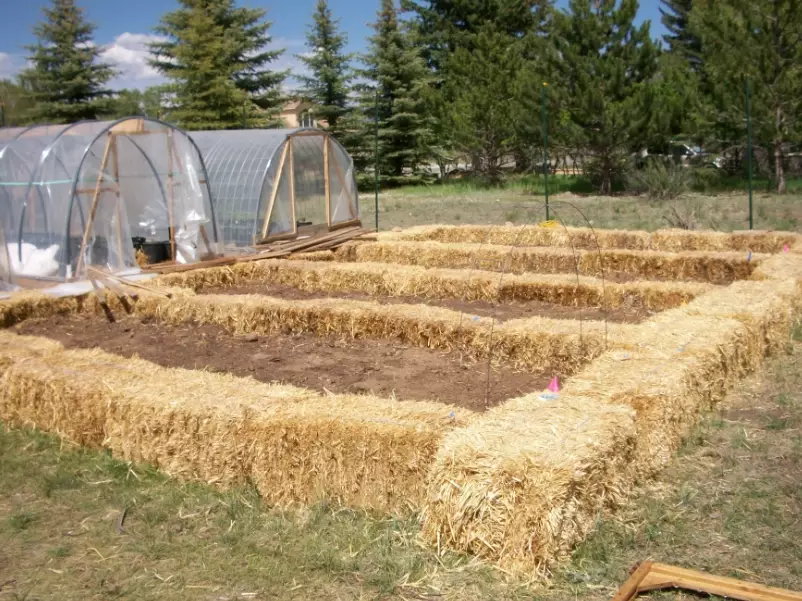
Ongoing Care: Watering and Feeding Your Bale
Bales dry out faster than soil, especially when new. In peak summer, you'll likely need to water daily. Stick your finger into the bale. If it's dry 2 inches down, it's time to water. A soaker hose laid along the top is a fantastic, water-saving investment.
For fertilizer, the bale provides some nutrients from decomposition, but it's not a complete diet. After planting, switch to a balanced, water-soluble fertilizer or compost tea every 2-3 weeks. I've found fish emulsion works wonders.
Common Pitfalls and How to Avoid Them
I've made these so you don't have to.
Skipping or rushing conditioning. The bale isn't ready until it's cool. Planting too early can "cook" your seedlings' roots.
Using hay full of weed seeds. The extra weeding headache is real. Insist on straw.
Under-watering. This is the #1 cause of failure after setup. Bales are porous. Check moisture levels religiously for the first month.
Placing bales in full shade. They need at least 6-8 hours of sun, just like any vegetable garden.
Reader Comments