Let's be honest, staring at an empty raised bed frame can be daunting. You've built or bought this perfect container, and now you have to fill it. What goes in it is the single most important decision you'll make for your garden's success. Get the soil right, and plants thrive with fewer pests and diseases. Get it wrong, and you'll fight compaction, poor drainage, and stunted growth all season.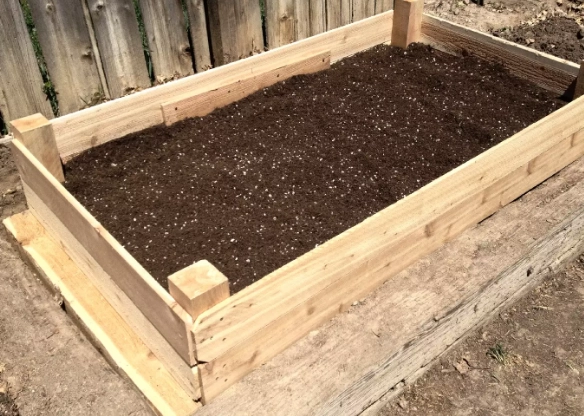
This isn't just about dumping in dirt from your yard. Raised bed soil is a crafted growing medium. It's the foundation. Over the years, I've seen gardeners make the same costly mistakes—both in money and effort. We're going to cut through the confusion, give you a simple, proven recipe, break down the real cost, and point out the subtle errors most beginners (and even some experienced folks) miss.
What's Inside This Guide?
How to Mix the Perfect Soil for Your Raised Bed
Forget complicated formulas. The goal is simple: create a light, fluffy, nutrient-rich mix that holds moisture but drains excess water. Heavy, clumpy garden soil fails on all counts inside a raised bed's walls.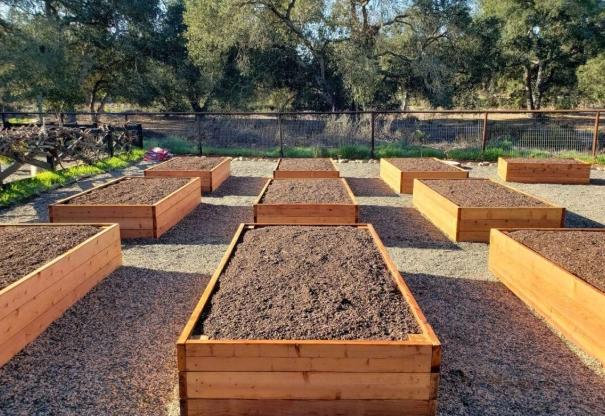
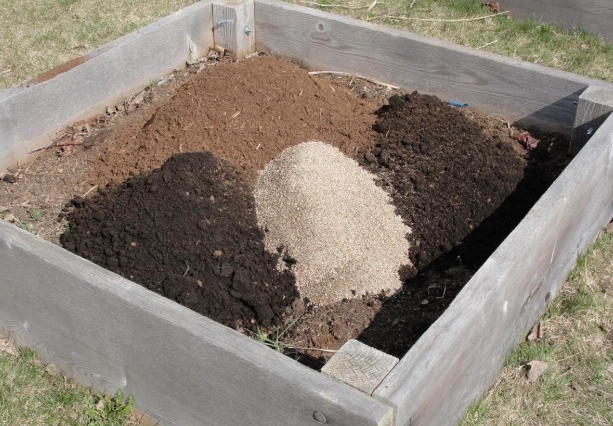
The classic, widely-recommended recipe is Mel's Mix, popularized by Square Foot Gardening: 1/3 peat moss (or coconut coir), 1/3 coarse vermiculite, and 1/3 blended compost. It's brilliant for its simplicity and results. But for many home gardeners, the cost of vermiculite can be a hurdle, and sourcing multiple types of compost isn't always easy.
Here's a more practical, budget-friendly, and equally effective recipe I've used for a decade. I call it the Balanced Bed Blend.
The Balanced Bed Blend Recipe
Base (60% of total volume): A combination of high-quality topsoil and garden soil. This isn't dirt from a hole in your yard. Buy bagged or bulk "screened topsoil" or "raised bed mix" from a landscape supplier. It provides mineral content and body.
The Life Force (30% of total volume): Compost. This is non-negotiable. Don't use just one source. Blend at least two different types for a broader spectrum of nutrients and microbes. Think mushroom compost, worm castings, and homemade leaf compost.
The Fluff Factor (10% of total volume): Aeration amendments. Perlite or coarse horticultural sand. This is the secret weapon against compaction. It creates permanent air pockets for roots to breathe.
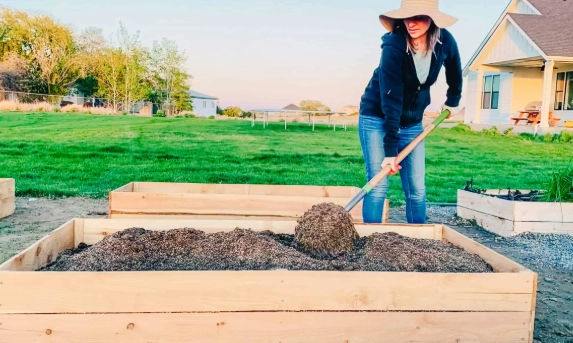
Mix these on a large tarp or in a wheelbarrow. Get it thoroughly combined. The texture should be crumbly, like a moist chocolate cake, not sticky like clay or dusty like sand.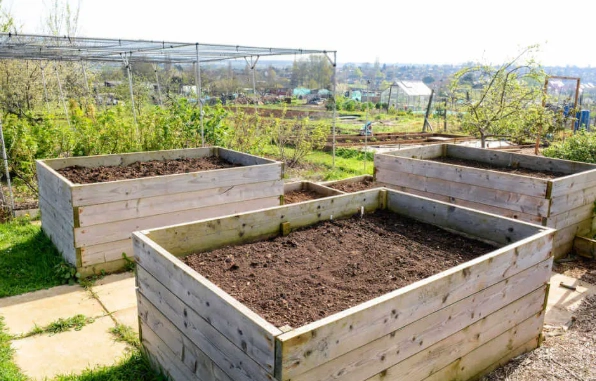
The "Why" Behind the Mix
Why this ratio? Topsoil gives structure. Compost feeds plants and builds soil life—it's not just fertilizer, it's the engine room. The aeration amendment (perlite is my favorite) is the insurance policy. Even with foot traffic and heavy rains, those little white chunks keep the soil from turning into a brick.
A mistake I made early on was skipping the aeration component to save twenty bucks. By mid-July, my bed was so dense that watering just pooled on the surface. The roots were suffocating. Never again.
The Real Cost of Filling a Raised Garden Bed
This is the sticker shock moment. Soil isn't free, and raised beds need a lot of it. But planning ahead saves money.
Let's take a standard 4-foot by 8-foot bed, 12 inches deep. That's 32 cubic feet of volume (4 x 8 x 1 = 32).
Cost Breakdown for a 4'x8'x1' Bed
Option 1: Bagged Soil from Big-Box Store
- Bags: 1.5 cubic feet each.
- Bags Needed: 32 / 1.5 = ~22 bags.
- Cost per Bag: $5 - $8 for decent raised bed mix.
- Total Estimate: $110 - $176. Convenient, but the most expensive route. Quality can be inconsistent.
Option 2: Bulk Delivery from Landscape Supply
- Bulk cubic yard: 27 cubic feet.
- Yard(s) Needed: Just over 1 yard (32 cu ft).
- Cost per Yard: $40 - $70 for premium triple-mix or raised bed blend.
- Delivery Fee: $50 - $100 (often waived for larger orders).
- Total Estimate: $90 - $170. Far better value for multiple beds. You must have a place to dump it.
Option 3: DIY Mix with Bulk Components
- 1 Yard Topsoil: $25
- 1/2 Yard Compost (blended): $35
- 3 cu ft bag of Perlite: $25
- Total Estimate: ~$85. The most economical for quality control. Requires labor to mix.
My advice? If you have more than one bed, go bulk. The savings are massive. Call local suppliers—many have specific "raised bed mix" that's close to our ideal recipe. Ask them for the ingredient list.
3 Common Raised Bed Soil Mistakes You're Probably Making
These aren't the obvious "don't use clay" tips. These are the subtle errors that slowly undermine your garden.
1. The "All-Compost" Bed. Enthusiasm leads to filling the bed with 100% beautiful, black compost. It seems logical—compost is good, so more must be better. The result? A bed that dries out in a day, holds too much nitrogen (leading to lush leaves but no fruit on tomatoes), and lacks mineral structure. Plants often get leggy and weak. Compost is a supplement, not the entire meal.
2. Ignoring Soil Depth for Specific Crops. You built a cute 6-inch deep bed. It's perfect for lettuce and herbs. But you plant carrots and parsnips. Their roots hit the hard ground underneath and twist or stall. Know what you want to grow. For root vegetables or deep-rooted tomatoes and peppers, aim for at least 12 inches of depth. 18 inches is luxury.
3. Forgetting the "Weed Seed" Factor in Cheap Topsoil. That bargain $15-per-yard topsoil from the guy on the roadside? It's often filled with weed seeds and might be subsoil (devoid of life). You'll spend the entire summer weeding. Pay a bit more for screened topsoil from a reputable supplier. The time you save is worth every penny.
Keeping Your Soil Alive Year After Year
Your raised bed soil isn't a one-time setup. It's a living system that needs feeding. You don't need to replace it annually.
Each fall, after harvesting, sow a cover crop like winter rye or crimson clover. It protects the soil, adds organic matter, and fixes nitrogen. In spring, chop it down and let it decompose on the surface as a "green manure."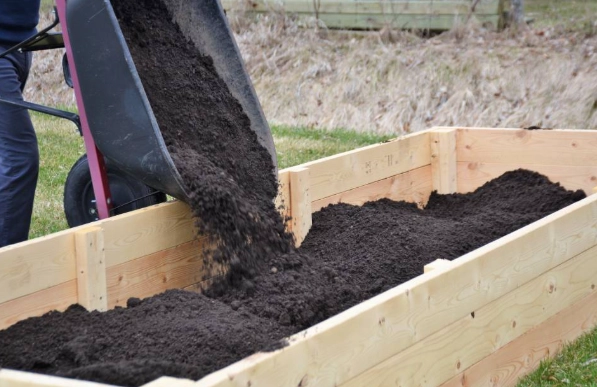
Every spring, top-dress. This is your annual ritual. Add a 1-2 inch layer of fresh, blended compost over the entire surface and gently rake it in. This replaces nutrients lost to last year's crops and reinvigorates microbial life.
Crop rotation matters even in small beds. Don't plant tomatoes in the same spot two years in a row. It helps prevent soil-borne diseases and balances nutrient demands.
Your Raised Bed Soil Questions Answered
The bottom line? Don't overthink it, but don't cut corners. Invest in a good mix from the start—your plants will thank you with buckets of harvest. Start with the Balanced Bed Blend, top-dress religiously, and your raised bed soil will get better every year, becoming your garden's greatest asset.
Reader Comments