Pruning is one of those gardening tasks that feels equal parts satisfying and terrifying. You get to shape nature, but one wrong snip and you fear you've committed plant murder. I've been there. I've also spent years teaching pruning classes, and the biggest mistake I see isn't a bad cut—it's hesitation. People are so afraid of doing it wrong that they don't do it at all, and their plants suffer for it. So let's strip away the mystery. Pruning, at its core, is a conversation with your plant. You're directing energy, removing problems, and encouraging good form. This guide is that conversation translated.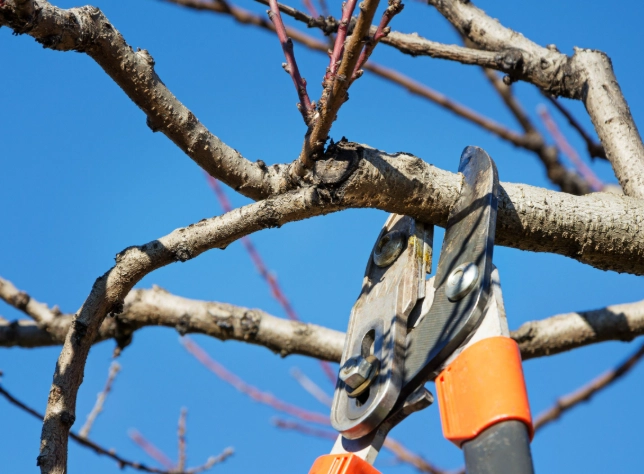
What's Inside This Guide
- Why Pruning is Non-Negotiable for Plant Health
- Essential Pruning Tools You Actually Need
- How Do You Actually Make the Cut? (The Mechanics)
- The When: Your Seasonal Pruning Calendar
- Plant-Specific Pruning: Trees, Shrubs & Perennials
- What Are the Most Common Pruning Blunders?
- Your Pruning Questions, Answered
Why Pruning is Non-Negotiable for Plant Health
Think of a plant's energy like a budget. It only has so much. When you let it spend that budget on dead branches, suckers at the base, or ten stems all crammed into one space, it's wasting resources. Pruning is you, the financial advisor, stepping in.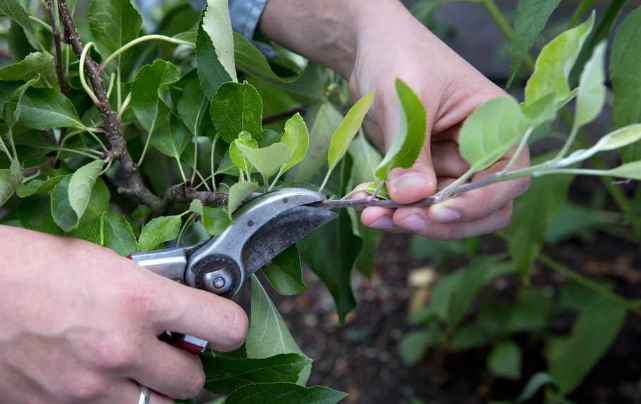
It's not just about looks. Sure, a well-pruned rose is a beautiful thing. But the real benefits are under the surface.
- Disease Prevention: Dead, rubbing, or crowded branches create wounds and trap moisture. That's a five-star hotel for fungi and pests. Removing them improves air circulation, letting leaves dry faster and making the plant less hospitable to problems. The Royal Horticultural Society consistently lists improved airflow as a primary defense against common fungal diseases.
- Stronger Structure: A young tree with a co-dominant leader (two main trunks) is a future hazard. Pruning to a single, central leader early on forces it to develop a strong, resilient architecture that can handle wind and snow.
- Rejuvenation: Many shrubs, like lilacs or forsythia, get woody and stop flowering profusely in the center. Strategic removal of the oldest stems at the base shocks the system, forcing out vigorous new growth that will bloom better in coming years.
- Controlled Growth: You're the boss. Want more fruit? Prune to stimulate fruiting wood. Want a denser hedge? Prune to encourage branching. The plant responds directly to where you cut.
My personal rule: I never prune without a reason. That reason falls into one of four categories: Health, Safety, Shape, or Purpose (like more flowers/fruit). If my cut doesn't serve one of those, my pruners stay in my pocket.
Essential Pruning Tools You Actually Need
You don't need a shed full of gadgets. You need three, maybe four, quality tools kept sharp and clean. A dull blade mashes stems, creating ragged wounds that heal slowly and invite trouble.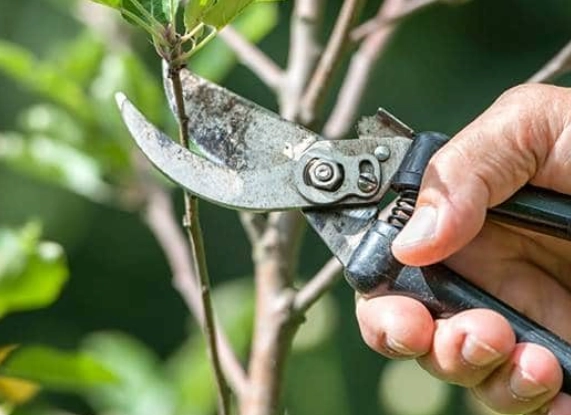
| Tool | Best For | What to Look For & Price Point |
|---|---|---|
| Bypass Hand Pruners (Secateurs) | Your workhorse. Stems up to ¾" thick. Precision cuts on roses, perennials, small branches. | A bypass mechanism (blade passes by hook). Comfortable grip. Brands like Felco, Corona, or ARS. Expect $40-$80 for a lifetime tool. |
| Bypass Loppers | Branches ¾" to 1.5" thick. The extra leverage saves your hands. Reaching into shrub centers. | Extendable handles are great for versatility. Look for geared mechanisms for easier cutting. $50-$100. |
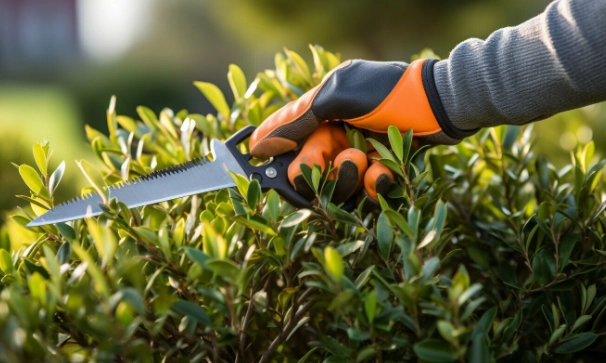
| Pruning Saw | Anything over 1.5" thick. Removing large tree limbs, cutting out old shrub canes. | A curved blade with aggressive, tri-cut teeth that cut on the pull stroke. Folding is safer for storage. $30-$60. |
| Hedge Shears (Optional) | Formal hedges and topiary only. Not for general pruning. | Long, straight blades. Lightweight. Don't spend a fortune here unless you have miles of hedge. |
Disinfecting your tools between plants, especially when moving from a diseased plant to a healthy one, is a step most people skip. A quick wipe with isopropyl alcohol or a disinfectant wipe can prevent spreading blight or canker. It takes ten seconds.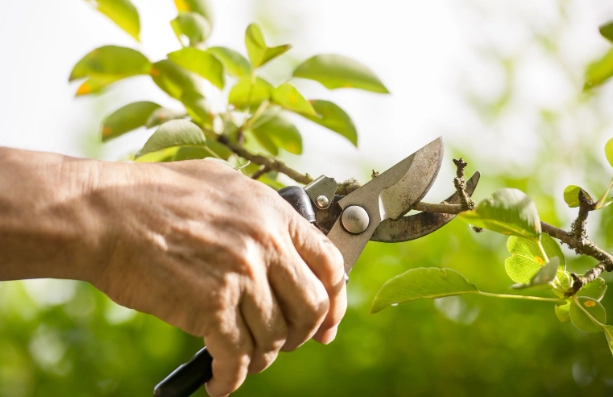
How Do You Actually Make the Cut? (The Mechanics)
This is where theory meets bark. There are two fundamental types of cuts, and which you use changes everything.
1. The Thinning Cut
You remove an entire branch back to its point of origin—either the main trunk, a larger branch, or the ground. This opens up the plant's structure without stimulating a burst of new growth right at the cut site. It's the cut you use most for health and natural shaping. Think of it as removing an entire paragraph, not editing a sentence.
2. The Heading Cut
You shorten a branch by cutting it back to a bud or a smaller side branch. This does stimulate vigorous new growth right below the cut, usually in the direction of the bud you left. Use this to encourage bushiness, control size, or shape formal hedges. Overuse creates a dense, twiggy mess people call "hatracking."
The #1 Technical Mistake: The Stub Cut. You leave a piece of branch sticking out past the bud or collar. That stub will die back, becoming an entryway for rot that can then move into the healthy tissue. Always cut close.
Where to cut: On a heading cut, find a bud facing the direction you want new growth to go (usually outward, away from the plant's center). Make your cut about ¼ inch above that bud, at a slight angle sloping away from it. This sheds water away from the bud.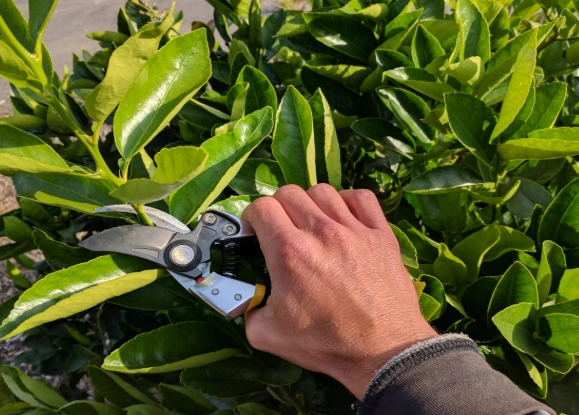
For a thinning cut at a branch union, identify the branch collar. It's that swollen, wrinkled area where the branch meets the trunk. Your cut should be just outside this collar, not flush with the trunk. The collar contains specialized cells that seal the wound. Flush cutting removes the plant's natural healing zone.
The When: Your Seasonal Pruning Calendar
Timing isn't everything, but it's close. Get it wrong, and you might cut off a season of flowers or expose fresh cuts to harsh frost.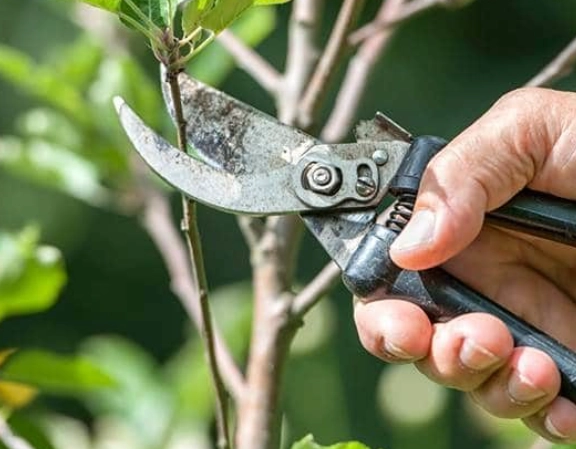
Late Winter / Early Spring (Dormant Season): This is prime time for major structural pruning on most trees and non-spring-blooming shrubs. The plant is asleep, its energy stored in the roots. With no leaves, you can see the skeleton clearly. Wounds heal quickly as growth surges in spring. It's also the best time to prune for disease control, as many pathogens are less active.
After Spring Bloom: This is the rule for shrubs that flower in spring on old wood (last year's growth). Lilac, forsythia, rhododendron, bigleaf hydrangea. If you prune these in winter, you're cutting off the flower buds. Prune them right after their flowers fade, giving them the rest of the season to grow new wood that will bloom next year.
Summer: Light pruning and clean-up. Pinching back perennials to encourage bushiness, deadheading spent flowers, removing water sprouts on trees. Avoid major cuts in late summer, as the new growth stimulated may not harden off before frost.
Fall: Generally, don't. Major pruning in fall is an invitation for trouble. Fresh cuts won't heal before winter, and decaying fungi are active. The only exception is removing dead, damaged, or diseased material anytime you see it.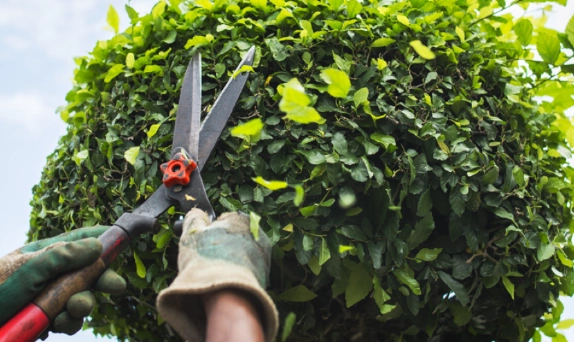
Plant-Specific Pruning: Trees, Shrubs & Perennials
Deciduous Trees (Maple, Oak, etc.)
Focus on the young tree. Establish a strong central leader. Remove competing leaders, rubbing branches, and branches with narrow, weak crotch angles. On mature trees, limit work to deadwood removal, thinning for light penetration, and raising lower limbs for clearance. Never "top" a tree. It creates weakly attached, hazardous growth and ruins its form forever.
Summer-Blooming Shrubs (Butterfly Bush, Rose of Sharon, Panicle Hydrangea)
These bloom on new wood (growth they make this season). Prune them hard in late winter/early spring. You can cut butterfly bush nearly to the ground. For others, reduce height by one-third to one-half to encourage strong, flowering stems.
Roses
A classic source of anxiety. Hybrid Teas: Late winter prune, cutting canes back to 12-18 inches, leaving 4-5 outward-facing buds per cane. Remove all thin, weak wood. Shrub Roses: Less severe. Just shape, remove dead wood, and thin the center. Climbing Roses: Don't cut the main structural canes. Prune the side shoots coming off those canes back to 2-3 buds in late winter.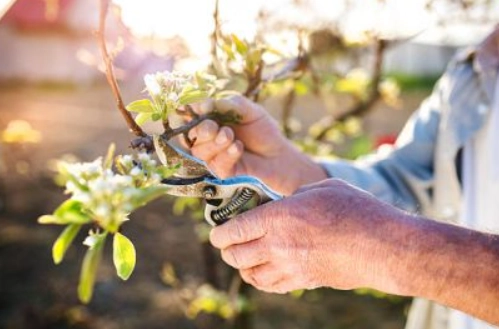
Herbaceous Perennials
This is mostly "cutting back." In fall or early spring, cut dead foliage to the ground. During summer, deadhead to encourage more blooms. Some, like sedum or ornamental grasses, have winter interest—leave them up until spring.
What Are the Most Common Pruning Blunders?
Let's look at the hall of shame. I've made a few of these myself early on.
- The Fearful Trim: Just snipping an inch off the ends of everything. This is all heading cuts, which causes a dense shell of growth on the outside that blocks light and air from the interior. The inside becomes a dead zone.
- Ignoring the 3 D's: Not starting every pruning session by removing Dead, Diseased, and Damaged wood first. This is your non-negotiable warm-up.
- Murdering a Crape Myrtle ("Crape Murder"): Topping it back to knobby stubs every year. It forces out weak, spindly growth, reduces flowering, and creates grotesque knuckles. Let it be a tree! If it's too tall for the space, you planted the wrong cultivar.
- Pruning Based on the Calendar, Not the Plant: Marking April 1st on your calendar for all pruning. You must know why each plant is being cut and how it flowers.
- Using the Wrong Tool: Forcing hand pruners through a two-inch branch. You'll strain the tool, make a terrible cut, and hurt your hands. Get the loppers or the saw.
Your Pruning Questions, Answered
The final thing to remember is that plants are resilient. They want to live. I've seen trees compartmentalize truly awful cuts and carry on. The goal isn't perfection—it's progress. Get your tools sharp, start with the obvious dead stuff, and make each cut with intention. Your garden will respond with better health, more blooms, and a clearer structure. And you'll lose that fear. You'll start seeing not just a shrub, but a collection of branches waiting for your direction.
Reader Comments