Here's What We'll Cover
Planting asparagus isn't like tossing in some lettuce seeds. It's a long-term commitment, but get it right, and you'll have fresh spears for decades. I've grown asparagus for over ten years, and let me tell you, the first harvest is magical. This guide cuts through the fluff and gives you the real steps, based on my own trials and errors.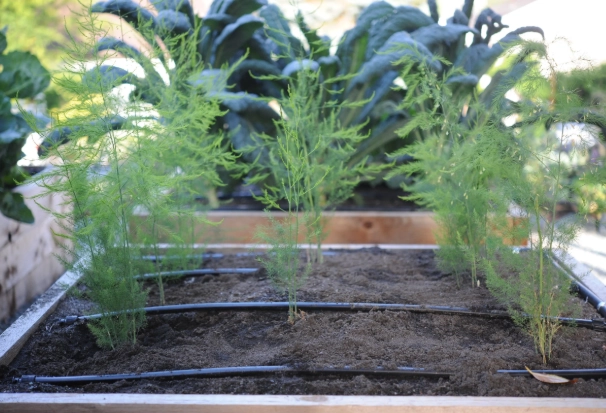
Why Asparagus is Worth the Wait – The Perennial Advantage
Most veggies are annuals—plant, harvest, done. Asparagus is different. It's a perennial, meaning once established, it comes back year after year. Think of it as a garden investment. You wait a couple of years, but then you get harvests for 15-20 years. That's a lot of asparagus dinners.
I remember planting my first bed and being impatient. But now, every spring, those spears pop up like clockwork. It's rewarding in a way that quick crops aren't.
How to Prepare Your Garden for Asparagus
This is where many beginners mess up. Asparagus hates wet feet and poor soil. Skip this step, and you'll have weak plants or crowns that rot.
Soil Requirements and Testing
Asparagus thrives in well-drained soil with a pH between 6.5 and 7.5. If your soil is heavy clay, you need to amend it. I learned this the hard way—my first bed in clay soil produced spindly spears.
Test your soil pH. Kits are cheap, or check with your local extension service (like the University of California Agriculture and Natural Resources for resources). Add lime to raise pH or sulfur to lower it. Then, work in plenty of organic matter. Compost is your best friend here. Aim for 2-3 inches mixed into the top 12 inches of soil.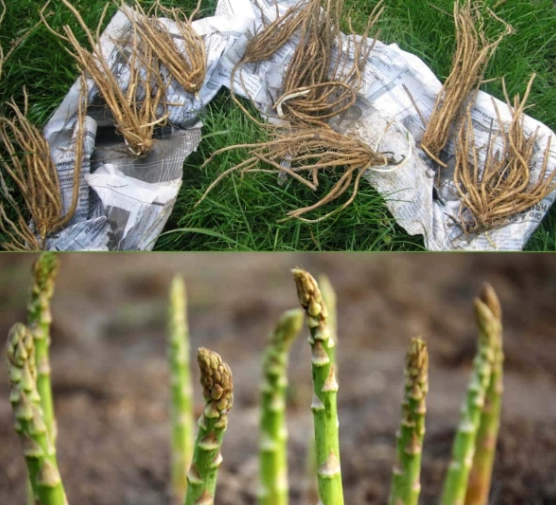
Choosing the Right Location
Pick a sunny spot—asparagus needs at least 8 hours of sun daily. Avoid low areas where water pools. Since it's perennial, think long-term: don't plant where you'll need to dig later.
Here's a quick table for soil prep essentials:
| Factor | Recommendation | Why It Matters |
|---|---|---|
| Soil pH | 6.5-7.5 | Affects nutrient uptake; outside this range, plants struggle. |
| Drainage | Well-drained | Prevents crown rot; asparagus roots drown in soggy soil. |
| Organic Matter | 2-3 inches compost | Improves soil structure and fertility for long-term growth. |
| Sunlight | Full sun (8+ hours) | Maximizes spear production and plant health. |
Step-by-Step Guide to Planting Asparagus Crowns
Most people use crowns—dormant roots—because they're faster than seeds. Here's the nitty-gritty.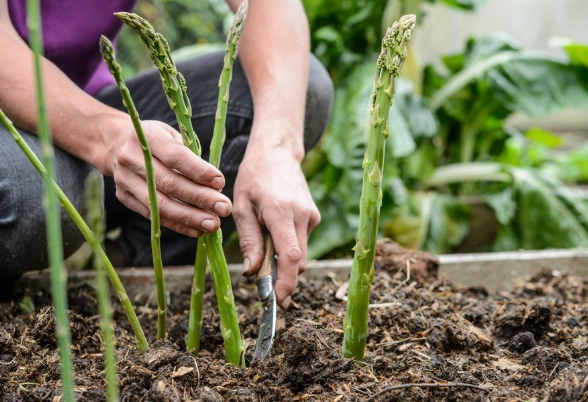
When to Plant Asparagus
Plant in early spring, as soon as the soil is workable. In most regions, that's when temperatures hit 50°F (10°C). Don't wait too long; crowns need time to establish before summer heat.
How Deep and Far Apart to Plant
Dig trenches 6-8 inches deep and 12-18 inches apart. Place crowns at the bottom, spreading roots out like an octopus. Cover with 2 inches of soil initially. As shoots grow, fill in the trench gradually over a few weeks. This encourages strong root development.
Some guides say 6 inches deep, but in sandy soil, I go 10 inches to prevent drying. In clay, stick to 6 inches to avoid waterlogging. It's a subtle tweak that makes a difference.
Water well after planting, but don't drown them. A good soak once a week is enough unless it rains.
Caring for Your Asparagus Bed
Once planted, asparagus is low-maintenance, but neglect it, and yields drop.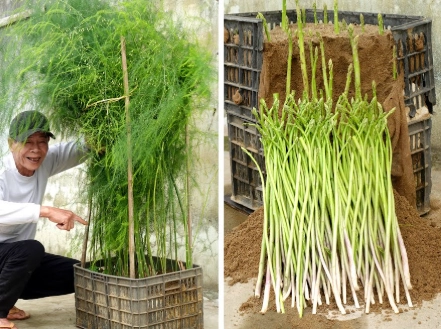
Watering and Fertilizing
Water deeply but infrequently—about 1 inch per week. Overwatering is worse than underwatering. In my garden, I use a soaker hose to keep moisture consistent.
Fertilize in early spring with a balanced fertilizer (10-10-10) or compost. Avoid high-nitrogen stuff; it promotes fern growth at the expense of spears.
Weed Control and Mulching
Weeds compete fiercely with asparagus. Mulch with straw or wood chips to suppress weeds and retain moisture. I mulch 2-3 inches thick, but keep it away from emerging spears.
Dealing with Pests and Diseases
Asparagus beetles are the main pest. Handpick them or use neem oil. For diseases like fusarium wilt, choose resistant varieties like 'Jersey Knight'. Rotate crops if possible, though with perennials, that's tricky.
Common Mistakes Beginners Make (And How to Avoid Them)
I've seen these over and over. Let's save you the headache.
- Planting too shallow: Crowns dry out or get damaged. Always dig deep trenches.
- Harvesting too soon: It's tempting, but wait at least 2 years. Harvesting early weakens plants.
- Poor soil prep: Skimping on compost leads to nutrient deficiencies. Don't rush this.
- Overcrowding: Spacing too close reduces air flow and increases disease risk. Stick to 12-18 inches apart.
One mistake I made was not labeling the bed. Asparagus goes dormant in winter, and I almost dug it up thinking it was dead. Use markers!
Harvesting Your Asparagus: When and How
Patience is key. For crowns, don't harvest the first year. In year two, take a few spears for 2-3 weeks. By year three, you can harvest for 6-8 weeks in spring.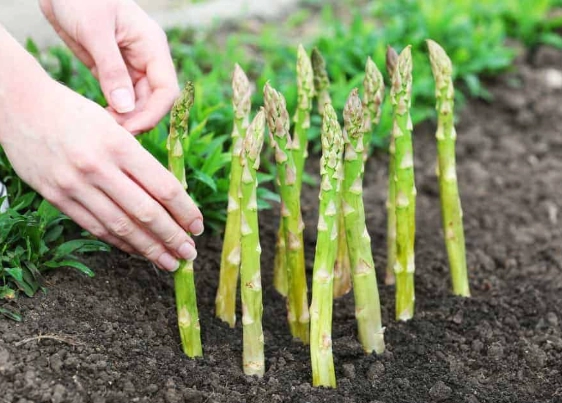
Harvest when spears are 6-8 inches tall and thick as a pencil. Snap them off at ground level—cutting can damage crowns. Stop harvesting when spears thin out; let the ferns grow to recharge the roots.
After harvest, leave the ferns until they yellow in fall, then cut them back. This cycle keeps plants healthy.
Frequently Asked Questions
That's it. Follow these steps, and you'll have a thriving asparagus bed. It's not rocket science, but attention to detail pays off. Start this spring, and in a few years, you'll be enjoying homegrown spears that beat anything from the store. Happy planting!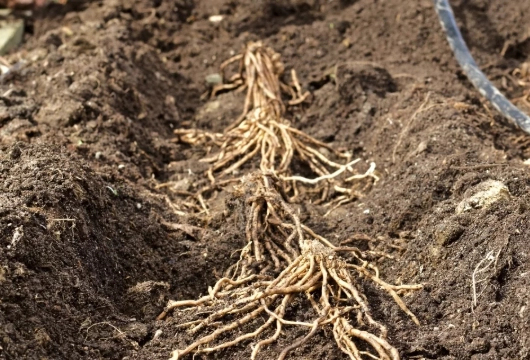
Reader Comments