In This Guide
- What Do Ladybug Eggs Look Like? The Ultimate Identification Guide
- From Egg to Beetle: The Fascinating Ladybug Life Cycle
- Why Finding Ladybug Eggs in Your Garden is a Cause for Celebration
- How to Protect and Encourage Ladybug Eggs in Your Garden
- Frequently Asked Questions About Ladybug Eggs
- The Bigger Picture: Ladybug Eggs and a Healthy Ecosystem
You’re out in your garden, checking on your roses or your kale, and you see them. Little clusters of tiny, yellow, pill-shaped things stuck to the underside of a leaf. Your first thought might be, "Uh oh, some weird pest has moved in." Hold that thought. Before you grab the insecticidal soap or, worse, squish them with your thumb, take a closer look. You might be looking at pure gardening gold: ladybug eggs.
I made that mistake once, years ago. I saw these odd yellow dots and panicked, thinking it was the start of an invasion. I sprayed them off with water. It wasn’t until later, when I saw the familiar red and black beetles nearby, that I realized my blunder. I’d just washed away an army of future aphid-eaters. I felt terrible. That experience sent me down a rabbit hole, and now I can spot ladybug eggs from a few feet away. Let me save you from making the same mistake.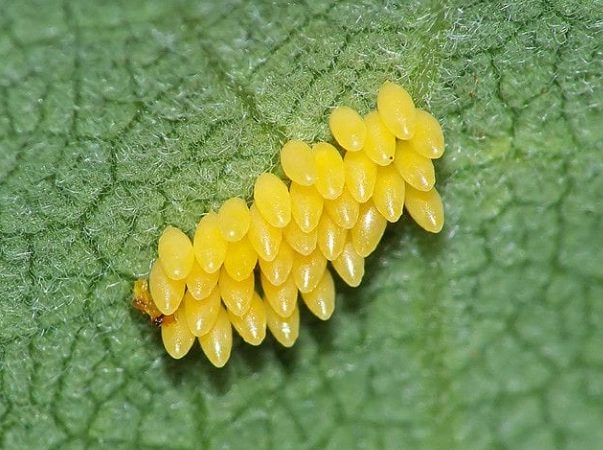
These tiny packages are the starting point for one of the most effective natural pest controllers you can have. Understanding them is a game-changer for any gardener trying to work with nature, not against it.
What Do Ladybug Eggs Look Like? The Ultimate Identification Guide
This is the big one, right? You searched for "what do ladybug eggs look like" because you need a clear, no-nonsense answer. Let’s break it down so you’ll never second-guess yourself again.
Imagine a tiny grain of rice, but shorter, fatter, and with a more rounded top. Now color it a vibrant, almost neon yellow or deep orange. That’s the basic shape and color. They’re incredibly small—typically around 1 millimeter long. You won’t see them from a standing position; you have to get down and look under leaves.
But here’s the real kicker: they are almost never laid alone. A female ladybug lays her eggs in a cluster. We’re talking groups of 10, 20, sometimes up to 50 eggs all stuck together on a single leaf surface. They stand upright, glued in place by a quick-drying secretion. This clustering is one of their most distinctive features.
Key Features to Look For (A Handy Checklist)
- Color: Bright yellow, orange-yellow, or sometimes a deeper saffron color. They are not white, green, or clear.
- Shape: Oval or elliptical, like a tiny barrel, with a slightly tapered end.
- Size: Minuscule. About the size of a pinhead or a grain of fine sand.
- Arrangement: Grouped in a tight, neat cluster. Random scattering is a red flag for something else.
- Location: Almost always on the underside of a leaf, often on plants already infested with aphids or other soft-bodied pests. It’s like mom is setting the dinner table right next to the buffet.
- Texture: They have a slight sheen and look smooth.
I keep a magnifying glass in my garden shed just for this purpose. It turns a blurry yellow smudge into a clearly defined cluster of ladybug eggs. It’s a worthwhile investment.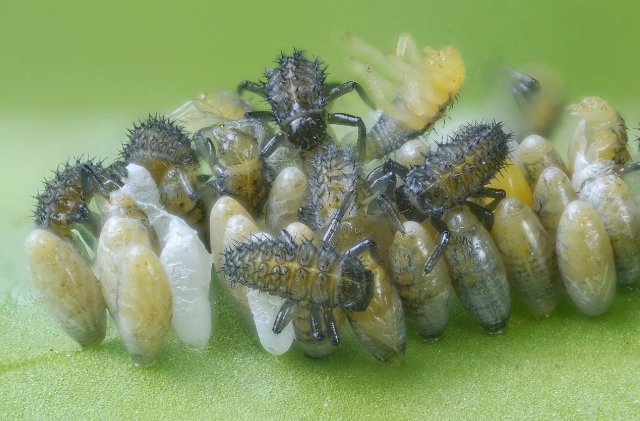
From Egg to Beetle: The Fascinating Ladybug Life Cycle
Knowing what ladybug eggs look like is half the battle. Understanding what happens next makes you appreciate the whole process. It’s a wild, almost alien transformation.
The ladybug life cycle is a textbook example of complete metamorphosis: egg » larva » pupa » adult. Each stage looks completely different, which is why many people kill the helpful larvae, thinking they’re pests.
| Stage | Duration (Approx.) | What It Looks Like & What It Does | Key Role in Pest Control |
|---|---|---|---|
| Egg | 3 to 7 days | Tiny yellow/orange clusters on leaf undersides. The starting point. | None yet. This is the "waiting" stage. |
| Larva | 2 to 3 weeks | Alligator-like, spiky, dark-colored (often black with orange spots). VERY active. | THE HEAVY LIFTER. A single larva can eat 300-400 aphids. This is the most voracious stage. |
| Pupa | 5 to 10 days | Immobile, orange-ish lump attached to a leaf. Looks like a tiny, shriveled shrimp. | None. Metamorphosis happening inside. |
| Adult | Several months to a year | The familiar dome-shaped, spotted beetle. | Continues eating pests and lays the next generation of eggs. |
The most important takeaway from this table? The larval stage is the true powerhouse. That weird, ugly, alligator-looking creature is an aphid-eating machine. When you protect a cluster of ladybug eggs, you’re not just getting a few beetles; you’re unleashing a small army of these ravenous larvae. They’ll clean up an aphid problem faster than any spray.
After hatching, the tiny larvae often eat their own egg casings for an initial protein boost before waddling off to find their first aphid. The race is on from minute one.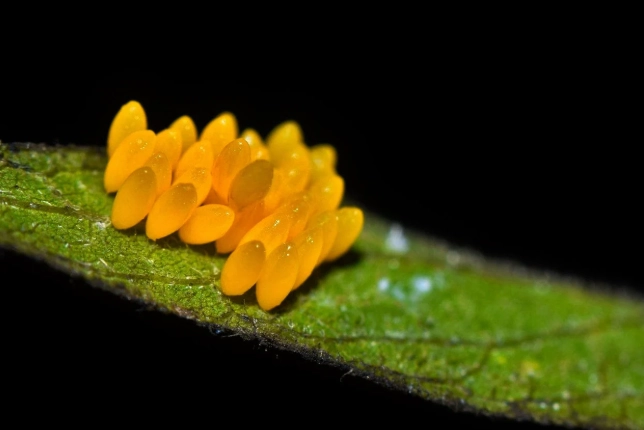
Why Finding Ladybug Eggs in Your Garden is a Cause for Celebration
If you’ve identified ladybug eggs on your plants, put down the tools and do a little dance. Seriously. This is one of the best signs your garden ecosystem is healthy and balanced.
Think about it. A ladybug chose your garden to lay her eggs. That means a few things:
- You have prey. She detected aphids, scale, mites, or other soft-bodied pests. She’s responding to a chemical SOS sent out by infested plants.
- Your environment is safe enough. She didn’t feel an overwhelming threat from pesticides or excessive disturbance.
- You’re getting free, targeted pest control. She’s deploying her offspring precisely at the site of the problem. It doesn’t get more targeted than this.
This is the essence of integrated pest management (IPM). You’re not just killing a pest; you’re fostering a natural predator that will manage the pest population for you, for free, and then reproduce to do it again next season. Those little yellow ladybug eggs are the seeds of your own personal pest control army.
How to Protect and Encourage Ladybug Eggs in Your Garden
Okay, you’ve found them. Now what? The goal is to get as many of those eggs to hatch and thrive as possible. Here’s what works (and what doesn’t).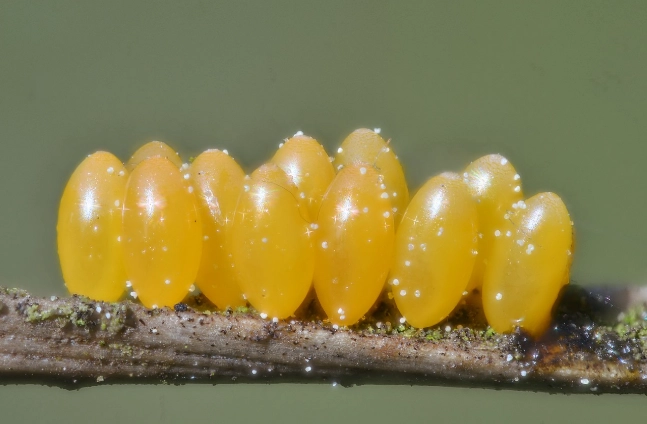
Do's and Don'ts for Ladybug Egg Care
DO:
- Mark the spot. Tie a little brightly colored ribbon or yarn on the stem. This reminds you and anyone else to avoid that area.
- Leave them absolutely alone. No touching, no spraying water near them, no poking. Disturbance can dislodge them or introduce mold.
- Avoid any broad-spectrum pesticides. This is non-negotiable. Insecticides, even organic ones like pyrethrin or neem oil, will kill the developing embryos. If you must treat for other pests nearby, use a targeted method like hand-picking.
- Provide a water source. A shallow dish with pebbles and water helps the adult ladybugs (and later, the larvae) stay hydrated.
DON'T:
- Try to "move" the eggs. They are glued down. Attempting to move them will destroy them.
- Assume you need to "feed" them. The mother chose the spot because food (aphids) is nearby. Trust her instinct.
- Panic if they darken. As the embryos develop inside, the ladybug eggs may turn darker, almost grey, just before hatching. This is normal.
Attracting Ladybugs to Lay Eggs in the First Place
Want to see more of these golden clusters? You need to roll out the welcome mat for the adults.
First, you have to accept a little bit of pest presence. It sounds counterintuitive, but if you have zero aphids, ladybugs have no reason to stick around and lay eggs. Tolerate a small, early-season aphid population. It’s the bait that brings in the cavalry.
Second, plant a diverse garden. Ladybugs need pollen and nectar as adult food sources when prey is scarce. Some of their favorite plants include: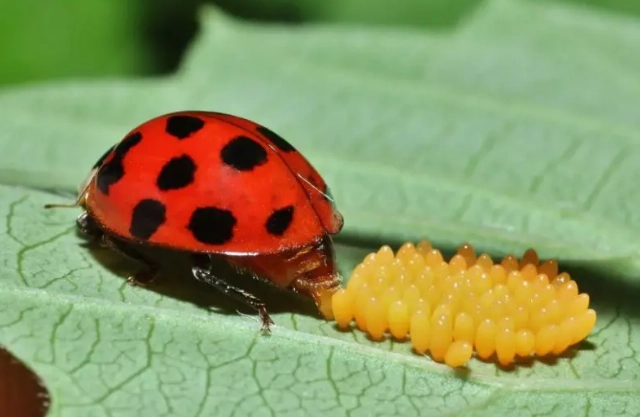
- Flowers: Dill, fennel, cilantro (let it bolt), yarrow, cosmos, marigolds, calendula, sweet alyssum.
- Shelter: Provide overwintering spots. Leave some leaf litter, have a rock pile, or even consider a simple "ladybug larvae housing" structure (the USDA has a great guide on this).
- Water: Again, that shallow dish with pebbles is crucial, especially in dry weather.
Avoid using any pesticides that aren’t explicitly labeled as safe for beneficial insects. The best pesticide is a thriving ecosystem.
Frequently Asked Questions About Ladybug Eggs
Let’s tackle the stuff you’re actually typing into Google.
The Bigger Picture: Ladybug Eggs and a Healthy Ecosystem
At the end of the day, spotting and protecting ladybug eggs isn’t just about saving your roses this season. It’s about participating in and strengthening your local ecosystem. You’re helping sustain a native pollinator (adults eat pollen too) and a legendary predator.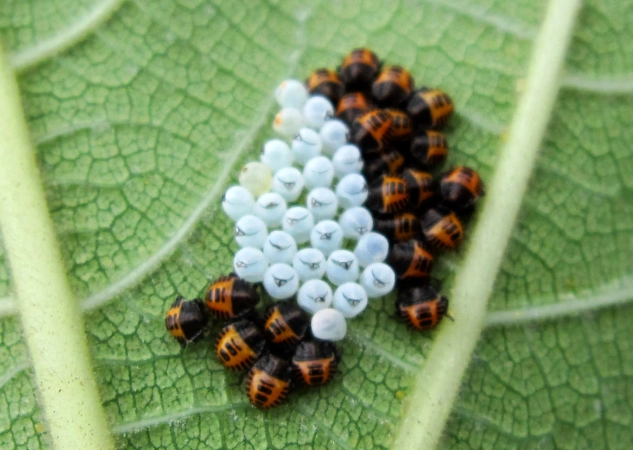
Ladybug populations, like many beneficial insects, face pressures from habitat loss and pesticide use. By learning to identify their eggs, you become a steward for them. You stop being an accidental destroyer and become a conscious protector.
So next time you’re in the garden, slow down. Turn over a few leaves, especially on plants that look a bit stressed. Look for those tiny, brilliant clusters. When you find them, smile. You haven’t found a pest. You’ve found a promise—a promise of natural balance, fewer sprays, and a garden that’s more alive, more complex, and more resilient because of it.
It all starts with a pinhead-sized, yellow egg.
Reader Comments