What You'll Learn in This Guide
- Choosing the Right Carrot Variety
- When is the Best Time to Plant Carrots?
- Preparing Your Soil: The Most Overlooked Step
- How to Sow Carrot Seeds for a Perfect Stand
- Watering, Fertilizing, and Thinning
- Common Carrot Pests and Diseases (and How to Avoid Them)
- How to Know When Your Carrots Are Ready to Harvest
Ever pulled up a carrot only to find it’s a forked, stunted, or just plain weird-looking mess? I have. More times than I care to admit in my first few years of gardening. The truth is, planting carrots is one of the most satisfying things you can do in a home garden. The sight of those vibrant green tops pushing through the soil, followed by the crisp, sweet crunch of a homegrown carrot, is hard to beat. But getting from a seed packet to that perfect harvest requires navigating a few common pitfalls that most generic guides gloss over.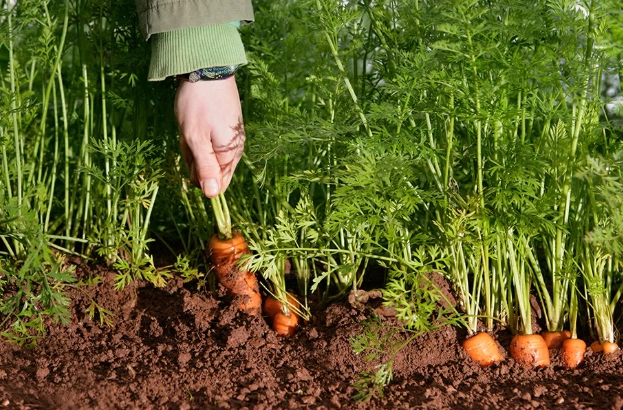
Let’s get straight to the point. You can absolutely grow fantastic carrots, even in less-than-ideal soil. The secret isn’t in buying expensive equipment or fertilizers. It’s in understanding what the carrot plant actually needs from you, and more importantly, what it doesn’t need. I’ll walk you through the entire process, step-by-step, but I’ll also point out the subtle mistakes that can make the difference between a bumper crop and a disappointing one.
Choosing the Right Carrot Variety
This is where most people trip up right from the start. They grab any seed packet off the shelf. Carrots aren’t just one thing. The variety you choose dictates your entire season – from planting depth to harvest window.
For Beginners (or if your soil is heavy clay):
- ‘Nantes’ Type: This is your best bet. Varieties like ‘Nelson’, ‘Touchon’, or ‘Yaya’ are typically shorter (6-7 inches), cylindrical, and mature quickly (around 60 days). They’re forgiving, reliable, and great for heavy soils or shallow containers.
- Why I recommend them: They’re less likely to fork in imperfect soil compared to longer varieties.
For Loose, Deep Soil (the dream for straight carrots):
- ‘Imperator’ Type: These are the classic, long, tapered carrots you see in supermarkets. Varieties like ‘Imperator 58’ or ‘Danvers’ need that deep, stone-free soil to reach their full potential of 8-10 inches.
- My personal favorite for flavor: ‘Bolero’. It’s a ‘Nantes’ type, but I find it holds its sweetness in the ground longer if you can’t harvest immediately, and it has better disease resistance than some heirlooms.
Avoid for your first time: Heirloom varieties like ‘Atomic Red’ or ‘Cosmic Purple’ are stunning, but many are slower to mature and may have thinner roots that are more susceptible to cracking if your watering isn’t perfectly consistent. Get your technique down with a reliable ‘Nantes’ first.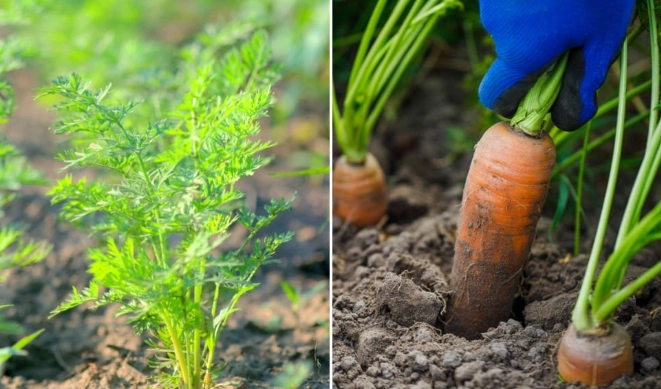
When is the Best Time to Plant Carrots?
Carrots are a cool-season crop. This means they thrive in cooler temperatures and can tolerate a light frost. This gives you two (and a half) main planting windows:
- For a Spring Harvest: This is the most common and successful timing. Sow seeds directly in the garden 2-4 weeks before your last average spring frost date. The soil should be workable, not frozen. This early start allows the roots to establish before the intense summer heat hits.
- For a Fall Harvest: This is a fantastic option, often yielding even sweeter carrots due to the cool temperatures concentrating sugars. Plant seeds about 10-12 weeks before your first average fall frost date. The exact timing depends on your climate. In warmer zones (USDA 7 and above), you can plant even later for a winter harvest.
- The “I Missed Spring” Window: You can plant carrots up until early summer in many areas, but there’s a catch. As soil temperatures rise consistently above 75°F (24°C), germination becomes erratic and slower. The seedlings that do emerge will struggle with the heat, often resulting in smaller, less sweet roots. If you find yourself in this situation, provide some light shade (like with a row cover) to keep the soil cooler and ensure consistent moisture.
Here’s a trick I learned the hard way: don’t just look at the calendar date of your last frost. Watch your soil temperature. Carrot seeds germinate best when soil is between 55°F and 75°F (13°C and 24°C). You can use a simple soil thermometer. If you don’t have one, a good rule of thumb is when the soil feels comfortable to the touch for a few consecutive days.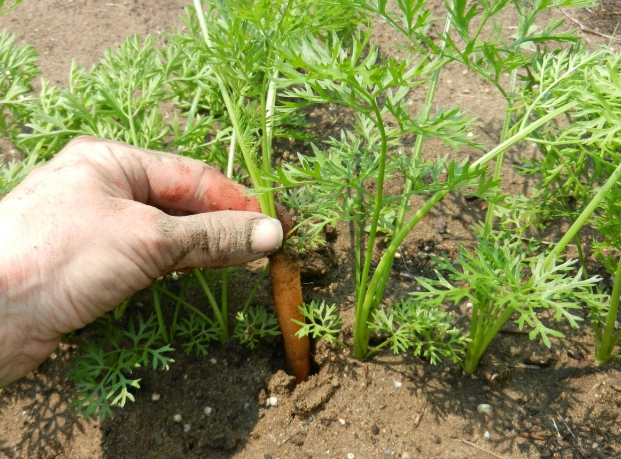
Preparing Your Soil: The Most Overlooked Step
This is the single most important factor for success, and where most guides are too vague. Carrots need deep, loose, and stone-free soil to grow straight and long. “Loose” doesn’t just mean fluffy on top. It means loose down to at least 12 inches (30 cm).
How to actually achieve this:
- If starting a new garden bed: Double-digging or using a broadfork to loosen the subsoil is ideal. Remove any large rocks or clumps as you go.
- If working with an existing bed that’s compacted: Don’t just till the surface. Use a garden fork to deeply loosen the soil. I made the mistake once of just rototilling the top few inches. The carrots hit a hard layer and started forking. Now, I always check with a fork first.
- The “No-Dig” Method for Carrots: I’m a huge proponent of no-dig gardening for most crops. For carrots, I’ve found a slight adaptation works wonders. In the fall, I’ll add a 3-4 inch layer of well-rotted compost or manure on top of the bed. The worms and microbes do the work of incorporating it loosely over the winter. In spring, I’ll gently rake the surface smooth before planting. This gives me that crucial depth without back-breaking digging.
The Rock Secret: Here’s a non-consensus, expert tip that most beginners (and even many experienced gardeners) miss. It’s not just about removing the big rocks you can see. It’s about sifting out the small ones, too. Any stone or hard clump larger than a pea can cause a fork. I use a simple 1/4-inch hardware cloth screen over a wheelbarrow to sift my seedbed area. Yes, it’s extra work. But the year I skipped it? I harvested a hilarious collection of abstract carrot sculptures. Now I never skip it.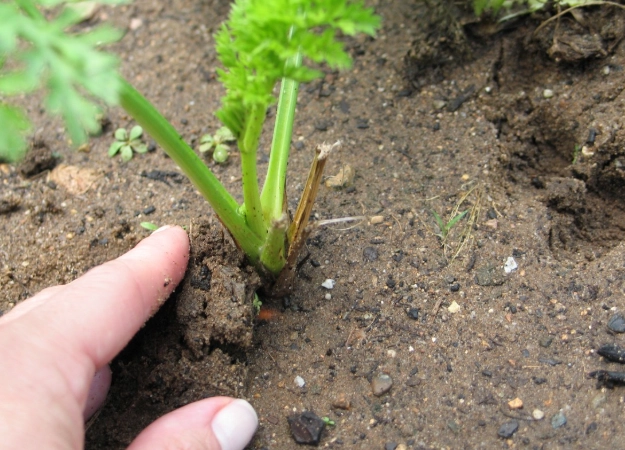
What to Add (and What to Avoid)
Fertilizer is tricky with carrots. Too much nitrogen, especially right before planting, gives you gorgeous, lush green tops… and tiny, hairy roots underneath. The plant puts all its energy into leaf growth.
- Add: A balanced, low-nitrogen fertilizer labeled for root crops. Bone meal is an excellent organic option as it provides phosphorus for strong root development. Work it into the soil a few weeks before planting, not the day of. This gives it time to integrate and mellow.
- Add: Compost. Well-rotted compost is your best friend. It improves structure, provides slow-release nutrients, and helps retain moisture.
- Avoid: Fresh manure. This is a classic, subtle mistake. Fresh manure is too “hot” (high in nitrogen and ammonia) and can burn tender seedlings. It also often introduces weed seeds and can cause root forking. If you must use manure, ensure it’s well-composted for at least 6 months and work it in the previous fall, not spring.
- Avoid: Clumpy, fresh organic matter. Large pieces of undecomposed straw or leaves can create air pockets that the root diverts around, causing forking.
Here’s my personal soil mix that I’ve refined over the years for container carrots (because yes, you can absolutely grow them in pots):
- 2 parts topsoil (or a good quality garden soil)
- 1 part sharp sand (or builder’s sand) – This is non-negotiable for drainage.
- 1 part well-rotted compost or worm castings
- A handful of bone meal or a balanced, low-nitrogen organic fertilizer mixed in.
How to Sow Carrot Seeds for a Perfect Stand
Carrot seeds are tiny. This leads to two common mistakes: planting too deep and sowing too thickly.
Seed Depth: 1/4 to 1/2 inch deep. That’s it. Barely cover them. I make a shallow furrow with the corner of my hoe, sow the seeds, and then gently pull the soil back over them. Some people mix the seeds with sand to see them better, which is fine, but I find just sprinkling them carefully from the packet works.
Spacing: This is critical. Final spacing between plants should be 2-3 inches. But you can’t achieve that by sowing one seed every 2-3 inches. Why? Because germination is never 100%. You will need to thin.
The Professional’s Sowing Method:
- Make your furrows about 12 inches apart.
- Water the furrow before sowing. This creates a moist environment and prevents you from washing the seeds away when you water afterwards.
- Sow the seeds thinly. I mean it. Try to get them about an inch apart initially. A small, hand-held seed sower can be a great help here.
- Cover lightly with soil or fine compost.
- Gently pat down to ensure good seed-to-soil contact.
- Do not water again immediately. This creates a crust that the tiny seedlings struggle to break. Instead, cover the row with a floating row cover or a very light layer of straw (not hay, which contains weed seeds). This keeps the soil surface moist and soft.
The Pre-Germination Trick for Faster Emergence
This is a game-changer, especially in cooler spring soil. Carrot seeds contain a natural germination inhibitor. You can trick them:
- Place seeds between two damp paper towels.
- Put them in a sealed plastic bag.
- Keep them in a warm spot (like on top of your refrigerator) for 3-5 days.
- Check daily. Once you see the tiny white taproots just starting to emerge, plant those seeds immediately. Handle them carefully.
- This can cut germination time in half.
I learned this from an old commercial grower. It feels a bit like cheating, but it works.
Watering, Fertilizing, and the Crucial Art of Thinning
Now, the seeds are in. The real work begins.
Watering: Consistency is King
Carrots need consistent moisture to grow smoothly and sweetly. Inconsistent watering is the prime cause of cracked, woody, or bitter carrots.
- Goal: Keep the soil evenly moist, like a well-wrung-out sponge, not soggy or bone-dry.
- The Trick: Water deeply and less frequently. A deep watering encourages the roots to grow down in search of moisture, making them stronger. A light sprinkle every day keeps the roots shallow and weak. I use a soaker hose or drip irrigation for my carrot beds. It delivers water directly to the soil, minimizing evaporation and keeping the foliage dry, which helps prevent disease.
- How to check: Stick your finger into the soil up to the first knuckle. If it feels dry, it’s time to water. In the heat of summer, this might be every other day. In cooler weather, once a week might suffice.
Fertilizing: The Low-Nitrogen Rule
As mentioned earlier, too much nitrogen is the enemy. If your soil is poor, a single, balanced, low-nitrogen feed about halfway through their growth (around 4-5 weeks after germination) is plenty. I often skip it entirely in my rich, compost-amended beds. If you do fertilize, use something like a 5-10-10 formula where the middle number (phosphorus) is higher.
Thinning: The Hardest but Most Important Step
This is the step everyone hates, and that’s why they often skip it or do it too late. You must thin. There’s no way around it. Those tiny seeds you sprinkled will turn into a tangled, stunted mess if you don’t give each carrot enough space.
When to thin: You’ll do it in two stages.
- First Thinning: When the seedlings are about 2 inches tall. This is just to break up any obvious clumps and give them some breathing room. Aim for about an inch apart.
- Final Thinning: This is the crucial one. When the carrots are about the thickness of a pencil (usually 3-4 weeks later), thin them to that final 2-3 inch spacing. Yes, you’re pulling up perfectly good, tiny carrots. It feels wasteful. But trust me, the ones you leave behind will reward you with size and quality. You can eat the thinnings! They’re delicious in salads.
Here’s a psychological trick I use: I don’t think of it as “throwing away” plants. I think of it as “harvesting” my first, bonus crop of baby carrots to make room for the main event.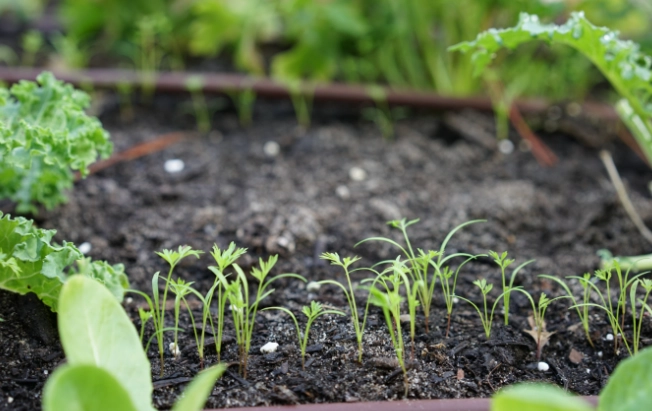
Common Carrot Pests and Diseases (and How to Avoid Them)
Carrots are relatively trouble-free, but a few issues can pop up.
- Carrot Rust Fly: This is the most common pest. The adult fly lays eggs at the base of the plant, and the larvae tunnel into the roots. The damage looks like rusty tunnels. Prevention is key: Use floating row covers immediately after sowing to physically exclude the flies. Practice crop rotation. Don’t plant carrots in the same spot year after year. The classic advice is to wait 3 years. I push it to 4 in my garden because I’ve seen pressure build up.
- Aster Yellows: A disease spread by leafhoppers that causes yellow, stunted, and hairy roots. There’s no cure. Remove and destroy infected plants. Control leafhoppers with insecticidal soap or neem oil if they become a problem.
- Leaf Blights: Fungal diseases that cause spots on the leaves. They rarely kill the plant but can reduce vigor. Water at the soil level (not overhead), ensure good air circulation, and remove affected leaves promptly.
I’ll be honest: I rarely spray anything in my carrot patch. The row cover does double duty by keeping out rust flies, and healthy soil seems to keep most other issues at bay for me.
How to Know When Your Carrots Are Ready to Harvest
This is the moment of truth. How do you know they’re ready?
- Check the “Shoulders”: Gently brush away a little soil from the top of a carrot or two. The crown (where the green top meets the orange root) should be about 3/4 to 1 inch in diameter. This is a more reliable indicator than days on a packet, as growth varies with conditions.
- They Should Feel Firm: Gently pull one. It should feel solid and not bend easily. If it’s thin and spindly, give the rest more time.
- Taste Test: The ultimate test! Pull one and try it. Homegrown carrots often reach peak sweetness before they reach their maximum listed size. Don’t be afraid to harvest some early as “baby carrots.”
The best part about carrots? You can leave them in the ground for a surprisingly long time after they mature, especially in cooler fall weather. They essentially become your root cellar. Just be aware that in very wet conditions, they can start to rot, and in warm winter climates, they may eventually bolt (send up a flower stalk), which makes the root woody and bitter.
How to Store Your Carrot Harvest
Proper storage is key to enjoying your harvest for months.
- For Short-Term (a few weeks): Leave them in the ground! Seriously, just harvest as needed. In cooler weather, they’ll keep perfectly.
- For Long-Term Storage (months): You need to remove the green tops. Twist or cut them off about 1/2 inch above the crown. Don’t wash the carrots. Brush off any large clumps of soil, but leave a thin layer. This protects the skin. Store them in a container of damp sand, sawdust, or peat moss in a cool, dark place like a root cellar, unheated garage, or refrigerator. The ideal temperature is between 32°F and 40°F (0°C and 4°C) with high humidity. I use old plastic bins with lids in my basement.
Here’s a mistake I see all the time: people wash their carrots before storing them. This removes the natural protective layer and dramatically shortens their storage life. Don’t do it.
My Personal Storage Secret: I store my fall-harvested carrots in damp sand in my cool basement. But I always save a few, and I mean just a few, of the smallest, most misshapen ones. I don’t store them. I leave them right in the garden bed, marked with a tall stick. Why? They’re the first ones to rot or get bug-eaten over the winter. They act as a decoy, a sacrifice. The pests go for those, leaving my good storage carrots mostly untouched. It’s not a perfect system, but it works for me.
Reader Comments