Key Takeaways
- Why This Odd-Sounding Ratio Works So Well
- How to Apply the 70-30 Rule in Your Garden (It's Not Just About Plants)
- Beyond the Beds: The 70-30 Rule for Hardscape and Space
- A Practical Table: Applying the 70-30 Rule to Different Garden Styles
- Common Pitfalls and How to Avoid Them
- Adjusting the Rule: When to Break It
- Your Questions on the 70-30 Rule, Answered
- Putting It All Together: A Simple Action Plan
Let's be honest. Staring at a blank patch of dirt or a messy flower bed can be overwhelming. You have all these plants you love, but throwing them in the ground willy-nilly often leads to a chaotic mess. It looks busy, feels stressful, and honestly, doesn't do your beautiful plants any justice. I've been there. My first garden looked like a plant yard sale.
That's where a little-known trick comes in. It's not a rigid law, but more of a guiding principle that professional landscapers and savvy home gardeners use all the time. You might have heard whispers about it: the 70-30 rule. So, what is the 70 30 rule in gardening? In its simplest form, it's a principle of visual balance. It suggests that for a harmonious and pleasing garden composition, about 70% of your space should be dedicated to a cohesive, unifying element (often a dominant plant type, color, or texture), while the remaining 30% is reserved for contrasting or accent elements that add spark and interest.
Think of it like a great outfit. Seventy percent is your well-fitting, solid-color pants and shirt—reliable, cohesive. The thirty percent is your statement necklace or colorful scarf—the bit that catches the eye and shows your personality. Without the 70%, the 30% looks gaudy. Without the 30%, the 70% looks boring. Your garden is the same.
Why This Odd-Sounding Ratio Works So Well
Our brains are wired to seek order but also to enjoy a bit of surprise. The 70-30 split hits a sweet spot. It provides enough repetition to feel calm, organized, and intentional (that's the 70%). Then, it offers just enough variety to prevent monotony and keep the eye moving and engaged (that's the 30%). This balance between unity and variety is a cornerstone of all good design, from paintings to architecture.
When you apply the 70 30 rule in gardening, you're essentially managing visual weight. The majority plants create a backdrop, a stage. The minority plants are the performers. This structure helps guide a viewer's gaze through your garden, creating little moments of discovery instead of a single, overwhelming blob of color and shape.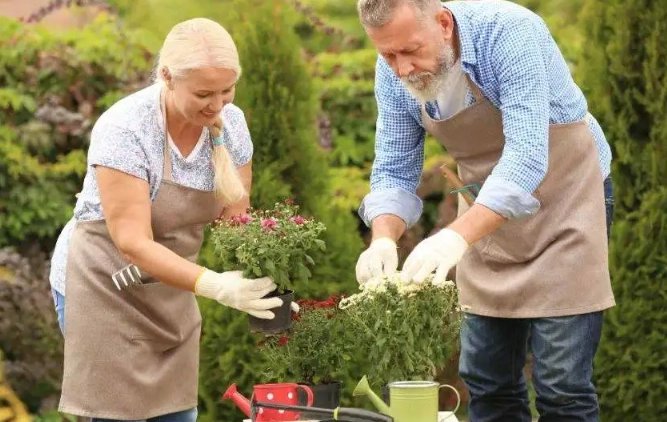
How to Apply the 70-30 Rule in Your Garden (It's Not Just About Plants)
This is where it gets practical. Understanding what is the 70 30 rule in gardening is one thing. Applying it is another. The key is figuring out what constitutes your 70% and your 30%. It can be applied through several lenses.
1. By Plant Type or Form
This is the most straightforward application. Choose a dominant plant form for 70% of your planting area. Then, use contrasting forms for the remaining 30%.
- The 70% (The Backbone): This could be a sea of ornamental grasses for a modern prairie look, a swath of low-growing evergreen shrubs for structure, or a mass planting of a single perennial like daylilies or black-eyed Susans.
- The 30% (The Accent): This is where you introduce contrast. Spiky verticals like veronica or lupines against mounded grasses. Bold, large-leaved plants like cannas or rodgersia among finer-textured ferns. A cluster of airy, delicate plants like gaura or baby's breath to lighten up a dense planting.
2. By Color
Color is a powerful tool, and the 70-30 rule prevents a carnival-like effect.
- The 70% (The Theme): Dominant your garden with a color scheme. A calming 70% of blues, purples, and silvers. A warm 70% of yellows, oranges, and reds. Or, most reliably, a 70% foundation of varying greens from foliage.
- The 30% (The Pop): Introduce the complementary or contrasting color. White flowers are a classic 30% element to brighten any scheme. In a blue/purple garden, a splash of yellow (like coreopsis) becomes electrifying. In a hot-colored border, some deep purple (like salvia or aster) adds sophistication.
3. By Texture
This is a subtler but incredibly effective approach, especially in shade gardens or foliage-focused designs.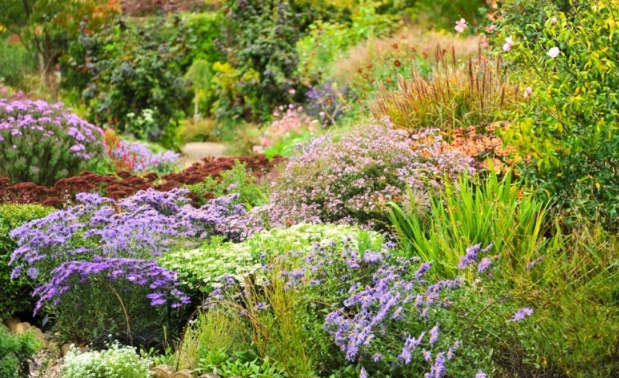
The 70% might be plants with medium-textured leaves (like hostas, hydrangeas). The 30% contrast would be a mix of very fine textures (like ferns, astilbes) and very coarse textures (like large-leaved brunnera or hellebores).
Beyond the Beds: The 70-30 Rule for Hardscape and Space
Here's a twist many beginners miss. The principle of "what is the 70 30 rule in gardening" can extend to your garden's layout itself.
Many experts suggest aiming for about 70% of your garden area to be planting beds (the living, soft part) and 30% to be hardscape (paths, patios, decks—the hard part). This generally creates a lush, abundant feel. A garden that's 50/50 can start to feel paved over and unwelcoming.
Similarly, within a bed, think about positive and negative space. The plants are the positive space. The bare soil or mulch is the negative space. A good composition often has about 70% positive (plant) space and 30% negative (breathing room) space, especially as plants mature. This prevents overcrowding and allows each plant to be seen.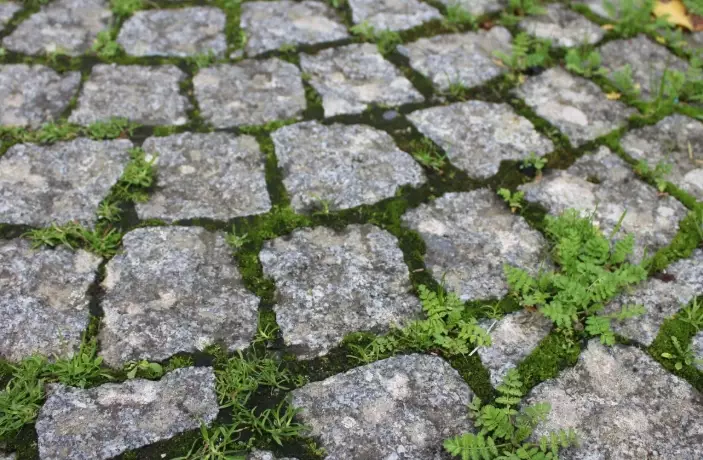
A Practical Table: Applying the 70-30 Rule to Different Garden Styles
| Garden Style | The 70% (Dominant/Unifying Element) | The 30% (Contrast/Accent Element) |
|---|---|---|
| Cottage Garden | Loose, billowing perennials (e.g., phlox, nepeta, roses) creating a blended mass of soft color. | Vertical accents (foxgloves, hollyhocks), spikes of blue salvia, or clusters of bold-faced flowers like sunflowers or dahlias. |
| Modern/Contemporary | Repetitive blocks of a single ornamental grass (e.g., Calamagrostis) or structural shrubs (boxwood balls). | Sculptural specimen plants (a twisted Japanese maple, a phormium), or a single bold color repeated in pots. |
| Shade Garden | Various textures of green foliage (hostas, ferns, hakonechloa grass). | Variegated foliage plants (like pulmonaria), flowering accents in white or pale pink (astilbe, hellebores), or coarse-textured leaves (bergenia). |
| Xeriscape/Drought-Tolerant | Silver and grey foliage plants (lavender, santolina, artemisia) and gravel mulch. | Pops of vibrant, water-thrifty color (red yucca, penstemon, blanket flower). |
See? The specific plants change, but the underlying principle of balance remains. Understanding what is the 70 30 rule in gardening gives you a framework to adapt to any style.
Common Pitfalls and How to Avoid Them
This rule is a guide, not a dictator. Slaving over exact percentages will drive you mad. Think of it as 2/3 and 1/3—a visual estimate.
The "One of Everything" Problem: This is the classic beginner error (guilty as charged). You fall in love with one of each plant at the nursery. The result is a spotty, disjointed patchwork with no rhythm. The 70-30 rule forces you to buy multiples of your core plants, which is actually more economical and impactful.
Ignoring Seasonality: Your 70% element should ideally have long-lasting appeal. Relying on a plant that blooms for two weeks as your 70% leaves a void. Use evergreens, plants with great foliage, or grasses with multi-season interest for a large portion of your foundation.
Forgetting About Height: The rule applies vertically too. In a border, 70% of the plants might be in the low-to-mid height range, creating a body. The 30% includes the taller background plants and the very shortest edging plants.
Adjusting the Rule: When to Break It
Yes, you can break it. Once you know the rule, you know how to break it effectively.
A monochromatic garden, like an all-white moon garden, might operate on a 90-10 rule, where 90% is white and 10% is silver foliage for subtle shift. A collector's garden for rare specimens might intentionally go for a more chaotic, 50-50 feel to showcase individual plants—but that's an advanced, intentional choice.
For most of us, aiming for that 70-30 balance is the shortcut to a garden that feels designed, not just planted.
Your Questions on the 70-30 Rule, Answered

Putting It All Together: A Simple Action Plan
- Observe: Look at your garden space. What's already there? Identify if you have any natural repetition that could become your 70%.
- Choose Your Dominant: Decide on one element to unify your space. Will it be a color? A type of plant? A texture? Be decisive.
- Plan in Threes and Fives: For your 70% element, buy odd-numbered groups of the same plant (3, 5, 7). This reinforces the unity.
- Select Your Spark: Choose 1-3 different plants for your 30% accent. They should clearly contrast with your dominant in form, color, or texture.
- Plant and Step Back: Install your plants, then literally step back. Does it feel balanced but interesting? Tweak as needed.
So, what is the 70 30 rule in gardening? It's less of a rule and more of a secret weapon. It's the reason some gardens just feel "right" while others feel off. It solves the paralysis of choice at the nursery by giving you a filter. It's the framework that turns a collection of plants into a composition.
It won't solve every gardening problem—you still need the right plant for the right place, good soil, and all that. But for the visual headache, the feeling that your garden lacks cohesion, it's a remarkably powerful and simple fix. Give it a try in just one bed this season. You might be surprised how such a simple concept can answer so many of your design questions.
Reader Comments