You’ve nurtured your tomato plants for months. Now, the big moment is here. Picking them at the wrong time can turn those potential jewels into mealy disappointments. Getting it right means explosive flavor you just can’t buy. The perfect time to pick isn't a single date on the calendar; it's a combination of visual cues, touch, and even smell that changes with each variety. Let's break down exactly what to look for.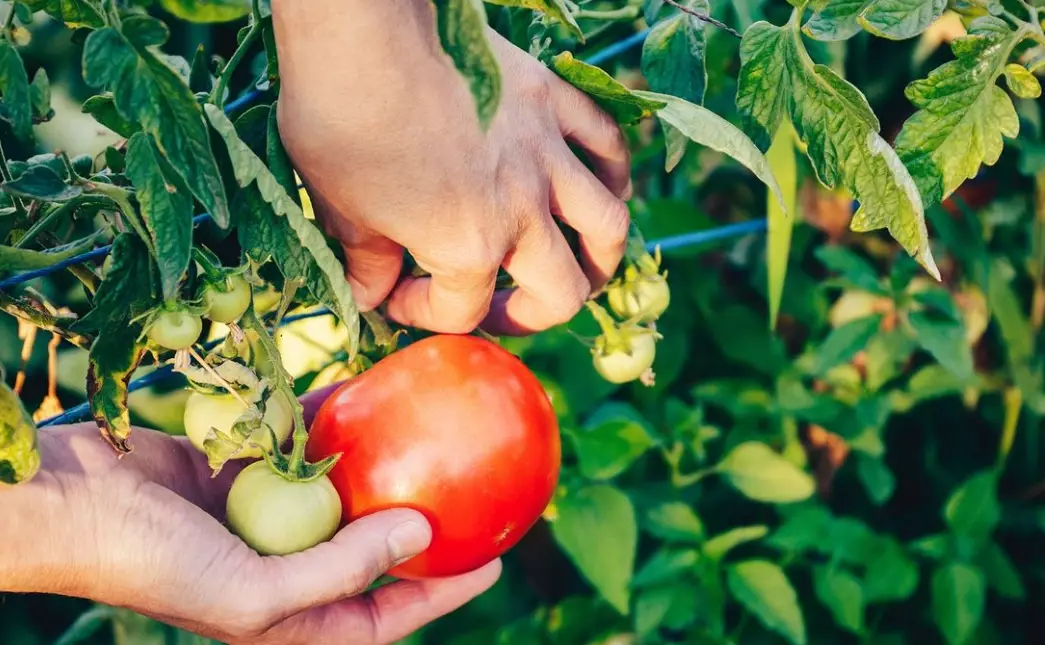
What You’ll Learn in This Guide
- Why Picking Timing is Everything (It’s Not Just About Color)
- How to Tell When a Tomato is Ready to Pick: The 4 Key Tests
- Special Considerations for Different Tomato Types
- The Right (and Wrong) Way to Pick a Tomato
- What If You Picked Too Early or Too Late?
- Top 3 Tomato Picking Mistakes Beginners Make
- Your Tomato Picking Questions, Answered
Why Picking Timing is Everything (It’s Not Just About Color)
Most people think a red tomato is a ripe tomato. That’s the first mistake. A tomato’s flavor and texture peak at a specific stage of ripeness on the vine. Pick too early, and you miss out on the full spectrum of sugars and acids the plant pumps in during the final days. Pick too late, and you’re inviting pests, splitting, and a texture that’s gone soft.
There’s a concept called the “breaker stage.” This is a term used by agricultural extensions like the University of California Agriculture and Natural Resources. It’s the point when the tomato first shows a hint of its final color (like a pink or yellow blush) and is physiologically mature. From this point, it can ripen fully off the vine with good flavor. But for the absolute best, most complex taste, you want to let it go a bit longer on the plant.
My own rule, after years of trial and error? I aim for what I call “vine-ripe, not vine-overripe.” The goal is to capture the peak, not wait for the decline.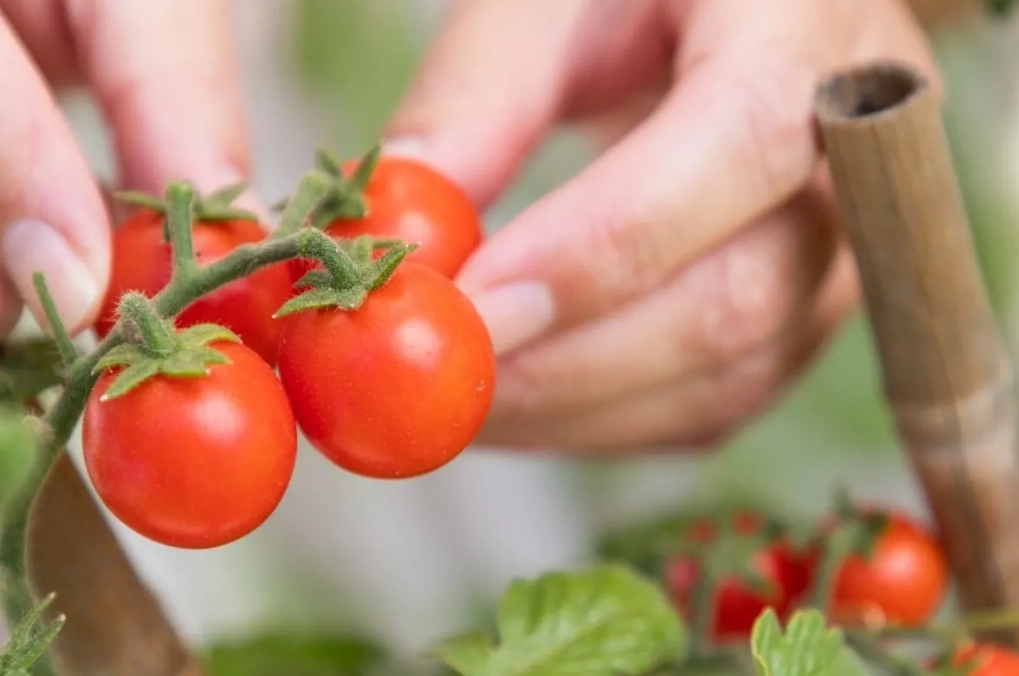
How to Tell When a Tomato is Ready to Pick: The 4 Key Tests
Forget guessing. Use this multi-sense checklist.
1. Color is a Guide, Not a Gospel
Look for full, deep color with no green shoulders (the area around the stem). For red varieties, that means a uniform, deep red. But here’s the nuance: some heirlooms, like ‘Brandywine,’ are ripe when they’re a deep pinkish-red, not fire-engine red. Yellow tomatoes should be a rich, buttery yellow, not pale. Striped varieties should have clearly defined, vibrant bands.
2. The Feel Test: Firmness vs. Give
This is critical. Gently cup the tomato in your palm and give it a very slight squeeze. A perfectly ripe tomato will feel firm but with a slight, pleasant give, like a ripe avocado. It should never feel hard as a rock (underripe) or squishy (overripe). The skin should be taut, not wrinkled.
3. The Sniff Test
This is the secret weapon. Bring the tomato close to your nose, right near the stem (where the scent is strongest). A ripe tomato will have a rich, earthy, unmistakably “tomato-y” aroma. If it smells like nothing, it’s not ready. If it smells sour or fermented, you’ve missed the window.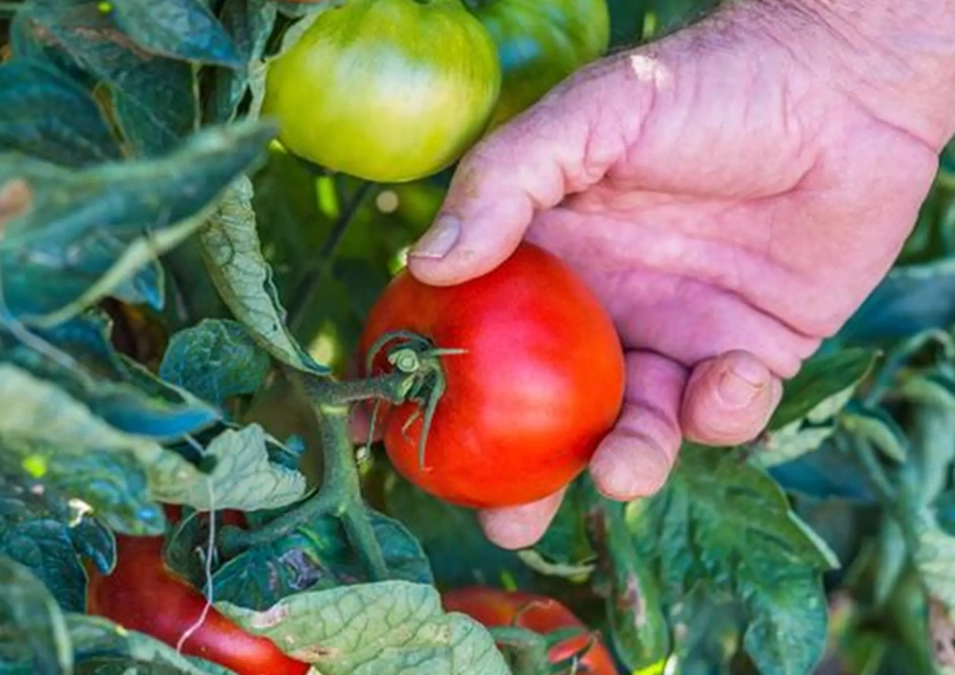
4. The “Ease of Pick” Check
A tomato that’s truly ready often detaches with shocking ease. Grasp the fruit firmly but gently, twist it slightly sideways (not straight up or down), and pull. If it resists and the stem feels like it’s putting up a fight, it might need another day or two. If it comes off cleanly with a small bit of stem attached, it’s usually right on time. A tomato that falls into your hand at the slightest touch is overripe.
Special Considerations for Different Tomato Types
Not all tomatoes play by the same rules. Here’s a quick-reference table for popular types.
| Tomato Type | Key Ripeness Color Cue | Texture When Ripe | Special Note |
|---|---|---|---|
| Cherry & Grape | Uniform, deep color (red, yellow, etc.). No green. | Plump, firm, pops when bitten. | Ripen very quickly. Check daily once color starts to change. Prone to splitting if left too long after a rain. |
| Beefsteak & Slicing (e.g., ‘Better Boy’, ‘Beefsteak’) | Full color, often with a slight softening at the blossom end. | Heavy for size, firm with slight give. | The “shoulders” (top) are the last to color. Don’t wait for them to be perfectly red if the bottom is fully colored and passes the feel/smell test. |
| Heirloom Varieties (e.g., ‘Cherokee Purple’, ‘Green Zebra’) | Varies widely. ‘Cherokee Purple’ is ripe with greenish shoulders. ‘Green Zebra’ is ripe when bright yellow-green with dark green stripes. | Often softer than hybrids. Should yield to gentle pressure. | Know your variety! Heirlooms are more prone to cracking. It’s often better to pick at the “breaker stage” and finish indoors to avoid losing them. |
| Paste/Roma | Deep, solid red throughout. | Very dense and firm, with minimal give. | They feel harder than slicers when ripe. Wait for full color, then pick. They have less water, so overripe signs are wrinkling, not mushiness. |
The Right (and Wrong) Way to Pick a Tomato
How you pick matters almost as much as when.
Do: Use two hands. One to support the fruit from below, the other to grasp and twist the stem. Twist gently until it snaps free. Aim to keep the small green cap (the calyx) attached—it helps slow moisture loss and can prevent the spot where the stem attached from rotting.
Don’t: Yank, pull straight down, or use fingernails to pierce the skin. You can damage the plant’s delicate branch (called a pedicel) and ruin chances for other tomatoes developing on the same cluster. I’ve snapped off a whole truss of green tomatoes before by being hasty. It hurts.
Pick in the cool of the morning, after the dew has dried. Tomatoes are full of water and are firmest then. Picking in the afternoon heat can leave them stressed and soft.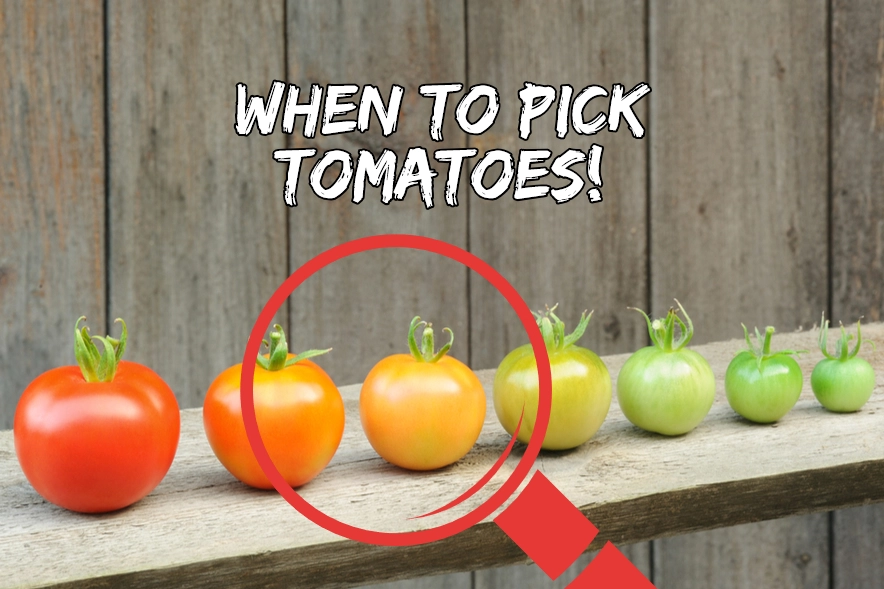
What If You Picked Too Early or Too Late?
It happens to everyone.
Picked Too Early (Pale, Hard): Don’t put them in the fridge! Cold temperatures destroy flavor compounds. Place them in a single layer in a paper bag or cardboard box with a banana or apple. These fruits release ethylene gas, a natural ripening agent. Store at room temperature (around 65-70°F) out of direct sun. Check daily. They will ripen in color and soften, but the flavor will never quite match a vine-ripened one.
Picked Too Late (Soft, Slightly Split): All is not lost. Use these immediately. Cut away any cracked or soft spots (they’re entry points for bacteria) and use the rest for cooking—sauce, soup, or roasting. The flavor for cooking is often still excellent. If it’s mushy and smells off, compost it.
Top 3 Tomato Picking Mistakes Beginners Make
Let’s cut to the chase. Here are the blunders I see most often.
Mistake #1: The “Fully Red” Obsession. Waiting for every last speck of green to vanish, especially on large heirlooms, often means you’ve passed the peak. The bottom half can be perfect while the shoulders are still green. Use the feel and smell test—if the colored part is giving and fragrant, pick it.
Mistake #2: Ignoring the Weather Forecast. See a huge rainstorm coming in two days? Pick any tomatoes that are at the breaker stage or beyond. Tomatoes absorb water through their roots, and a sudden deluge can cause rapid growth that splits the skin of nearly-ripe fruit. A split tomato is a target for bugs and rot.
Mistake #3: Refrigerating Fresh-Picked Tomatoes. This is a flavor killer. A study from the University of Florida found that chilling tomatoes below 55°F degrades the volatile compounds that give them their aroma and taste. Store your harvest on the counter, stem-side up, and eat within a few days. Only refrigerate cut leftovers.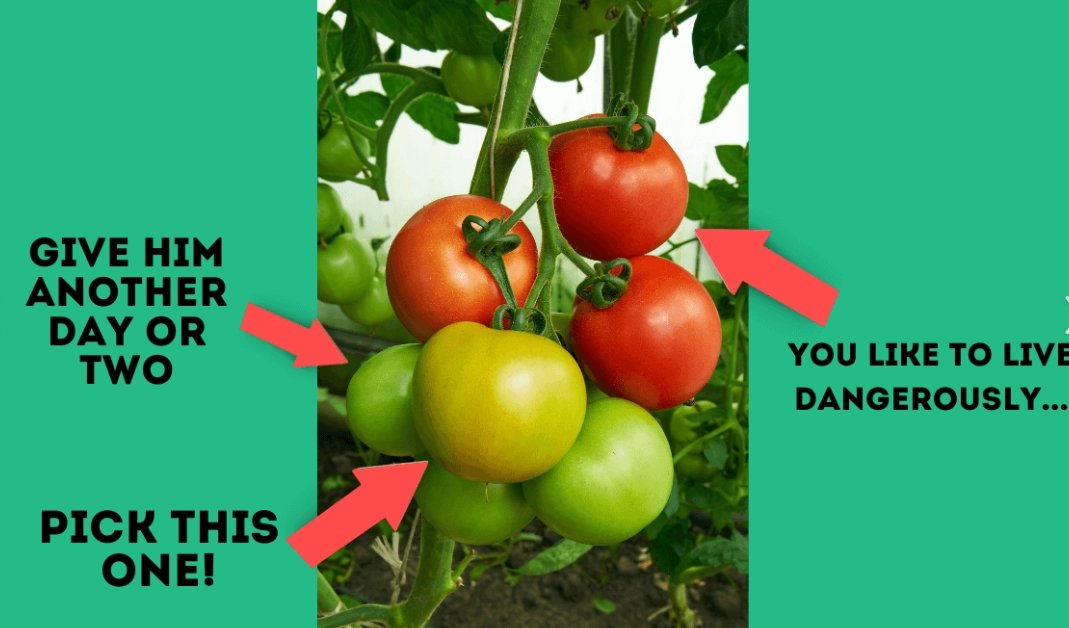
Your Tomato Picking Questions, Answered
 What does it mean if the stem area is brown and cracked?
Reader Comments