Let's be honest. Most garden advice starts with flowers. But what if your garden could look stunning and put dinner on the table? That's the magic of edible garden design. It's not about hiding a few scraggly tomato plants behind the shed. It's about intentionally creating a space where food is the star, and beauty is a non-negotiable side effect.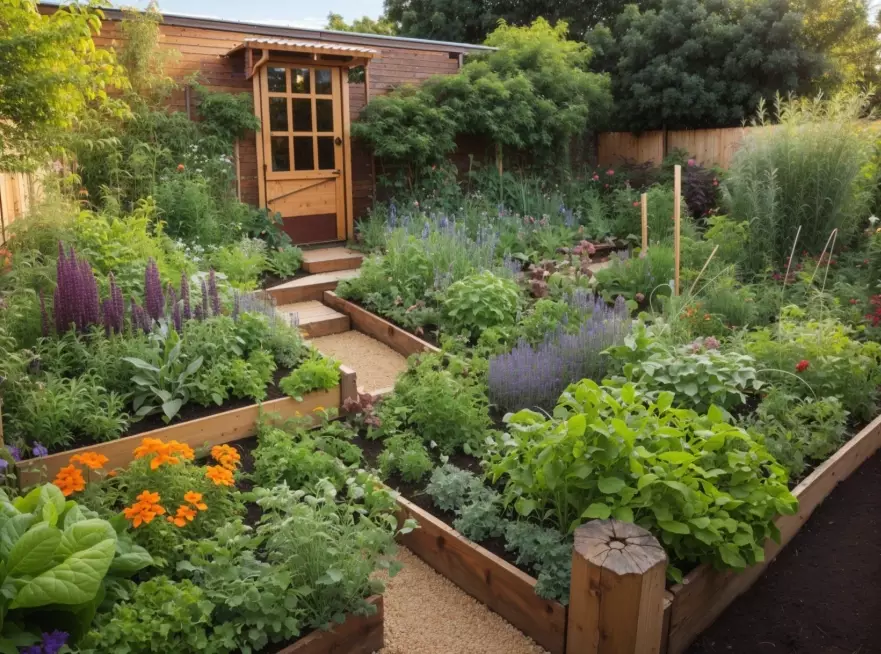
I've designed dozens of these spaces, from tiny balcony setups to sprawling suburban plots. The biggest mistake I see? People jump straight to buying seeds without a plan. They end up with a chaotic patch that's hard to maintain and underwhelming to look at. Good design fixes that. It turns a chore into a joy and a pile of dirt into your personal grocery store.
Your Edible Garden Roadmap
Why Edible Garden Design Isn't Just Planting Stuff
Anyone can poke a seed in the ground. Designing an edible garden means thinking like a chef, an artist, and an ecologist all at once. You're layering flavors, colors, textures, and harvest times. A well-designed edible border will give you salad greens in spring, beans in summer, kale in fall, and maybe even sprouting broccoli in winter. It looks full and interesting for ten months of the year, not just two.
The Royal Horticultural Society (RHS) has done great work promoting edible landscaping, showing how food plants can be just as ornamental as any perennial. This isn't a fringe idea anymore; it's smart gardening.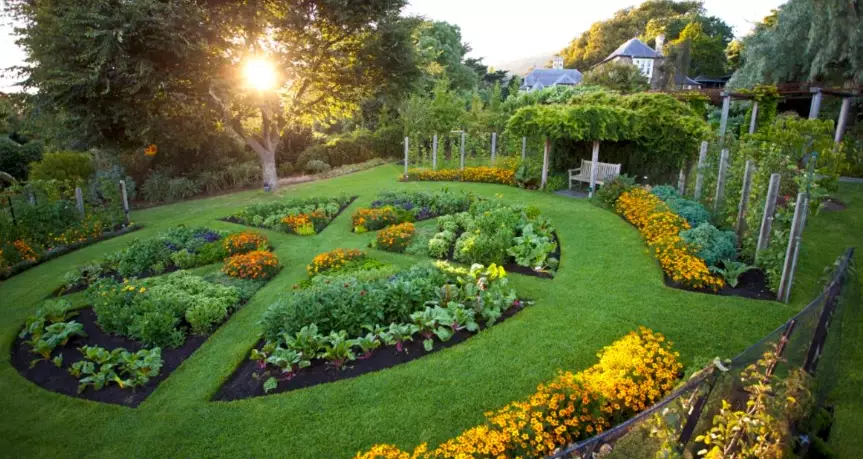
Step Zero: The Non-Negotiable Planning Phase
Skip this, and you'll regret it by July. Grab a notebook.
Sunlight: This is the dictator of your garden. Most edible plants need a minimum of 6 hours of direct sun. Don't guess. Watch your space for a full day. Draw a simple map and note where the sun hits and when shadows fall. A north-facing wall might only be good for herbs like mint or parsley.
Soil: That bagged topsoil from the big-box store? Often terrible. Get a soil test. Your local cooperative extension office (like those supported by the USDA) usually offers cheap or free tests. It tells you pH and nutrient levels. You might need to add lime to sweeten acidic soil or sulfur to lower the pH for blueberries. Amending with compost isn't optional—it's the foundation.
Water Access: How will you water during a two-week dry spell in August? If the hose doesn't reach, factor in the cost of a long hose or drip irrigation lines into your startup budget.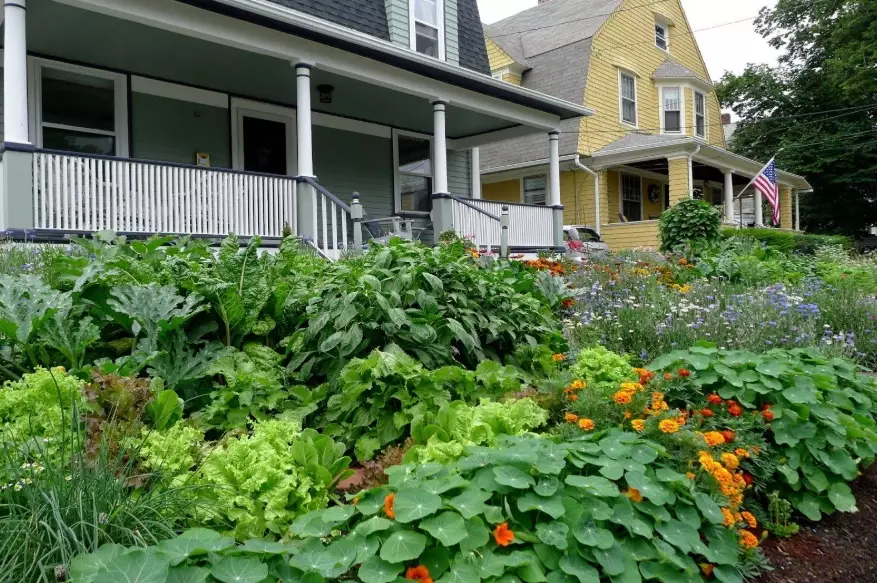
Pro Tip: Start small. A 4' x 8' raised bed or a few large containers is a perfect first project. Managing 50 square feet perfectly is better than neglecting 200. You can always expand next season.
Choosing Your Plants: Beyond Tomatoes and Lettuce
This is where the fun begins. Think in layers and seasons.
Start with "Anchor" Plants: These are your structural, longer-lasting elements. Dwarf fruit trees (apple, pear, fig), berry bushes (blueberry, raspberry), or perennial herbs (rosemary, thyme, sage) form the backbone. Place these first.
Fill in with Annuals: These are your seasonal workhorses. But be strategic. Don't just plant what you like; plant what you'll actually eat. If no one in your house likes eggplant, don't grow it, no matter how pretty it is.
Top 5 Easy Edibles for Beginners (That Look Amazing)
These plants are productive, relatively pest-free, and have great visual appeal.
- Swiss Chard 'Bright Lights': Stems come in rainbow colors—yellows, pinks, reds. It's a cut-and-come-again crop that lasts from spring to hard frost. More forgiving than spinach.
- Bush Beans 'Provider' or 'Royal Burgundy': Fast, productive, and the purple 'Royal Burgundy' beans turn green when cooked—a fun trick for kids.
- Kale 'Lacinato' (Dinosaur Kale): Its dark blue-green, textured leaves are architectural. It gets sweeter after a frost.
- Zucchini 'Costata Romanesco': Has more flavor than standard zucchini and beautiful ribbed fruits. Just plant one. Trust me.
- Nasturtiums: Not just a flower! The leaves and flowers are peppery and great in salads. They trail beautifully over edges and deter some pests.
Companion Planting: The Real Story
A lot of companion planting charts are folklore. After years of testing, I focus on two principles that actually work: diversity and attracting beneficial insects. Plant dill and fennel to attract ladybugs and parasitic wasps that eat aphids. Let some of your cilantro "bolt" (flower) to feed tiny wasps that control caterpillars. The goal isn't a magic bullet, but a resilient ecosystem.
| Plant | Good Companions | Why It Works (The Practical Reason) |
|---|---|---|
| Tomatoes | Basil, Marigolds, Borage | Basil may improve flavor; marigolds' roots deter nematodes; borage attracts pollinators for better fruit set. |
| Cucumbers | Dill, Nasturtiums, Radishes | Dill attracts predators of cucumber beetles. Nasturtiums can act as a trap crop for aphids. |
| Carrots | Onions, Leeks, Rosemary | The strong scent of alliums can confuse carrot fly, a major pest. |
| Lettuce | Tall plants like Corn or Tomatoes | Provides partial shade in hot summer months, preventing lettuce from bolting (going to seed) too quickly. |
5 Edible Garden Design Styles to Steal
Your garden should reflect you. Here are some blueprints.
1. The Potager (Kitchen Garden): This is formal and geometric. Think symmetrical raised beds divided by gravel or grass paths. Use low boxwood hedges or neatly trimmed lavender to define the edges. It's high-maintenance but incredibly satisfying and productive.
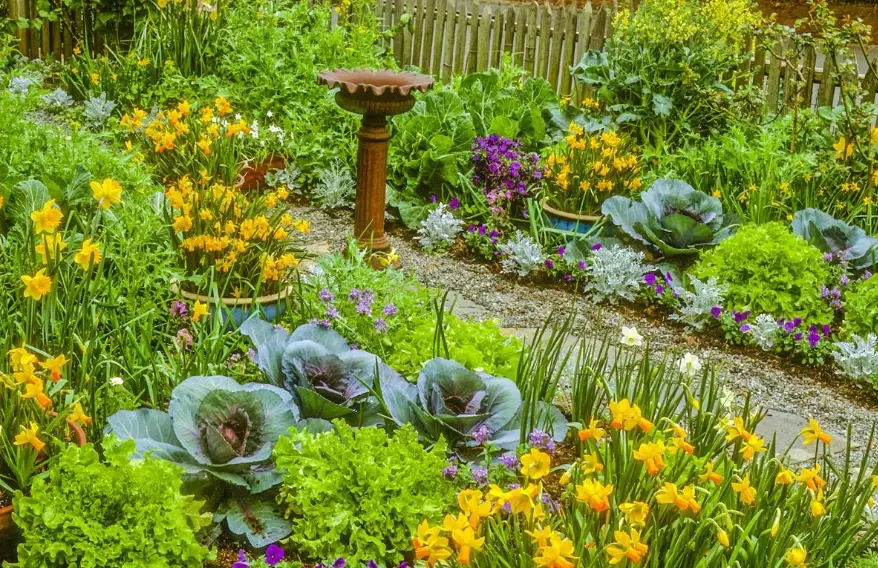
2. The Cottage-Style Edible Border: My personal favorite for its relaxed feel. Mix edible flowers (calendula, violas), herbs, and vegetables together in a loose, flowing bed. Let parsley self-seed, allow ruby chard to tower over strawberries. It's lush and full of life.
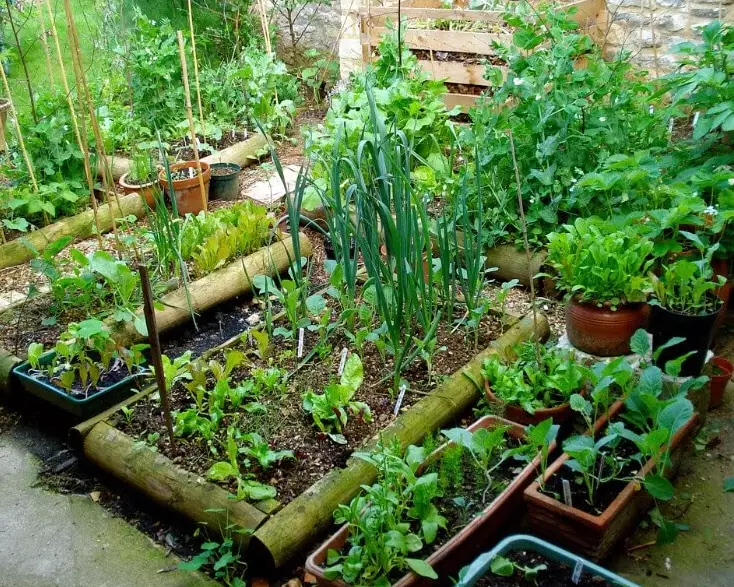
3. The Container & Vertical Garden: The only option for patios, balconies, or terrible soil. Use large pots (bigger is always better), wall planters, and trellises. Grow pole beans, cucumbers, and small squash varieties upwards. A 5-foot-tall trellis of beans is a green wall of food.
4. The Permaculture "Food Forest" Layer: Mimics a forest ecosystem. Tall fruit/nut trees, underplanted with berry shrubs, then perennial vegetables (like asparagus, artichoke), then ground covers (strawberries, creeping thyme). It's a long-term, low-maintenance investment.
5. The Front Yard Foodscape: Why hide the veggies in the back? Replace a thirsty lawn with decorative raised beds, a dwarf apple tree, and borders of kale and chard. Many communities are changing rules to allow this. It's a statement.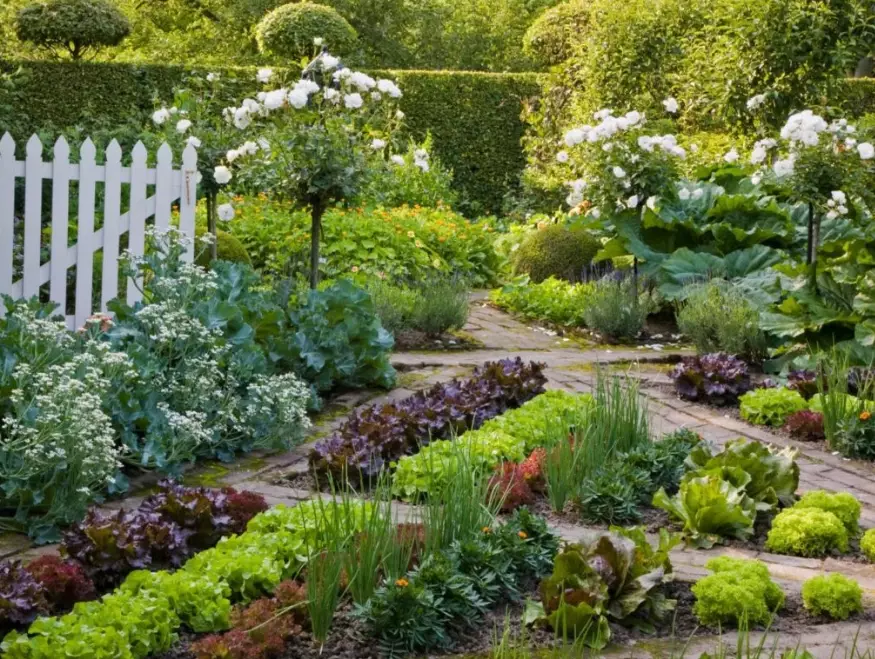
Keeping It Alive: Maintenance Made Simple
Design with maintenance in mind. Wide paths so you can kneel comfortably. Drip irrigation on a timer so you never forget to water. The biggest time-saver? Mulch. A 3-inch layer of straw, shredded leaves, or wood chips suppresses weeds, retains moisture, and feeds the soil as it breaks down.
Harvest little and often. Picking zucchini when they're small encourages more production. Snip outer lettuce leaves. This keeps plants looking tidy and productive.
Your Edible Garden Questions, Answered
My yard gets mostly afternoon shade. Can I still grow vegetables?
You can, but you need to choose carefully. Focus on leafy greens which are more shade-tolerant: lettuce, spinach, kale, Swiss chard, arugula. Herbs like mint, parsley, and cilantro will also do okay. Fruiting plants like tomatoes, peppers, and cucumbers need that full sun to produce well. You might get some cherry tomatoes, but don't expect a heavy harvest.
How do I keep rabbits and deer from eating everything?
Fencing is the only 100% reliable method. For rabbits, a 2-foot tall chicken wire fence buried a few inches deep works. For deer, you need 8 feet tall. It's an investment, but so is replacing all your plants. Short of that, try interplanting strong-smelling herbs like rosemary, sage, and lavender, which they tend to avoid. Motion-activated sprinklers can startle them away temporarily.
 I only have a small apartment balcony. Is it worth trying?
Absolutely. Focus on high-value crops you love that are expensive to buy fresh. A deep pot of basil, a cherry tomato plant in a 5-gallon bucket, a window box of mixed lettuces, and a pot of strawberries. Use vertical space with a trellis for snap peas. The yield might not feed a family, but the taste and satisfaction are huge.
My soil is terrible clay (or sand). Should I just use raised beds?
Raised beds filled with a quality soil mix are the fastest path to success for terrible native soil. You control the medium completely. However, don't write off improving your native soil long-term. For clay, add massive amounts of compost and coarse sand over years to improve drainage. For sand, add compost to increase water and nutrient retention. Raised beds for immediate results, soil amending as a parallel long-term project.
How much does it really cost to start an edible garden?
It can range from $50 to $500+ for a starter setup. The cheapest route: containers you already have, a bag of potting mix, and a few seed packets ($30-50). A simple 4'x8' raised bed made from untreated lumber, filled with a soil/compost mix, plus plants and seeds will run $150-$300. Costs go up with irrigation systems, fancy beds, or buying large established plants instead of seeds. The key is to start modestly. Your biggest savings come in years two and three when you save seeds and make your own compost.
Reader Comments