You’re checking your rose bushes, thrilled they're finally budding, and then you see them. Clustered on the stems are dozens of tiny, black, spiky, alligator-looking bugs. Your first instinct? Grab the insecticide spray. Stop right there. If you spray, you might be wiping out your garden's single most effective pest control squad: ladybug nymphs. These bizarre-looking creatures are the juvenile form of the beloved ladybug, and they're absolute eating machines. For over a decade of gardening, I've watched countless gardeners, myself included early on, make the costly mistake of treating these allies as enemies. This guide will flip that script, turning you from a potential nymph-nemesis into a knowledgeable guardian.
What You'll Find Inside
From Egg to Beetle: The Ladybug Lifecycle Journey
Let's start at the beginning. That classic red dome with black spots? That's just the final, adult stage. A ladybug's life is a four-act play, and the nymph stage is where all the action happens.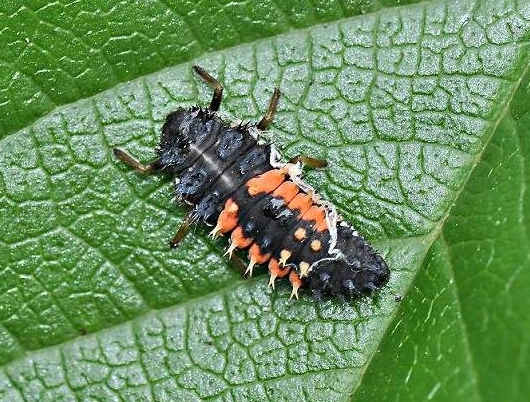
Act 1: The Eggs. A female ladybug, after a good meal of aphids, will lay clusters of 10-50 bright yellow, oval eggs vertically on a leaf or stem, usually right in the middle of an aphid colony. It’s like setting the dinner table for her kids. You’ll find these on the underside of leaves—check your milkweed, roses, or nasturtiums.
Act 2: The Nymph (Larva). This is our star. In 3-7 days, the eggs hatch into what looks nothing like a ladybug. They’re elongated, segmented, and often dark colored—black, dark gray, or blue—with bright orange or yellow markings. They have six legs right up front and move with a purposeful, almost robotic crawl. This stage lasts 2-4 weeks, and it’s a non-stop feeding frenzy.
Act 3: The Pupa. When it's time to metamorphose, the nymph attaches its rear end to a leaf and curls up. It sheds its final larval skin to reveal a pupa, which can be orange, black, or spotted. It looks like a tiny, wrinkled spaceship glued to your plant. Don’t disturb it! Inside, the magic is happening.
Act 4: The Adult. After about a week, the adult ladybug emerges, soft and pale at first. Its iconic spots and hard wing covers (elytra) will darken over the next few hours.
I remember the first time I saw the full cycle on my kale. I had ignored a small aphid outbreak, and a week later, it was crawling with these spiky black bugs. I was horrified, thinking it was a new infestation. I waited, watched, and was rewarded with a dozen new ladybugs. Patience paid off.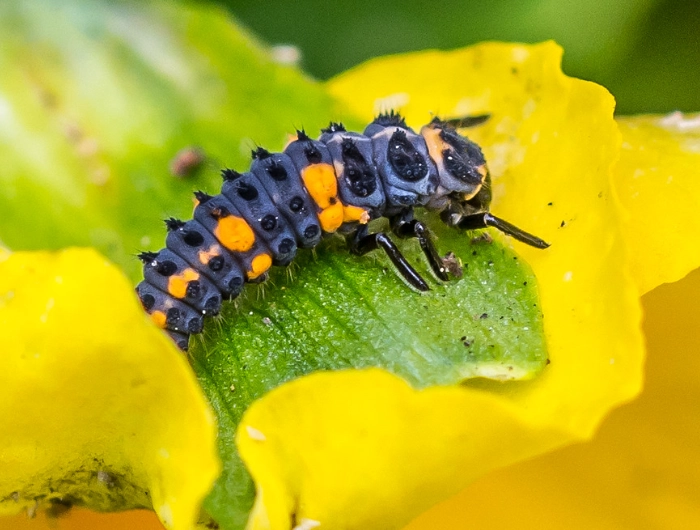
How to Spot a Ladybug Nymph (And Not a Pest)
This is the most critical skill. Misidentification leads to friendly fire. Here’s a breakdown to make it foolproof.
Key Identification Features of a Ladybug Nymph
Forget cute. Think functional predator.
Body Shape: Long, segmented, and slightly flattened. Think miniature alligator or a tiny, armored torpedo. It’s not a round blob.
Color: Typically dark—black, dark gray, or navy blue. The most common species, the Hippodamia convergens, has orange markings on its segments. They are not brightly colored red or yellow at this stage.
Movement: They crawl actively and deliberately. You’ll see them methodically moving across leaves and stems, not hopping or flying.
Location: Almost always found where their prey is: on the undersides of leaves, along tender new growth, and right in the heart of aphid colonies, mealybug clusters, or scale insect infestations.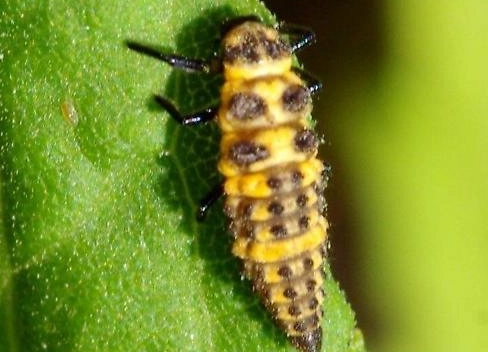
Ladybug Nymph vs. Common Pest Look-Alikes
This table clears up the confusion. Study it before you reach for any spray.
| Insect | Key Visual Differences from Ladybug Nymph | What They Do |
|---|---|---|
| Ladybug Nymph | Elongated, segmented, dark with possible orange marks. Six legs at front. Found on pest colonies. | Voracious predator of aphids, mites, scale. |
| Aphids | Pear-shaped, soft-bodied. Can be green, black, white. Often have two little "tailpipes" (cornicles) on rear. Usually stationary in groups. | Sap-sucking pests that weaken plants. |
| Spider Mites | Extremely tiny (pinhead size). Need magnifying glass to see. Look like moving dust. Create fine webbing. | Sap-sucking pests causing stippling on leaves. |
| Mealybugs | White, cottony, oval blobs. Look like they're covered in powder. Slow-moving or stationary. | Sap-sucking pests that excrete sticky honeydew. |
| Colorado Potato Beetle Larvae | Plump, hump-backed, and reddish-orange with black spots along sides. Found on potatoes, tomatoes, eggplant. | Defoliating pests that chew leaves. |
Why Ladybug Larvae Are Your Garden's Silent Heroes
If adult ladybugs are the special forces, the nymphs are the infantry, doing the gritty, ground-level work. Their reputation as beneficial insects is almost entirely built on this larval stage.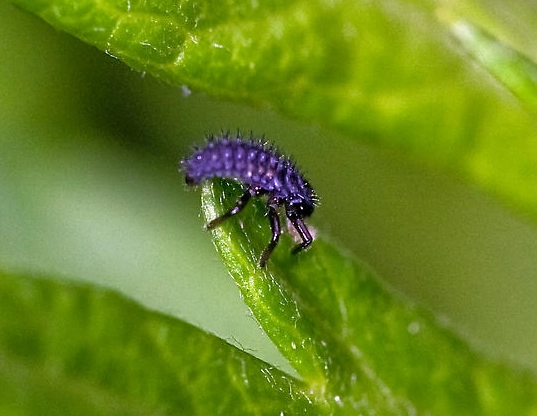
Their appetite is staggering. A single ladybug nymph can consume up to 400 aphids during its development, according to entomologists at the University of Kentucky College of Agriculture. They eat constantly. I’ve watched one systematically clear a stem of 50 aphids in an afternoon, leaving behind only the hollow skins.
They target the pests you hate most: aphids, thrips, spider mites, mealybugs, and even small caterpillars and insect eggs. They have piercing-sucking mouthparts—they stab the pest and suck out its juices. It’s efficient and brutal.
Here’s the non-consensus bit everyone misses: Nymphs are often more effective than the adults. Adults can and will fly away to greener pastures. The flightless nymphs are stuck where they hatched. They have no choice but to clean up the local pest problem. They are a committed, resident pest control service.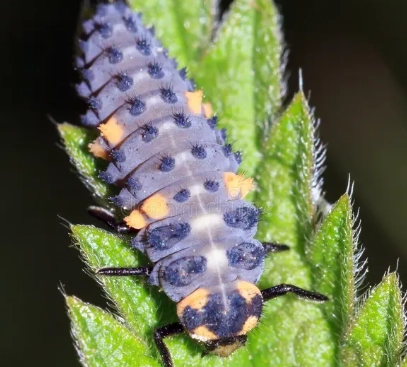
How to Attract and Retain Ladybug Nymphs
You don't just want visiting ladybugs; you want them to settle down and raise a family (of hungry nymphs) in your garden. It’s about creating a habitat, not just a snack bar.
Step 1: Provide a Pest Buffet (Tolerate Some Aphids). This is the hardest rule for neat-freak gardeners. If you zap every aphid with soap spray at first sight, you remove the ladybug's food source and reason to stay. Let a small, manageable aphid colony develop on a sacrificial plant—like your nasturtiums or early-season sunflowers. It’s an invitation.
Step 2: Plant Pollinator & Insectary Plants. Adults need pollen and nectar for energy to mate and lay eggs. Focus on plants with small, clustered flowers:
- Dill, Fennel, Cilantro: Let them bolt and flower. The umbel flowers are perfect.
- Yarrow, Alyssum, Marigolds: Reliable, long-blooming sources.
- Cosmos, Daisies, Angelica: Great structure for shelter too.
Step 3: Offer Shelter and Water. Leave some leaf litter, have a small rock pile, or use perennial ground covers. A shallow dish with pebbles and water gives them a drink. Avoid perfect, bare mulch beds—they offer no housing.
Step 4: The Nuclear Option: STOP Using Broad-Spectrum Insecticides. Pyrethroids, carbamates, neonicotinoids—these don’t discriminate. They will kill your nymphs, larvae of other beneficials like lacewings and hoverflies, and the pollinators you depend on. If you must intervene, use targeted methods like insecticidal soaps or horticultural oils, and spray carefully, avoiding areas where you see nymphs active.
My own garden transformed when I adopted this approach. I stopped panicking over the first aphids on my milkweed. Now, by mid-summer, it’s a ladybug nursery, crawling with nymphs that keep the pest population in perfect, balanced check. I rarely have to intervene.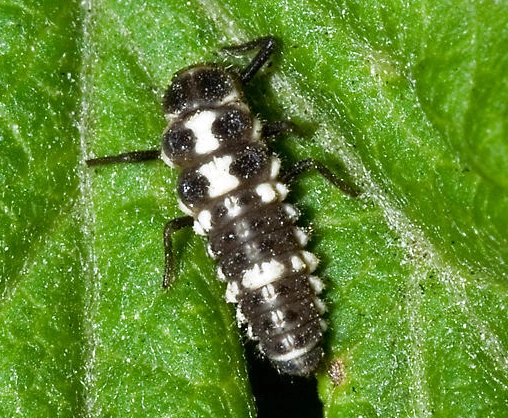
Common Mistakes and How to Avoid Them
I’ve made these, and I see fellow gardeners make them every season.
Mistake #1: Spraying First, Asking Questions Later. This is the big one. That instinct to “clean” the plant is a killer. Pause. Get close. Use the identification guide above. Is it actually causing damage, or is it on the things causing damage?
Mistake #2: Buying Adult Ladybugs and Expecting Miracles. Commercially sold ladybugs are often wild-harvested, stressed, and dehydrated. They frequently just fly away. It’s a crapshoot. A better investment? Buying actual ladybug larvae from reputable insectaries like Arbico Organics or Nature’s Good Guys. You release the nymphs directly onto the infested plant. They can’t fly away, and they’re hungry immediately.
Mistake #3: Over-Managing the Garden. A perfectly tidy garden is a biodiversity desert. Leave some “mess”—spent flower heads, a patch of weeds like dandelions (early spring pollen source), and undisturbed soil edges. This complexity creates the micro-habitats beneficial insects need to complete their life cycles.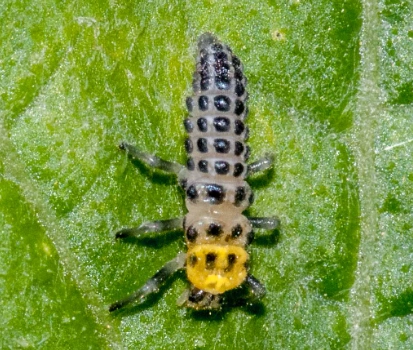
Your Ladybug Nymph Questions Answered
I think I accidentally sprayed my ladybug nymphs with insecticidal soap. Did I kill them all?
Can ladybug nymphs bite or harm me or my pets?
How many ladybug nymphs do I need to control a serious aphid outbreak?
Where is the best place to buy live ladybug larvae for my garden?
I see ladybug nymphs on my plants, but they don't seem to be eating all the aphids. What's wrong?
Reader Comments