Quick Guide to Ladybug Life
- The Four Act Play: A Ladybug's Metamorphosis
- Act One: The Egg – A Clustered Beginning
- Act Two: The Larva – The Hidden Hunger Machine
- Act Three: The Pupa – The Quiet Revolution
- Act Four: The Adult – The Familiar Final Form
- What Influences These Life Stages?
- Your Burning Questions on Ladybug Life Stages, Answered
- Wrapping Up the Life Cycle
You've probably seen them—those cheerful little red beetles with black spots dotting your garden plants. They're iconic. But have you ever stopped to wonder where they come from? I mean, they don't just appear out of nowhere as perfect, spotted adults. The truth is, the story of a ladybug is one of the most dramatic transformations in your backyard, a full-blown metamorphosis that's just as fascinating as a butterfly's, if not more so because it's happening right under our noses, often mistaken for a pest.
I remember as a kid, I saw this weird, spiky, alligator-looking thing on my rose bush and nearly squished it, thinking it was eating the leaves. My grandma stopped me and said, "That's a baby ladybug." My mind was blown. That ugly little creature was going to turn into that pretty beetle? That moment stuck with me, and it's why I think understanding the life stages of ladybugs is so crucial, especially for gardeners. It stops you from accidentally wiping out your best little helpers.
So, let's ditch the picture-book version and get into the nitty-gritty, complete reality of a ladybug's life. It's a four-act play, and each stage is wildly different from the last.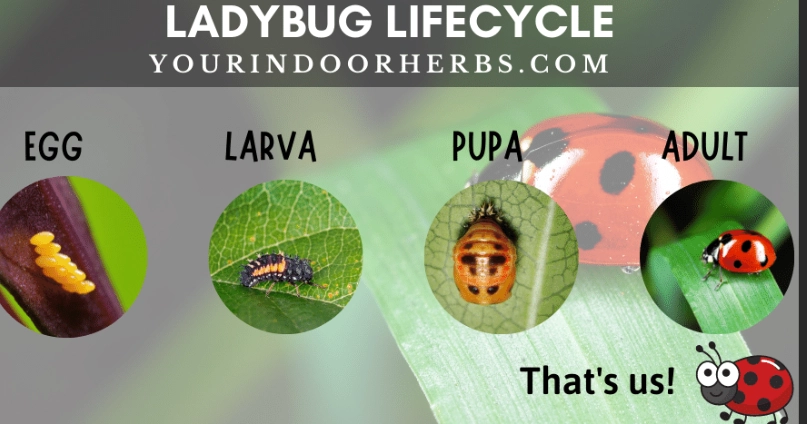
The Four Act Play: A Ladybug's Metamorphosis
Think of it like this. The egg is the opening scene. The larval stage is the long, hungry, growing-up montage. The pupal stage is the magical transformation sequence where everything gets rearranged. And the adult is the final form, ready to fly off and start the cycle again. Missing any one of these stages means you're not getting the full story of the ladybug lifecycle.
Act One: The Egg – A Clustered Beginning
It all starts with a choice. A female ladybug, after mating, goes on a mission to find the perfect nursery. And her criteria are simple: find a plant crawling with aphids or other soft-bodied insects. She's not being sentimental; she's being practical. She's laying a pantry right next to the fridge for her soon-to-hatch babies.
She deposits her tiny, yellow or orange, football-shaped eggs in neat clusters, usually on the underside of a leaf to protect them from rain and predators. A single female can lay hundreds, even over a thousand, eggs in her lifetime, but she'll spread them out in batches of 10 to 50. This is a smart survival tactic—don't put all your eggs in one basket, literally. If one cluster gets found by a predator or a parasitic wasp (a real threat), the others might survive.
The eggs are surprisingly bright. That yellow-orange color might seem like a beacon, but some scientists think it serves as a warning to other insects that they're not good to eat. They're kind of like nature's "Caution" tape.
This stage is short, lasting only about 3 to 5 days in warm weather. Then, the tiny drama begins.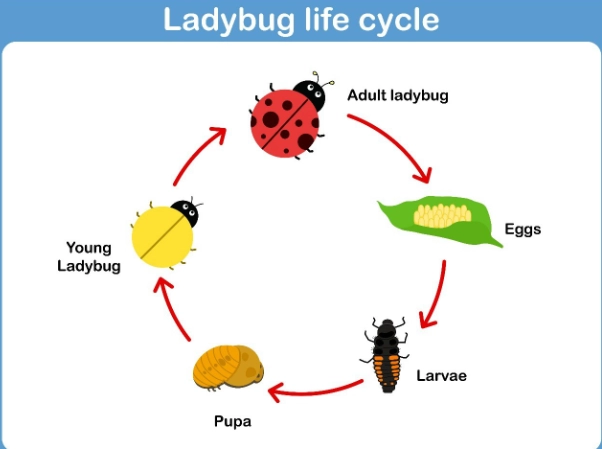
Act Two: The Larva – The Hidden Hunger Machine
This is the stage most people never see, or if they do, they mistake it for a pest. And I get it. Ladybug larvae look nothing like their parents. They're elongated, segmented, and often look like miniature, spiky, black and orange alligators. They're built for one thing: eating.
When the egg hatches, the first thing the tiny larva often does is turn around and eat its own eggshell. Protein-packed first meal, zero waste. Then, it gets to work. Its sole purpose during this larval stage is to consume as many aphids, mites, scale insects, or other small pests as possible. We're talking hundreds of aphids during its development. This is why ladybugs are a gardener's absolute best friend—their larval stage is when they do the majority of their pest control work.
But they can't grow in one skin. Like other insects, they have to molt. The ladybug larva will go through four distinct growth phases, called instars. After each instar, it sheds its too-tight exoskeleton, revealing a new, larger one underneath. It's a vulnerable time, but necessary.
| Instar Stage | Key Characteristics | Primary Activity |
|---|---|---|
| First Instar | Immediately after hatching. Tiny, dark grey/black. May cluster with siblings. | Consumes remaining egg casing, then begins hunting very small prey. |
| Second Instar | Larger, more segmented. Coloration (orange/yellow markings) often becomes visible. | Feeding rampage begins. Becomes more mobile and aggressive in hunting. |
| Third Instar | Significantly larger, prominent spines and legs. Looks distinctly "alien." | Peak consumption phase. Can devour dozens of aphids per day. |
| Fourth (Final) Instar | Largest larval form. Stops feeding towards the end as it prepares for pupation. | Wanders to find a secure pupation site. Often travels away from the feeding ground. |
The entire larval stage, across these four instars, lasts about 2 to 3 weeks, depending on food supply and temperature. Then, something incredible happens. The eating machine stops. It gets a sort of restless energy.
Gardeners, take note: If you buy live ladybugs for your garden and release the adults, many will just fly away. But if you can find and protect the larvae (or eggs!), that's where you get real, localized, long-term pest control. They're hungry, grounded, and focused.
Act Three: The Pupa – The Quiet Revolution
This is the stage that still feels like magic to me. After its final molt, the larva finds a safe spot. It often chooses a leaf, a stem, a fence post, or even the side of your house. It then attaches the tip of its abdomen to the surface using a special silk it produces.
Then, it curls up. Its skin shrinks and hardens, forming what's called a pupal case. From the outside, it looks like a still, knobby, orange and black blob. It might remind you of a tiny, shriveled shrimp stuck to a leaf. Honestly, it doesn't look like much is happening. It's easy to think it's dead.
But inside that case, a biological revolution is underway. The larval body is being completely broken down into a kind of cellular soup. From this soup, the entirely new structures of the adult ladybug are formed: the wings, the hard wing covers (elytra), the six proper legs, the compound eyes, everything. It's a complete dismantling and reassembly. This process is called histolysis and histogenesis.
This pupal stage is a vulnerable time. The ladybug is immobile and defenseless. It lasts about 5 to 7 days. And then, the case splits open.
But what exactly happens inside that pupa? It's not just a simple suit change.
Act Four: The Adult – The Familiar Final Form
The newly emerged adult ladybug is a sight to see, but it's not quite ready for its close-up. Its exoskeleton is soft and pale, often a yellowish color. The iconic spots may not be fully formed yet. It has to hang there, pumping fluid into its wings and body to expand them to their full size. The exoskeleton then slowly hardens and darkens to its final red, orange, yellow, or even black color, with the spots becoming clearly defined.
This hardening process can take a few hours. Once it's done, the adult is ready for its two main tasks: eating (though not as voraciously as the larva) and reproducing to start the cycle of ladybug life stages all over again.
An adult ladybug's lifespan is surprisingly variable. Some may only live a few weeks after emerging in the summer. Others, particularly those that emerge in late summer or fall, will enter a state of dormancy called diapause. They'll find a sheltered spot—under leaf litter, in cracks of tree bark, or even in the corners of your attic—and huddle together in large groups to wait out the winter. These are the ones you might find on a warm winter day. Come spring, they emerge, feed, mate, and the female begins laying eggs, completing the generational cycle.
So, from egg to reproducing adult, the entire life stages of ladybugs process can take as little as 4 weeks in ideal summer conditions, or be stretched out over many months if it includes overwintering.
What Influences These Life Stages?
It's not a fixed clock. Several things can speed up or slow down the ladybug metamorphosis.
- Temperature: Warmth speeds everything up. Cool weather slows development to a crawl. This is basic insect biology.
- Food Supply: A larva with an unlimited aphid buffet will grow faster and larger than one struggling to find meals. Starvation can kill them or result in a weaker adult.
- Ladybug Species: There are over 5,000 species of ladybugs worldwide! While the four-stage process is the same, timing, colors, and number of generations per year (voltinism) can differ. The common Seven-Spotted Ladybug (Coccinella septempunctata) might have multiple generations in a warm year, while others might have just one.
I've noticed in my own garden that during a big aphid outbreak, the ladybug population seems to explode almost in sync. It's like the existing adults sense the feast and lay more eggs, and those eggs develop at lightning speed. When the aphids are gone, everything slows down. It's a perfect, if brutal, feedback loop.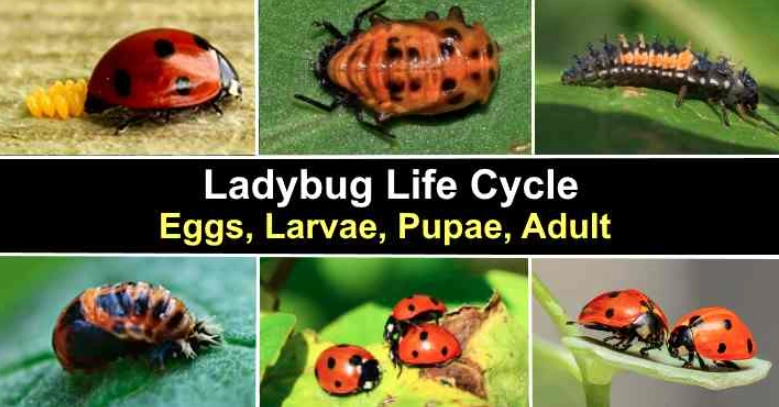
Your Burning Questions on Ladybug Life Stages, Answered
After talking to lots of fellow garden enthusiasts, I've compiled the questions that come up again and again. Let's tackle them head-on.
Q: How can you tell a male ladybug from a female ladybug?
This is a tough one, even for experts. You generally can't tell by color or spot pattern. The most reliable way (without a microscope) is size—females are often slightly larger. Some species have subtle differences in the shape of the last abdominal segment, but that's not practical for casual observation. For most of us, it's safe to say it's a guessing game.
Q: What do ladybug larvae eat, exactly? Will they eat plants?
This is crucial. Ladybug larvae are almost exclusively predators. They eat soft-bodied insects: aphids are the main course, but they'll also eat thrips, mite eggs, small caterpillars, and even the eggs of other insects, including other ladybugs (cannibalism happens when food is scarce). They do not eat plant leaves. If you see a bug munching on your green leaves, it's not a ladybug larva. This is the biggest misconception that leads to people killing the good guys. If you need a reliable source to confirm their diet, the Michigan State University Extension has excellent, science-backed profiles on these beneficial insects.
Q: Do ladybugs bite?
They can, but it's rare and not serious. Adult ladybugs have mandibles designed for chewing small insects. Sometimes, if they're seeking moisture or salt, or if they feel threatened (like being held in a closed hand), they might give a little pinch. It feels like a tiny tickle or a weak pinch, and it almost never breaks the skin. It's more startling than painful. Their main defense is actually "reflex bleeding"—they exude a foul-tasting, yellowish fluid from their leg joints that deters predators.
Q: How can I attract ladybugs to my garden to complete their life cycle there?
You need to think about the needs of all life stages of ladybugs, not just the adults.
- Stop using broad-spectrum pesticides. These kill the larvae and the adults just as dead as the pests.
- Plant a diversity of flowers, especially ones with small, flat flower clusters like dill, fennel, yarrow, cilantro, and alyssum. These provide pollen and nectar for the adults, which they need for energy when prey is low.
- Tolerate a small aphid population. I know it sounds counterintuitive, but a few aphids on your plants are like putting out a welcome sign and a free buffet for ladybugs. No food, no residents.
- Provide overwintering sites. Leave some leaf litter in a corner, have a rock pile, or don't be too quick to clean out every dead plant stem in the fall. These offer shelter.
For a deeper dive into creating a habitat, the Xerces Society for Invertebrate Conservation provides phenomenal region-specific plant lists for beneficial insects.
Q: What does the number of spots on a ladybug tell you?
Contrary to the nursery rhyme, the number of spots does not tell you its age. Spots are part of the species' identifying characteristics, fixed in the exoskeleton. A Seven-Spotted Ladybug will always have seven spots (give or take a rare variation). It's like a fingerprint for the species, not an age counter. A great resource to identify different species is the UK Ladybird Survey species guide, which has clear photos of adults, larvae, and pupae.
Q: Where do ladybugs go in the winter?
As adults, in diapause. They seek protected microclimates that shelter them from the worst freezing and wet. This can be under loose tree bark, inside hollow plant stems, under rocks or logs, in leaf litter, or in the cracks and crevices of buildings (which is why you sometimes find them indoors). They often cluster in large aggregations, sometimes containing thousands of individuals, which helps conserve heat and humidity.
Q: Are all ladybugs red with black spots? Are orange ones a different stage?
Not at all! Color is species-dependent, not a stage. While red with black spots is classic, ladybugs can be orange, yellow, pink, black, and even grey. Some have spots, some have stripes, some have no patterns at all. An orange ladybug with black spots (like the Asian Lady Beetle, Harmonia axyridis) is just a different species, not a different life stage. The adult is the final, colored form.
Q: Are ladybug larvae harmful or beneficial?
They are incredibly beneficial. Full stop. This is the most important takeaway. The larval stage is the workhorse of pest control in the ladybug's life. A single larva can consume hundreds of aphids before it pupates. Squishing one because it looks "scary" is like firing your most effective employee on their first day because you don't like their suit. Learn what they look like and protect them.
Q: How long does it take for a ladybug to come out of its pupa?
The actual emergence is quick, often taking just a few minutes once the pupal case splits. But the newly emerged beetle then spends several hours hanging there while its wings expand and its exoskeleton hardens and colors up. So, from the first crack to seeing a fully formed, hard-bodied ladybug ready to fly, you're looking at a half-day process, give or take.
Q: How do I tell the difference between a ladybug larva and a pest like a Colorado potato beetle larva?
Good question! Both can be orange/black-ish. Look at the legs and behavior.
- Ladybug Larva: Has six prominent, jointed legs near the front of its body. It walks actively. It's often found on a wide variety of plants, not eating the leaves, but hunting on them.
- Colorado Potato Beetle Larva: Is more hump-backed, softer-looking, and has a row of black spots along each side. Crucially, it will be sitting on and devouring the leaves of plants in the nightshade family (potato, tomato, eggplant). It's a dedicated leaf-eater, not a hunter. The University of Kentucky Entomology department has clear comparison images that can help with this exact identification problem.
Wrapping Up the Life Cycle
So there you have it. The next time you see that perfect red beetle, you'll know it's just the final page of a much longer, wilder story. You'll know about the hidden eggs, the ravenous alligator-larvae, and the miraculous, quiet pupal stage. Understanding the complete life stages of ladybugs transforms them from just a cute bug into a complex, fascinating, and immensely valuable part of your garden's ecosystem.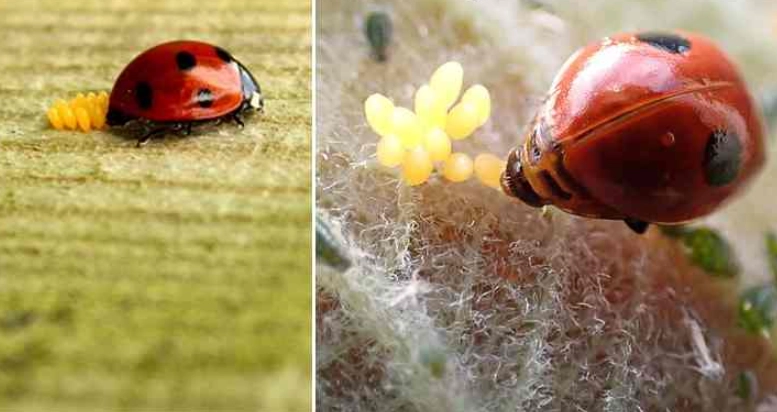
It makes you look at your plants differently. Instead of panicking at the first sign of an aphid, you might just watch and wait, hoping to spot a cluster of tiny yellow eggs or a spiky little larva on patrol. You become a participant in the cycle, not just an observer. And honestly, that connection—seeing the whole process unfold—is one of the most rewarding things about paying close attention to the natural world, right in your own backyard.
Go take a closer look. Turn over a leaf. You might be surprised at what drama you find.
Reader Comments