Let's be honest, the first time you bring a bonsai home, it feels magical. This tiny, ancient-looking tree sitting on your desk. But then the fear sets in. How do you not kill it? I've been there. I killed a beautiful little Juniper because I treated it like a houseplant. That was years ago, and let me tell you, I've learned the hard way so you don't have to. Real bonsai care isn't about following a strict schedule; it's about learning to listen to the tree.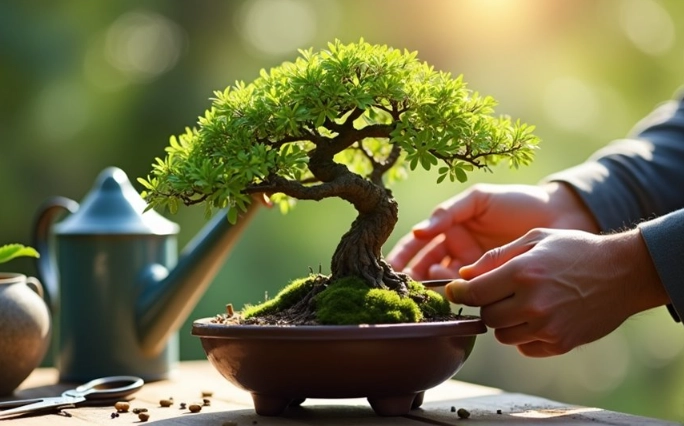
It's a conversation. The tree tells you what it needs through its leaves, its soil, its posture. Your job is to learn its language. This guide is my attempt to translate that for you. We're going to move past the generic advice and get into the nitty-gritty of what actually works.
The Core Mindset: A bonsai is not a decoration. It's a living tree in a very small pot. Every single aspect of its care—water, food, light—is amplified and critical. Forget what you know about watering your peace lily.
Watering Your Bonsai: The Number One Killer (And Savior)
Ask any experienced bonsai artist what the most common cause of death is, and 9 out of 10 will say improper watering. It's that important. But here's the thing everyone gets wrong: there is no weekly schedule. Watering on Saturdays because it's convenient for you is a surefire path to root rot or a dried-out stick.
So how do you know?
The Finger Test Method (My Daily Ritual)
Stick your finger about half an inch to an inch into the soil. For most common bonsai mixes, if it feels slightly damp but not wet, you're good. If it feels dry, water. If you're unsure, wait a day. It's almost always better to be slightly under-watered than over-watered, as roots need air as much as they need water. Overwatering suffocates them.
But there's more to it than poking the soil.
- Species Matters: A tropical Ficus will drink more than a hardy Pine. A tree in active growth (spring/summer) needs more than in dormancy (winter).
- Pot and Soil Matter: A shallow pot dries out faster than a deep one. A fast-draining soil mix (which you should be using) needs more frequent watering than dense, organic-heavy soil.
- Weather Matters: A hot, windy day can dry a tree out in hours. A cool, humid week might mean no water is needed.
See? No schedule. Just observation.
How to Water Properly (It's Not a Sprinkle)
The goal is to completely saturate the root ball. A light misting on the surface does nothing but encourage surface roots, which you don't want. Here's my method:
- Take the tree to the sink or use a watering can with a fine rose (the shower head attachment).
- Water thoroughly over the entire soil surface until water runs freely out of the drainage holes. Not a trickle, but a good flow.
- Wait 2-5 minutes.
- Water thoroughly again. This second watering ensures the peat or akadama in the soil, which can be hydrophobic when dry, has fully absorbed moisture.
Biggest Mistake I See: Using a decorative tray underneath and letting the pot sit in the runoff. This is a death sentence. Always let the pot drain completely. Elevate it on little feet or pebbles in the tray.
Bonsai Soil: It's Not Dirt From Your Yard
This is the second pillar of solid bonsai tree care. The soil is the engine room. In a tiny pot, it must provide three things: drainage, aeration, and water retention. Regular garden soil provides none of these well—it compacts, suffocates roots, and either holds too much water or becomes concrete.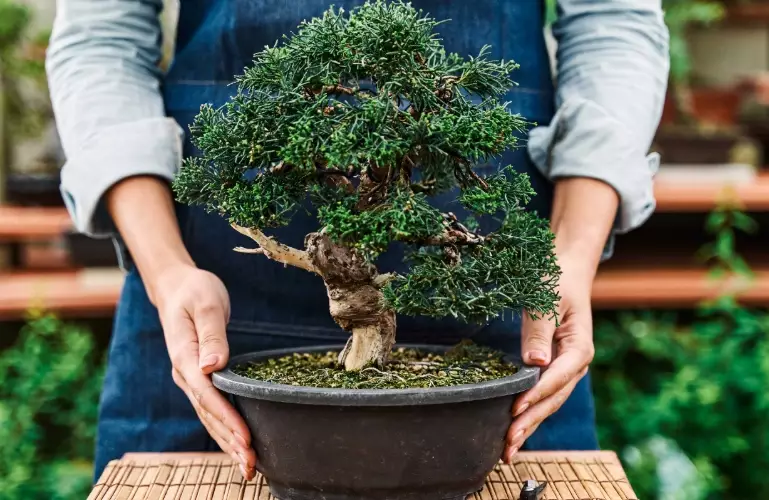
A good bonsai soil is a granular, inorganic mix. It looks like little rocks. Here's a breakdown of common components:
| Component | What It Does | Best For | My Personal Take |
|---|---|---|---|
| Akadama | Hard-baked Japanese clay. Holds water & nutrients, breaks down slowly. | Deciduous trees, Maples, many classics. The "gold standard." | Expensive but great. It does break down over 2-3 years, signaling it's time to repot. |
| Pumice | Volcanic rock. Excellent for aeration and holding some water/nutrients. | Almost everything. A fantastic, neutral component. | My go-to base for most mixes. Affordable and effective. |
| Lava Rock | Volcanic rock. Provides great drainage and structure, doesn't break down. | Conifers (Pines, Junipers), trees that need sharp drainage. | Creates permanent air pockets. I use it in all my conifer mixes. |
| Kiryu (Gravel) | Hard granite grit. Pure drainage and anchorage. | Pines, as a small percentage of mix. | Very sharp, good for root anchorage. Not a primary component for me. |
| Organic Matter (Pine Bark, etc.) | Holds moisture and nutrients. | Usually a small additive (10-20%) to inorganic mixes for tropicals or water-loving species. | Use sparingly. Too much leads to compaction and rot. I add a bit for my Ficus and Chinese Elm. |
You can buy pre-mixed soils, which is a great start for beginners. As you get more into it, mixing your own lets you tailor the blend to your specific tree and local climate. The Bonsai Empire soil guide is a fantastic resource that dives deeper into the science of these components.
The right soil makes every other part of bonsai care—especially watering—infinitely easier.
Sunlight: Finding the Sweet Spot
Bonsai are trees. Trees need light. A lot of it. The single biggest reason indoor bonsai fail is insufficient light. Most species sold as "indoor" bonsai (Ficus, Jade, Chinese Elm) are really subtropical trees that can tolerate indoors, but they thrive outdoors in warm months.
Outdoor Bonsai (Temperate Climate Trees)
Pines, Maples, Junipers, Azaleas. These must live outdoors year-round. They need the full seasonal cycle, including winter dormancy. Place them where they get at least 5-6 hours of direct sunlight daily. Morning sun is gentler than harsh afternoon sun in hot climates, which can scorch leaves.
Indoor/Subtropical Bonsai
If you must keep a tree indoors permanently, light is your biggest challenge. A north-facing windowsill is almost never enough. A bright, south-facing window (in the Northern Hemisphere) is the minimum. Even then, consider supplementing with a grow light, especially in winter. I use a simple LED panel for my indoor Ficus during the gloomy months, and the difference in growth is night and day.
Pro Tip: Rotate your tree a quarter turn every time you water. This ensures all sides get even light and prevents the tree from "reaching" lopsidedly toward the window.
Fertilizing: Not Plant Food, But Tree Nutrition
In that limited soil, nutrients get used up fast. Fertilizer isn't optional; it's essential for health and growth. But don't think of it as "food." The tree makes its own food via photosynthesis. Fertilizer is more like vitamins and minerals.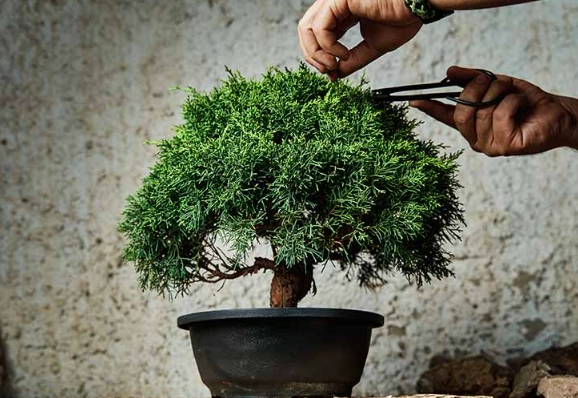
I use a balanced, liquid fertilizer (like a 10-10-10 or 7-9-5) diluted to half-strength, and I apply it every two weeks during the growing season (spring to early autumn). In winter, for dormant trees, I stop completely. For my indoor tropicals that grow slowly year-round, I might fertilize once a month in winter.
Organic vs. chemical? Organic pellets (like Biogold) are popular and release slowly with watering. They're great and hard to overdo. Liquid chemical fertilizers give you more immediate control. I've used both successfully. The key is consistency during the growth period. The University of Minnesota Extension has a great general primer on how trees use nutrients, which applies directly to our potted miniatures.
Pruning and Shaping: The Art of Bonsai Care
This is where hobby becomes art. Pruning serves two main purposes: maintaining the miniature size and enhancing the artistic form.
Maintenance Pruning (Just a Haircut)
This is simple. You see a branch or shoot growing beyond the desired silhouette, you cut it back. Use sharp, clean scissors or shears. For deciduous trees, you can often cut back to just above a pair of leaves. This encourages back-budding and makes the tree bushier. Do this throughout the growing season as needed.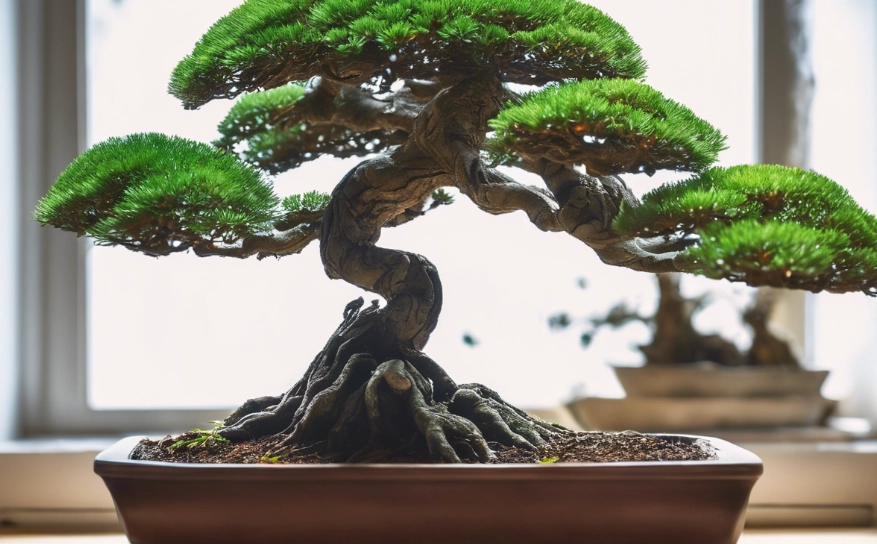
Structural Pruning (The Big Decisions)
This is major surgery, usually done in late winter or early spring before the growth surge. You're removing entire branches to improve the tree's line, create better balance, or direct future growth. This requires thought. Look at the tree from all angles. Which branch is redundant? Which disrupts the flow? Sometimes you have to make a bold cut and wait years to see the result. It's scary and thrilling.
Wiring (wrapping aluminum or copper wire around branches to bend and position them) is a whole other advanced skill. Don't rush into it. Learn to prune well first.
A common fear: "What if I cut the wrong branch?"
Most trees are resilient. It might set you back a season, but it likely won't kill the tree. Hesitation often leads to a messier tree. Study resources like the USDA's plant database to understand your specific tree's growth habits before major work. For artistic principles, the archives of the Bonsai Clubs International site are a treasure trove of advice from decades of practitioners.
Repotting: Refreshing the Foundation
Every 2-5 years, depending on the species and growth rate, the tree will exhaust its soil and fill the pot with roots. It becomes pot-bound. Growth slows, and watering becomes erratic. Time to repot.
When: Early spring, just as buds begin to swell but before they fully open. This is when the tree has maximum energy to recover from root loss.
The Process (Simplified):
- Remove the tree from its pot. You may need to cut circling roots at the edges.
- Carefully rake out the old soil from the roots with a chopstick or root hook. Remove up to 1/3 of the root mass, focusing on long, thick roots and any rotten ones.
- Place fresh soil in the pot, position the tree, and work new soil around the roots, using the chopstick to eliminate air pockets.
- Water thoroughly and place the tree in a sheltered, shady spot for 3-4 weeks to recover before moving back to its normal sunny location.
Don't repot and do major structural pruning in the same season. It's too much stress. Choose one.
Troubleshooting: Reading the Leaves
Your tree talks. Here's how to listen:
- Yellowing & Dropping Leaves: Could be overwatering (often mushy), underwatering (dry and crispy), or a natural seasonal drop (for deciduous trees in autumn). Check your soil moisture history first.
- Brown, Crispy Leaf Tips: Usually underwatering, low humidity, or fertilizer burn (if you recently fertilized).
- Weak, Elongated Growth (Leggy): Not enough light. The tree is stretching to find it.
- No New Growth: Could be dormant (winter), root-bound, lacking nutrients, or in a spot that's too cold.
- Pests: Aphids (little green bugs), spider mites (fine webbing), scale (little bumps on stems). Isolate the tree. A strong spray of water can dislodge many. For persistent issues, insecticidal soap or horticultural oil (like neem oil) is effective. Be gentle.
Top 3 Mistakes in Beginner Bonsai Care
- Overwatering with Love: This is the champion killer. Soggy soil = no oxygen = dead roots.
- Keeping an Outdoor Tree Indoors: That beautiful Juniper or Pine from the mall will die a slow death inside your living room. It needs winter cold.
- Neglecting Dormancy: Temperate trees need a cold rest period. Don't try to keep them warm and growing all winter. Protect their roots from freezing solid (a cold frame, unheated garage), but let them sleep.
Common Questions (The Stuff You Actually Google)
Q: How often should I water my bonsai?
A: I hate to sound like a broken record, but when it needs it. Use the finger test. It could be daily in summer, weekly in winter.
Q: Can I keep a bonsai indoors?
A: Yes, but choose the right species (Ficus, Schefflera, Jade, Chinese Elm) and provide maximum light. A bright window is non-negotiable.
Q: Why are the leaves turning yellow?
A. The plant's equivalent of a check engine light. 90% of the time, it's a watering issue. Check if the soil is soggy or bone dry.
Q: Do I need special tools?
A: To start, just a pair of sharp scissors for pruning and a small watering can. You can invest in shears, concave cutters, and wire later.
Q: My bonsai came with rocks glued to the soil. Is that okay?
A: No. It's terrible for the tree, preventing you from checking soil moisture and likely hindering watering. Carefully break and remove the glue and rocks. It's a purely decorative (and harmful) practice by some mass retailers.
Getting Started: Your First Tree
If you're a total beginner, skip the mall and the dying Juniper in the ceramic pot with glued-on rocks. Look for a nursery that specializes in bonsai or start with a robust, forgiving species.
My top recommendation for a first tree: Ficus Retusa or Chinese Elm. They're tough, tolerate indoor conditions (with good light) better than most, and bounce back from beginner mistakes. You can learn all the basics of bonsai care on a tree that won't die if you miss a watering or prune a bit wrong.
Start with one tree. Master its rhythm. Learn its personality. The joy of bonsai isn't in having a perfect, static sculpture. It's in the slow, quiet process of tending to something alive, guiding its growth year after year. You'll make mistakes. I still do. But each one teaches you more about this incredible art form.
It's not about control. It's about partnership. Give your tree what it truly needs, and it will reward you with a living piece of art that grows more beautiful with time.
