In This Guide
- From Egg to Majesty: The Life Cycle on a Milkweed Leaf
- Not All Milkweeds Are Created Equal: Picking the Right One
- Building a Monarch Waystation: More Than Just Milkweed
- The Ugly Parts: Milkweed Challenges and Solutions
- Your Monarch Questions, Answered
- The Bigger Picture: Migration and Why Your Garden Matters
- Getting Started: Your Action Plan
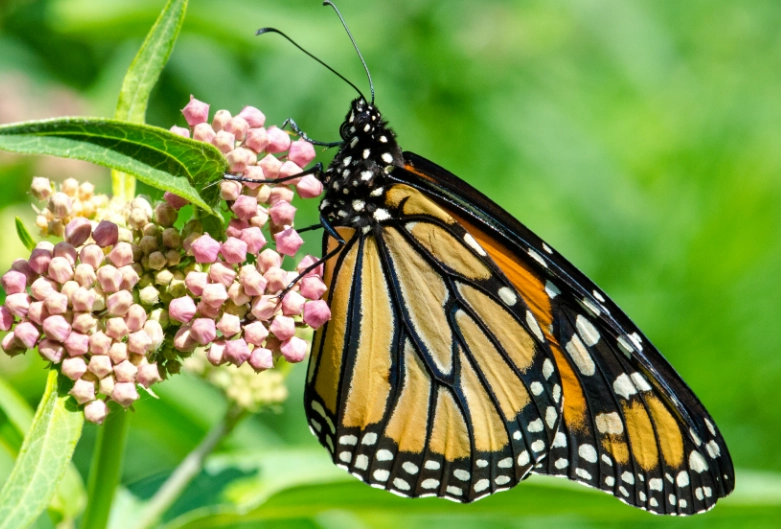
Let's talk about one of nature's most famous duos. You've probably seen the pictures – a stunning orange and black monarch butterfly, wings wide open, perched on a cluster of pink or orange flowers. But that plant isn't just a pretty backdrop. It's the cornerstone of the monarch's entire existence. That plant is milkweed. Without it, the monarch butterfly story simply ends. It's that simple, and that critical. I remember the first time I really saw the connection. I was watching a monarch flit around my garden, looking almost frantic. It landed on a zinnia, then a coneflower, then took off again. It wasn't until it finally found the lone common milkweed plant I'd let grow in the corner that it settled. It curled its abdomen under a leaf, and with a tiny tap, left a single, ridged egg behind. That's when it clicked for me. This wasn't just a butterfly visiting a flower. This was a mother ensuring the survival of her offspring, and the only place she would do that was on milkweed.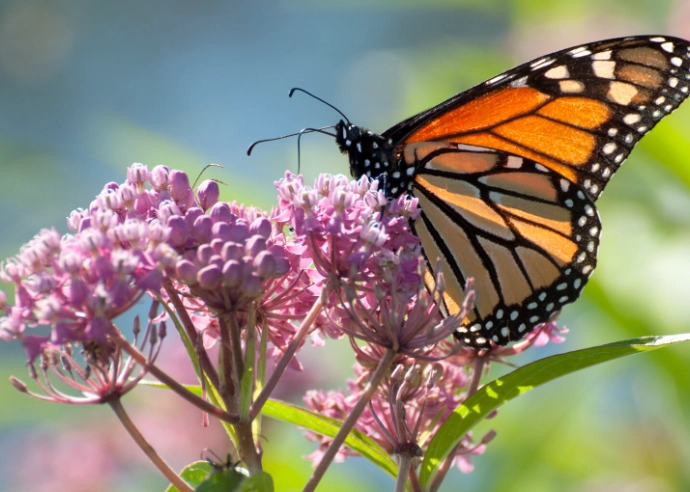
So, why this obsession with a single type of plant? It boils down to chemistry and co-evolution. Monarch caterpillars (the larvae) can only eat plants in the milkweed family (Asclepias). It's not a preference; it's a physiological requirement. The milky, latex-based sap of the milkweed contains toxic compounds called cardenolides. Most insects and animals find these downright poisonous. But monarchs? They've turned this poison into their superpower. The caterpillars have evolved to not only tolerate these toxins but to store them in their bodies. This chemical defense carries over into the adult butterfly, making them taste terrible to potential predators like birds. A bird that tries to eat a monarch will likely get sick and remember that bright orange pattern as a warning sign. It's a brilliant survival strategy, but it comes with a massive catch: total dependence. A female monarch will only lay her eggs on milkweed. She uses sensors on her feet to taste the plant and confirm it's the real deal. No milkweed means no eggs. No eggs mean no next generation.
It's a breathtakingly tight relationship, but it's also incredibly fragile. And that's where we come in.
From Egg to Majesty: The Life Cycle on a Milkweed Leaf
To understand how to help, you need to know what you're looking for. The life of a monarch butterfly on milkweed is a dramatic, five-act play that unfolds over a few short weeks.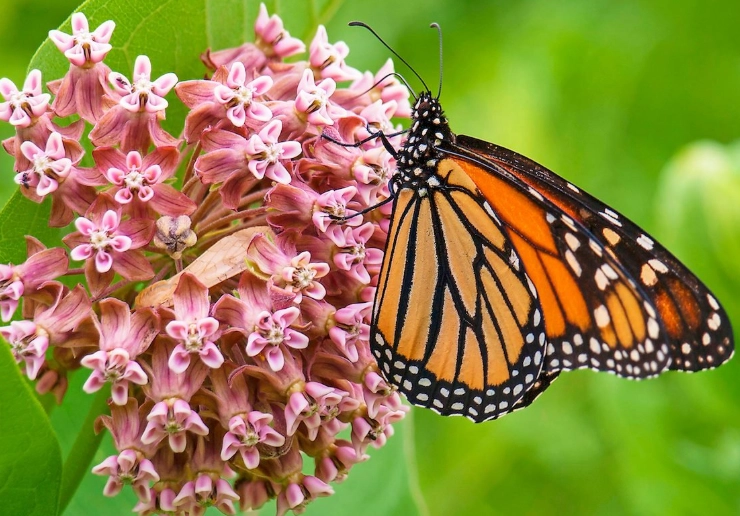
Act 1: The Tiny Pearl (The Egg)
The story starts smaller than a pinhead. A monarch egg is a pale, creamy white, shaped like a tiny barrel with vertical ridges running from top to bottom. The female usually lays just one egg per leaf or stem, often on the underside. Finding them is a challenge – it takes a sharp eye and patience. I've spent whole afternoons searching and found maybe two. But there's a thrill in spotting that little white speck. It's a promise.
Act 2: The Eating Machine (The Caterpillar/Larva)
After about 3-5 days, the egg hatches. Out comes a caterpillar so small it's almost invisible, barely a couple of millimeters long. Its first meal? The nutrient-rich eggshell it just left. Then, it gets to work on the leaf. Over the next 10-14 days, this caterpillar will do one thing with astounding focus: eat milkweed. It will grow exponentially, molting its skin five times (these stages are called instars). You'll watch its appearance change from a translucent, worm-like creature to the iconic striped caterpillar – yellow, black, and white – that everyone recognizes.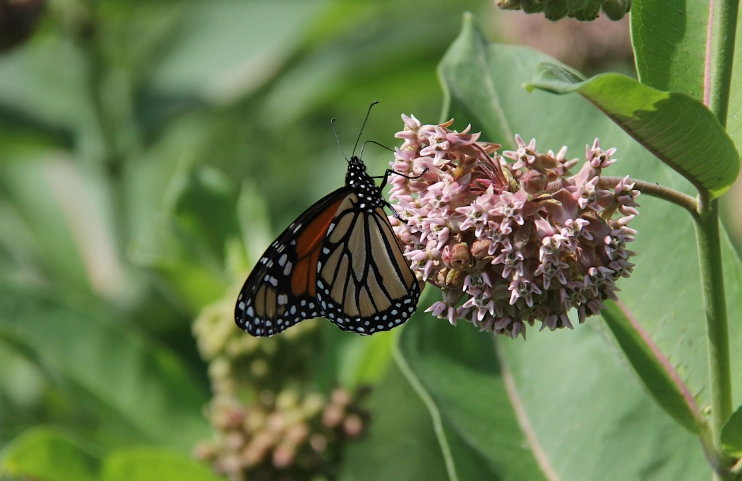
Here's a personal observation: they are messy eaters. They don't neatly nibble edges. They chomp holes right in the middle of leaves, leaving skeletons behind. And they eat a lot. A single caterpillar can devour an entire large milkweed leaf in a day by its final instar. This is why a healthy patch of milkweed is so important. One plant might support a few caterpillars, but a dozen will strip it bare, leaving them to starve or forcing them on a dangerous journey to find more food.
Act 3: The Metamorphosis (The Chrysalis)
When it's finally full-grown, the caterpillar enters the pupa stage. It spins a silken pad, attaches itself by its last pair of legs, and hangs in a distinctive 'J' shape. Then, in one of nature's greatest magic tricks, it sheds its striped skin for the final time to reveal the jade-green chrysalis dotted with gold. It looks like a piece of jewelry. Inside, the caterpillar's body literally liquefies and reorganizes into the body of a butterfly. This process takes about 10-14 days. The chrysalis will darken, becoming transparent the day before the adult emerges, allowing you to see the orange and black wings folded inside.
Act 4 & 5: The Flight and the Cycle Continues
The adult butterfly emerges, pumps fluid into its crumpled wings, and after a few hours of drying, takes its first flight. It will now feed on the nectar of many flowers, but its reproductive destiny is forever tied to milkweed. If it's a female, she will soon begin searching for milkweed plants to start the cycle all over again. This dependence is absolute. A monarch butterfly on milkweed isn't just a nice photo op; it's the visual representation of a biological imperative.
No milkweed, no monarchs. It's that stark.
Not All Milkweeds Are Created Equal: Picking the Right One
This is where a lot of well-meaning people, myself included at first, can go wrong. "Milkweed" isn't just one plant. There are over 100 species native to North America. And while monarchs will use many of them, some are far better than others. The golden rule? Plant native milkweed species that are local to your region. Tropical milkweed (Asclepias curassavica) is widely sold in big-box garden centers because it's pretty and easy to grow. But it can cause problems. In warm climates where it doesn't die back in winter, it can encourage monarchs to breed year-round instead of migrating, and it can harbor a debilitating parasite called OE (Ophryocystis elektroscirrha).
So, which one should you plant? Here’s a breakdown of some top contenders, tailored for different needs. Think of it as a menu for monarchs.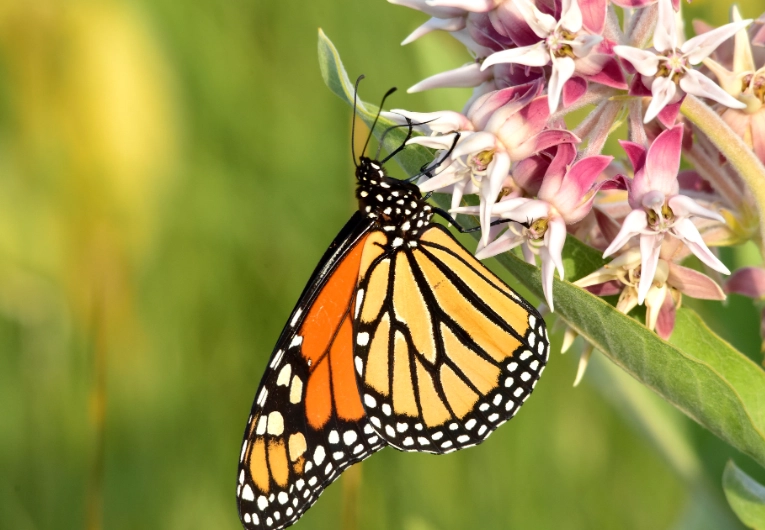
| Milkweed Variety | Best For Regions | Height & Look | Why Monarchs Love It | One Downside |
|---|---|---|---|---|
| Common Milkweed (A. syriaca) | East of the Rockies | Tall (3-5 ft), pink globe flowers | Robust leaves, high toxin concentration, spreads easily. | Can be aggressive in gardens (runs via rhizomes). |
| Swamp Milkweed (A. incarnata) | Most of US, especially wet areas | Medium (3-4 ft), clusters of pink/white flowers | Less aggressive, tolerates moist soil, great nectar source. | Name is misleading – it does fine in average garden soil too. |
| Butterfly Weed (A. tuberosa) | Most of US, drier areas | Shorter (1-2.5 ft), brilliant orange flowers | Stunning color, drought-tolerant, doesn't spread aggressively. | Lower in cardenolides, so caterpillars may be more vulnerable to predators. |
| Showy Milkweed (A. speciosa) | Western US, Plains | Medium (2-3 ft), large pinkish-white flower heads | Thick leaves good for many caterpillars, important western species. | Can be slower to establish from seed. |
For the most authoritative guidance on what's native to your exact area, I always cross-reference with the USDA PLANTS Database. It's a dry government site, but the information is gold. Just type in your state and "Asclepias." Another fantastic resource is the Xerces Society's Milkweed Seed Finder. They are the invertebrate conservation experts, and their tool helps you find native seed suppliers.
Building a Monarch Waystation: More Than Just Milkweed
Okay, you're convinced. You want to plant milkweed. Fantastic! But if you really want to support the full life cycle, think bigger. A monarch needs more than just its host plant. It needs a habitat. I like to call it building a monarch waystation – a pit stop for all their needs.
Milkweed is for the babies (the caterpillars). The adults (the butterflies) need fuel for their incredible journeys. That fuel is nectar. So, your goal is to plant a buffet that blooms from spring through fall, providing continuous food for migrating monarchs. Early spring and late fall flowers are especially critical, as nectar sources can be scarce then.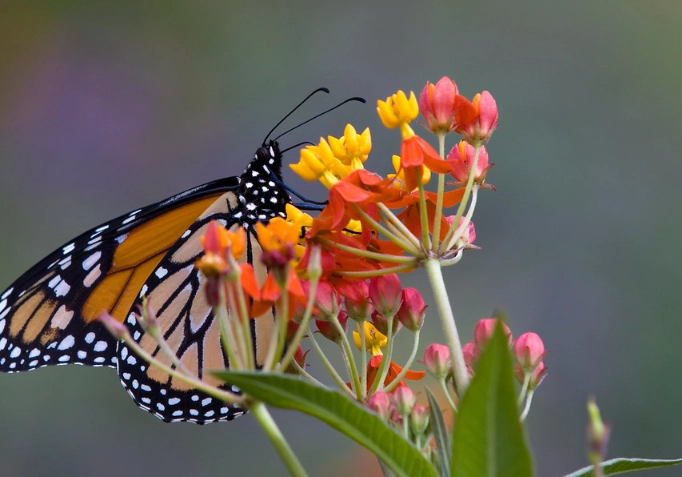
Here’s a simple plan for a monarch-friendly garden:
- The Foundation: A dense patch of your region's native milkweed (at least 5-10 plants grouped together is a good start).
- The Nectar Bar: A variety of native, single-flowered (not double-flowered) plants. Doubles often have less accessible nectar. Great choices include:
- Spring: Lilac, Lupine, Bluebells
- Summer: Bee Balm (Monarda), Coneflower (Echinacea), Liatris, Joe-Pye Weed
- Fall: New England Aster, Goldenrod (Solidago), Sedum 'Autumn Joy'
- The Shelter: Some shrubs or tall grasses nearby for protection from wind and predators.
- The Rule: No Pesticides. Period. Not insecticides, not systemic neonicotinoids (often used in nursery plants), not even "organic" ones like BTK (Bacillus thuringiensis kurstaki), which is a caterpillar stomach poison. Herbicides can drift and kill your milkweed. If you see aphids on your milkweed (you will), just blast them off with a strong spray of water. The monarch caterpillars will be fine.
It doesn't have to be a huge space. A sunny corner of your yard, a container garden on a balcony with swamp milkweed and some zinnias – every little bit creates a stepping stone in their migratory path.
The Ugly Parts: Milkweed Challenges and Solutions
Let's be real. Gardening with milkweed isn't always a pristine, Instagram-perfect experience. You'll encounter some issues. I've dealt with them all.
The Aphid Invasion: Bright yellow oleander aphids will almost certainly cover your milkweed stems. They're gross, they suck sap, and they secrete sticky honeydew. Your first instinct will be to kill them. Resist. Spraying any insecticide risks killing monarch eggs or caterpillars. Instead, put on a garden glove and squish them with your fingers, or use that strong spray of water. Ladybugs and lacewings are natural predators that will often show up if you're patient.
The Milkweed Tussock Moth: You might find other, fuzzier caterpillars munching on your plants. These are the larvae of the milkweed tussock moth. They're native, they're also specialized on milkweed, and they have just as much right to be there as monarchs. I used to pick them off, thinking I was saving the leaves for "my" monarchs. That was selfish and ecologically wrong. There's usually enough to share. Biodiversity is the goal, not a monarch monoculture.
Leaf Damage: Your milkweed will look ragged by mid-summer. Holes, missing leaves, chewed stems. This is not a sign of failure. It is a sign of SUCCESS. You are growing food for hungry, growing insects. Celebrate the tattered leaves! If you want some plants to look nice for flowers, plant more than you think you need. Some for beauty, some for the buffet.
Your Monarch Questions, Answered
The Bigger Picture: Migration and Why Your Garden Matters
The monarch's migration is one of the planet's most incredible phenomena. Eastern monarchs fly thousands of miles to a specific mountain forest in Mexico. Western monarchs overwinter along the California coast. This journey is undertaken by butterflies that have never made it before. They are guided by a complex combination of the sun's position and the Earth's magnetic field.
But they can't make it on empty. They need nectar to fuel their flight, and in the spring and fall, they need milkweed to produce the next generation that will continue the journey. The loss of native habitat due to agriculture, development, and herbicide use has created a "nectar desert" and a "milkweed famine" across the continent. Your garden, your schoolyard planting, your community park project – these are the oases. They are the connecting threads in a fraying tapestry.
You can track the amazing fall and spring migration pulses on citizen science sites like Journey North. Seeing the sightings map move south in the fall, knowing your late-blooming asters might fuel one of those travelers, is a powerful feeling.
It makes you part of the story.
Getting Started: Your Action Plan
Feeling overwhelmed? Don't be. Start small. Do one thing.
- Identify: Go to the Xerces Society Seed Finder and find a source for native milkweed seeds or plants for your state.
- Plant: This fall or next spring, plant a small patch. Milkweed seeds often need a period of cold stratification (a mimic of winter) to germinate, so fall planting is great.
- Expand: Add a couple of native nectar plants that bloom at different times.
- Protect: Commit to a pesticide-free zone around your milkweed.
- Watch and Learn: Be patient. It might take a season or two for the monarchs to find your patch. But they will.
You are not just planting a flower. You are planting a future. You are providing the one essential ingredient for the next chapter of the monarch butterfly on milkweed – a story of orange and black against green leaves that has been unfolding for millennia. Let's make sure it has a place to unfold for generations to come. The best time to plant milkweed was 20 years ago. The second-best time is now.
